PATTAYA, Thailand – Thailand is facing structural economic challenges that are making growth of even 3% difficult, while Pattaya is turning to major events, international markets and MICE tourism to generate wider economic activity.
Dr. Ekniti Nitithanprapas, Deputy Prime Minister and Finance Minister, said Thailand’s economic growth has slowed significantly over the decades. Speaking on “Transforming Thailand’s Economy through Productivity and Innovation” at the 2026 annual conference of the National Economic and Social Development Council (NESDC), he said growth had averaged around 7% before the 1997 financial crisis, falling to about 4% afterward and now making even 3% difficult to achieve.
He identified insufficient investment, an ageing production base and machinery, and an ageing population as major structural challenges. People aged over 60 now account for about 20% of the population, increasing the need to invest in people, machinery, technology and artificial intelligence to raise productivity.
Dr. Ekniti outlined a “repair, reinforce and create” approach. This includes repairing weaknesses in the existing economy, reinforcing competitiveness through skills development, technology and innovation, and creating new industries with growth potential while expanding opportunities for Thai workers and SMEs.
He also stressed the importance of maintaining economic stability. Unlike the 1997 crisis, when Thailand faced foreign reserve pressures and problems in the financial sector, the current challenge is to maintain confidence, fiscal stability and competitiveness during a period of slower growth.
At the city level, Pattaya is using tourism as one of its main economic drivers. During a Pattaya City Council meeting, council member Banjong Bantoonprapayuk questioned plans for tourism activities and overseas roadshows in 2027.
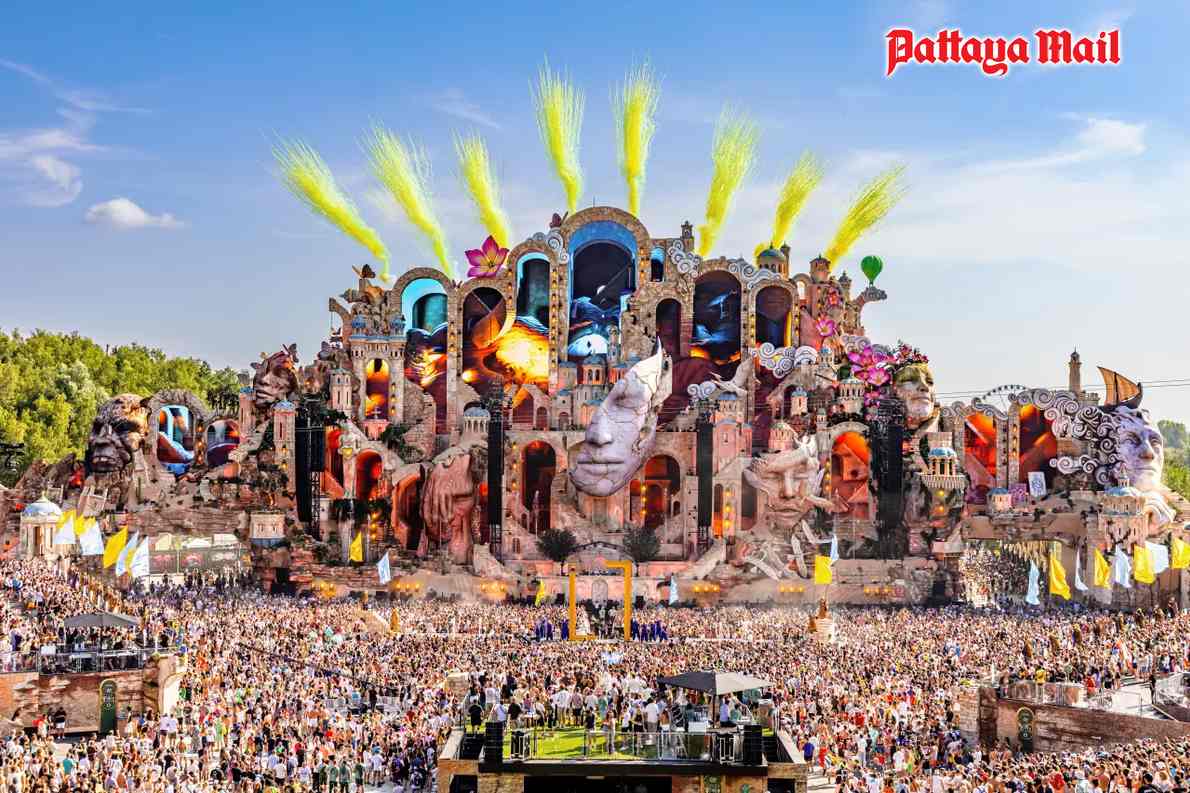
Deputy Mayor Damrongkiat Pinitkarn said Pattaya is preparing a series of major events toward the end of the year, including a jazz festival, the International Fireworks Festival, Tomorrowland and the Pattaya Countdown.
According to estimates presented to the council, the International Fireworks Festival is expected to attract about 389,860 people and generate approximately 2.035 billion baht in economic circulation. Pattaya Countdown is projected to draw around 393,060 people and generate approximately 5.7 billion baht. Pattaya is also looking beyond large events by developing international tourism markets and MICE business through roadshows and trade events.
For Thailand Travel Mart Plus 2026 (TTM+), Pattaya provided a budget of 2.5 million baht. Twelve hotels recorded bookings of more than 1,400 rooms per night, while the economic value presented to the council was estimated at more than 5.083 billion baht.
IT&CM 2026 received a Pattaya budget of 3.9 million baht and is expected to generate more than 200 million baht in spending. At IT&CMA, 30 Chonburi businesses met more than 800 international buyers, creating business opportunities and an estimated 49.55 million baht in local economic activity. The figures illustrate how tourism spending can extend beyond hotels to restaurants, shops, communities, transport operators and other service businesses.

Pattaya plans to continue its more active tourism marketing strategy in 2027 by expanding its customer base, reducing dependence on individual markets and pursuing visitors with higher purchasing power.
The city also plans to combine tourism promotion with improvements in safety, infrastructure and services. At the national level, the government’s economic strategy places greater emphasis on workforce skills, investment, new industries, technology and AI to raise productivity and create broader opportunities.
The parallel approaches reflect a wider challenge facing Thailand: generating more value and productivity from the economy while ensuring that tourism, investment and new business opportunities reach a broader range of businesses and workers.