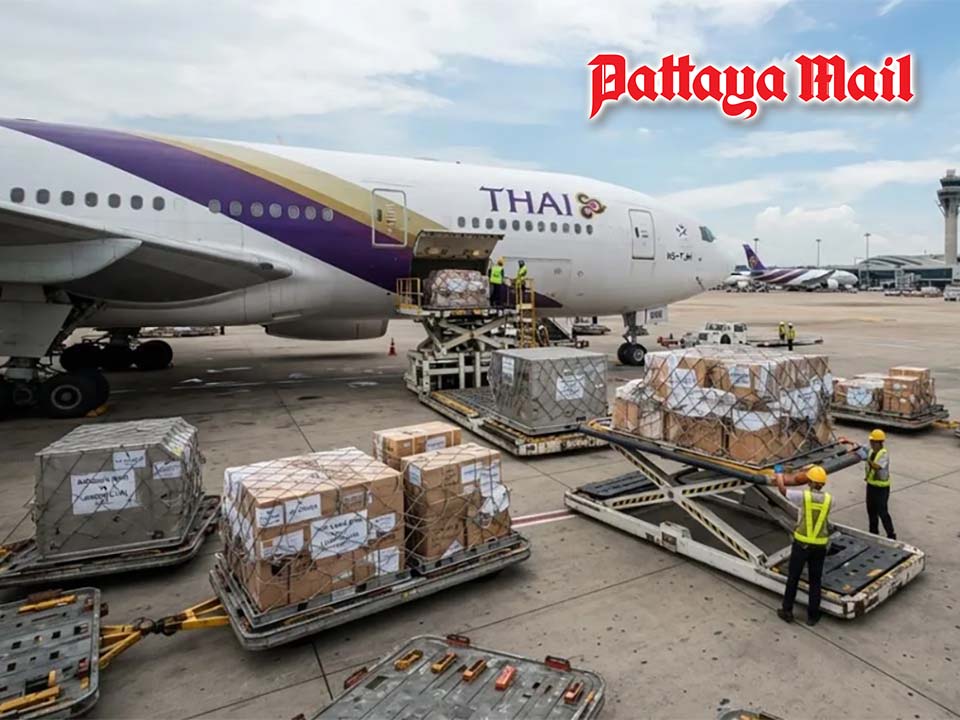
BANGKOK, Thailand – Thailand’s temporary suspension of inbound and outbound cargo services at Thai Airways’ cargo warehouse from September 30 to October 6 is creating risks for exporters and importers, with flooding affecting staff availability and warehouse operations.
The suspension is not only affecting Thai Airways but also airlines and businesses that depend on its cargo facilities at Suvarnabhumi Airport. Some airlines using the warehouse have temporarily delayed or stopped accepting export shipments, raising concerns over delivery deadlines for overseas buyers.
The impact could be particularly serious for perishable and time-sensitive goods, including fresh agricultural products, seafood, chilled and frozen food, temperature-controlled products, electronics and components, manufacturing materials and urgent shipments.
The Department of International Trade Promotion (DITP) said exporters may need to shift cargo to other airlines and air-cargo operators whose facilities remain open, including Bangkok Flight Services (BFS) and foreign airlines. However, limited capacity could push air freight rates higher.
The disruption could also affect production and supply chains because the suspension covers both inbound and outbound cargo. Imported raw materials and chemicals needed by Thai manufacturers for processing and re-export could be delayed, potentially holding up production schedules by three to seven days.
The electronics and parts industry is expected to be among the first affected because it depends heavily on fast and precise deliveries to maintain overseas production lines. Agricultural and food products could also face losses if shipments are delayed or miss scheduled flights.
The disruption comes amid existing capacity constraints at Suvarnabhumi’s cargo facilities. The Thai National Shippers’ Council (TNSC) has noted that rising cargo volumes and stricter pre-loading inspection procedures have already increased the risk of export shipments missing flights. In some cases, inbound cargo and raw materials have taken about seven working days to move from the airport to factories.
Air exports during the first seven months of 2026 were valued at 2.42 trillion baht, up 36.7% year-on-year and accounting for about 33% of Thailand’s total exports of approximately 7.34 trillion baht.
The temporary disruption therefore creates risks for export deliveries, logistics costs, production continuity and Thailand’s role in global supply chains. Some cargo could also be redirected to competing facilities, potentially reducing related revenue.
Electronics and components accounted for about 1.32 trillion baht, or 42%, of Thailand’s air-export value in 2025. The category includes electronic circuit boards, semiconductors and hard disk drives.
Agricultural and food products accounted for about 380.8 billion baht, or 26.2%, of total air-export value in 2025. These products are particularly sensitive to transport time and quality-control requirements.
The Commerce Ministry, through the DITP, is preparing urgent measures to monitor the situation and collect information on affected businesses, products, destination markets and trade values.
The DITP will coordinate with the TNSC, Thai Airfreight Forwarders Association (TAFA), logistics associations and exporter networks. It will also work with 58 overseas trade promotion offices covering 43 economic areas to help communicate delays to foreign buyers and trading partners.
The agencies will assist exporters in negotiating extended delivery deadlines and communicating the flood-related disruption as a force majeure event where applicable, with the aim of reducing potential penalties and losses.