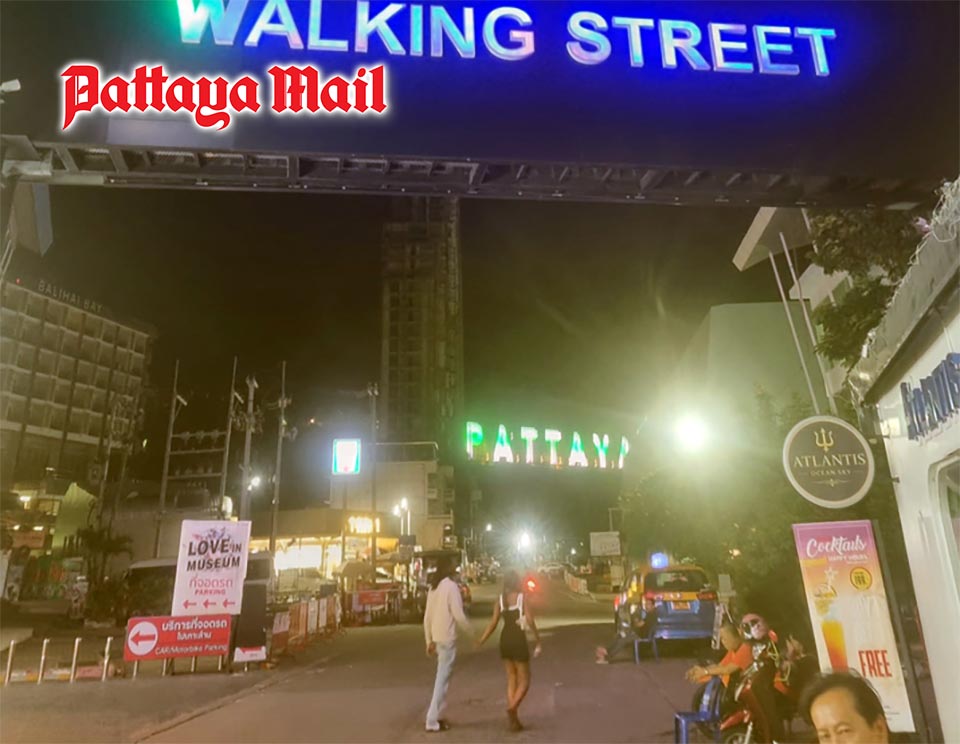
PATTAYA, Thailand – A discussion over unusually quiet streets in Pattaya has reignited a familiar question: is the city simply experiencing its traditional low season, or are deeper changes taking place in its tourism market? Photos showing relatively empty streets around the rear end of Walking Street prompted a flood of comments online, with residents and visitors offering sharply different explanations for the lack of crowds.
Some argued that the location shown was not representative of Pattaya’s main nightlife areas, pointing out that the back streets behind Walking Street can be considerably quieter and that the busiest period traditionally comes later at night. Others blamed the seasonal slowdown, saying Pattaya normally sees fewer visitors during the rainy season before international arrivals pick up toward the end of the year. Some commenters also pointed to the expected arrival of US Navy personnel in early September as a sign that the city could quickly become busier. But not everyone was convinced.
Several comments expressed concern that Pattaya no longer feels as lively or attractive as it once did. Some blamed negative publicity surrounding fights, theft, harassment and other incidents involving tourists, arguing that safety concerns could discourage visitors who are looking for a peaceful holiday. That criticism deserves attention.
Pattaya cannot afford to dismiss every quiet street as simply “low season.” Seasonal fluctuations are normal, but tourism is increasingly competitive. Visitors have more destinations to choose from, and perceptions of safety, cleanliness, value and overall experience can influence where they spend their holidays.
There was also criticism of the changing mix of visitors, with some commenters complaining about particular nationalities or groups. Such comments should not be allowed to become a substitute for serious tourism analysis. Pattaya’s challenge is not about excluding people based on nationality. It is about attracting visitors who respect Thai laws and local communities while ensuring that everyone who comes to the city can enjoy it safely.
The debate also highlights another problem: Pattaya often measures success by how many tourists arrive rather than by the quality of the experience they receive. A crowded Walking Street may look impressive, but the real test is whether visitors stay longer, spend money across the city, return again and recommend Pattaya to others.
City officials, tourism authorities and businesses therefore need to look beyond headline visitor numbers. They should be asking why certain areas remain quiet, why some businesses struggle outside peak hours and what makes visitors choose Pattaya over competing destinations.
Low season will eventually end. More tourists will arrive, nightlife will become busier and the familiar crowds will return. But that should not end the conversation.
If Pattaya wants to remain one of Thailand’s leading tourism destinations, it needs to ensure that the city is not merely busy, but safe, welcoming, clean, well-managed and worth returning to.
Empty streets may be seasonal. The questions they raise about Pattaya’s tourism future are not.