PATTAYA, Thailand – For five days, the arrival of around 5,000 US Navy personnel from the USS Abraham Lincoln gave Pattaya something the city always welcomes during the low season — attention, crowds and spending. But now that the sailors are preparing to leave, the bigger question is not how much excitement their arrival generated. It is what Pattaya actually learned from their visit and what the city has left to rely on once the ship sails away.
There was plenty of anticipation before the sailors came ashore. Social media was filled with images of Pattaya preparing for the arrival, businesses hoping for a windfall and speculation about how the American visitors would spend their shore leave. But the reality on the ground appeared more complicated.
The new generation of American sailors does not necessarily arrive in Pattaya looking for the same experience associated with the Vietnam-era GI generation. The stereotype of young American servicemen coming to Pattaya primarily to drink, party and pursue relationships with Thai women belongs increasingly to another era. Today’s young sailors are more likely to be seen shopping, eating, visiting cafés, taking photographs and producing social-media content. They still enjoy nightlife, but a night out does not automatically mean sitting in a beer bar looking for romance. For many, it means going to a club, listening to music, dancing and sharing the experience online.
That matters because it changes what Pattaya is selling.
Shopping appears to have been an important part of the visit. Workers at shopping centers reported strong sales, with some sailors deliberately buying goods to take home. Restaurants and cafés also benefited. The younger generation’s appetite for places that look good in photographs and videos gives Pattaya another opportunity to capture spending beyond its traditional nightlife economy. But this also exposes an uncomfortable truth. Five thousand visitors do not automatically mean five thousand major economic contributors spread evenly across Pattaya.
The money was concentrated in particular shopping centers, restaurants, entertainment venues, hotels and other businesses. Some operators benefited substantially. Others may barely have noticed the visit. That is not a criticism of the sailors. It is a reminder that Pattaya’s tourism economy is far more fragmented than the headline figure of 5,000 visitors suggests. And there is another issue that should not be ignored. The excitement surrounding the USS Abraham Lincoln visit was enormous online, but the reaction among many people actually living and working in Pattaya was considerably more subdued. For many local businesses, life simply continued.
They served their regular customers, dealt with the usual traffic and continued competing for tourists. The arrival of American sailors was welcome additional business, but it was not enough to transform the entire city. And once the sailors leave, Pattaya does not suddenly become a different tourism destination. The city still has to deal with the same challenges it had before the ship arrived — a low season, changing tourist behavior, strong competition between businesses and an increasingly important Indian market. That last point is particularly interesting.
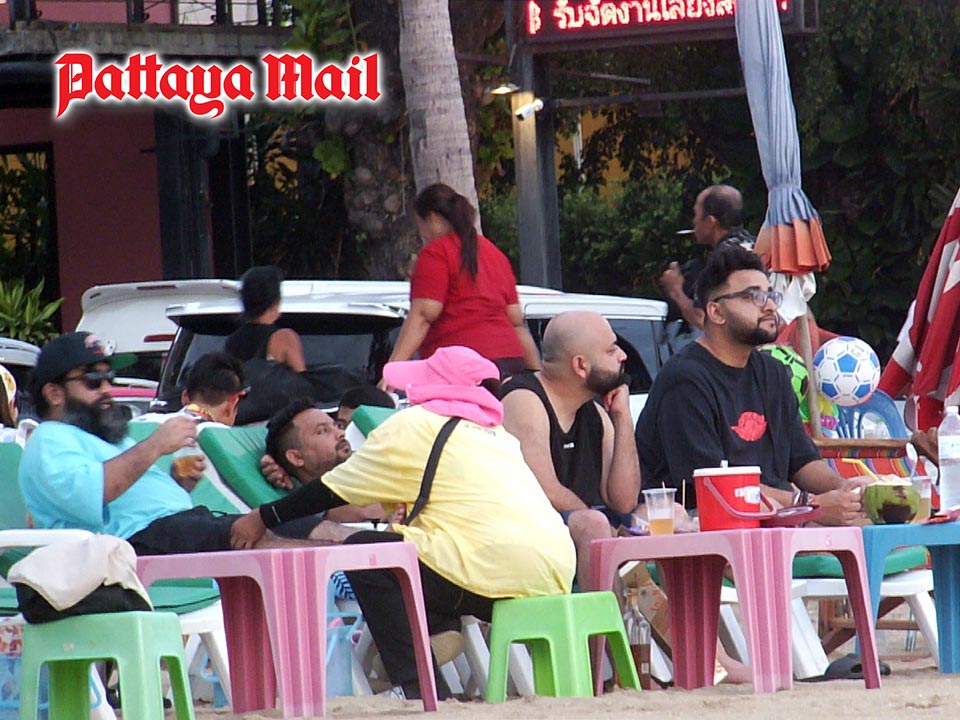
While Pattaya was focused on the arrival of 5,000 American sailors, businesses on the ground continued dealing with the much larger and more permanent flow of tourists from India. Whether individual businesses like that market or not, Indian visitors are becoming an increasingly visible part of Pattaya’s tourism landscape. Unlike a naval visit lasting five days, they represent a continuing source of customers that businesses have to understand, accommodate and compete for. That is perhaps the biggest lesson from the USS Abraham Lincoln visit. Pattaya should welcome every visitor — but it cannot build its tourism future around occasional waves of visitors.
A US Navy ship can bring thousands of people into the area at once. A major international event can do the same. A holiday period can suddenly fill hotels and entertainment venues. But those are temporary injections. When the ship leaves Laem Chabang, Pattaya is still Pattaya. The beaches remain. The restaurants remain. The hotels remain. The nightlife remains. And the businesses remain dependent on the next wave of tourists walking through their doors.
If the USS Abraham Lincoln returns next year, the city will probably get excited all over again. Social media will fill with photographs, businesses will prepare promotions and the arrival of thousands of young American sailors will once again become a major talking point. And there is nothing wrong with that. But perhaps the real question for Pattaya is not “How many tourists can we bring here?” It is: “Why should they come back after the five-day visit is over?” That is the challenge Pattaya cannot solve with a visiting aircraft carrier.