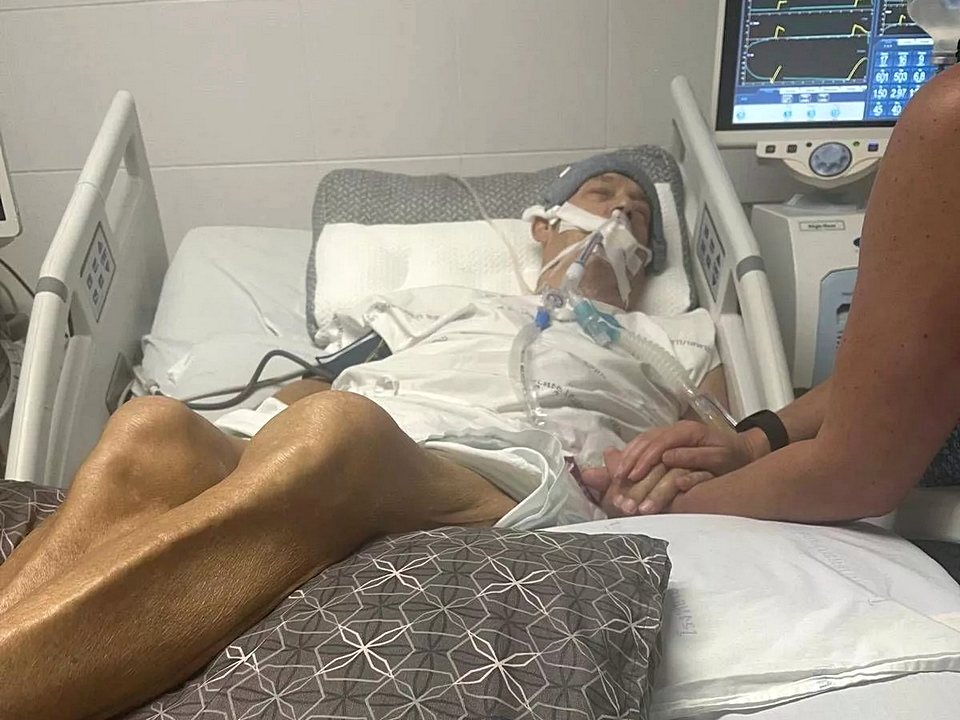
Alexander Parker, a 73-yearold Scot, lies immobile in a Thai provincial government hospital with suspected blood cancers or lymphoma. Neither he nor his UK-based family apparently have the funds for full-scale treatment and surgery in a top-notch Thai private hospital such as Bangkok Hospital Chanthaburi. Even the bills in the current government facility are mounting at around 21,000 baht or 500 pounds a day, with family members seemingly encouraged to learn about feeding tubes and changing dressings.
Mr Parker’s daughter Jayne Simpson said the only answer was to move father by air ambulance to a UK hospital with an anticipated cost of about 30,000 pounds. However, Sky Care International was quoted as estimating the typical cost would likely be at least 85,000 pounds for a full-scale medical evacuation. Mr Parker is too ill to take the far less expensive option of a scheduled flight with one or two medical personnel in attendance.
Like all distressed families, members have approached the British embassy in Bangkok for assistance. But the diplomatic post cannot pay medical bills and their contact with hospital authorities has not so far led to the patient being moved to a better public facility in the Chanthaburi region, a four hour drive from Bangkok. Thai hospitals are very reluctant to move patients to more expensive premises unless the extra cash is obviously available.
Mr Parker was medically uninsured. He is a former Royal Fleet Auxiliary serviceman with substantial experience in foreign fields, but the Royal British Legion has stated that they are unable to pay medical bills from their grants, but can assist with ancillary services and detailed advice. A GoFundMe appeal has been launched in the UK and has, so far, raised just over 8,000 pounds. This is a typical amount for hospitalized Brits.
Most foreigners in Thailand are not required to have medical insurance even for longstay permits such as the five year Destination Thailand Visa or the Privilege Card for 5-20 years, both of which do require a cash bond on application. In recent years, private hospitals have refused to treat foreign patients without insurance or sizeable cash funds, whilst the cheaper public hospitals are not always able to provide the same quality of care in serious cases.
So far in 2025, according to AI assisted research, 26 ill Brits have sought crowd funding to pay medical bills with average donations totalling under 10,000 pounds per case. Thai governments have resisted requiring medical insurance for all visitors unless neighbors competing for tourists – Cambodia, the Philippines and Vietnam – do the same. Meanwhile, foreigners feel relaxed about the statistics that fewer than one percent of travellers require inpatient treatment whilst in a foreign country. They are assuming that serious illness abroad affects only other people. Sadly, not always true.