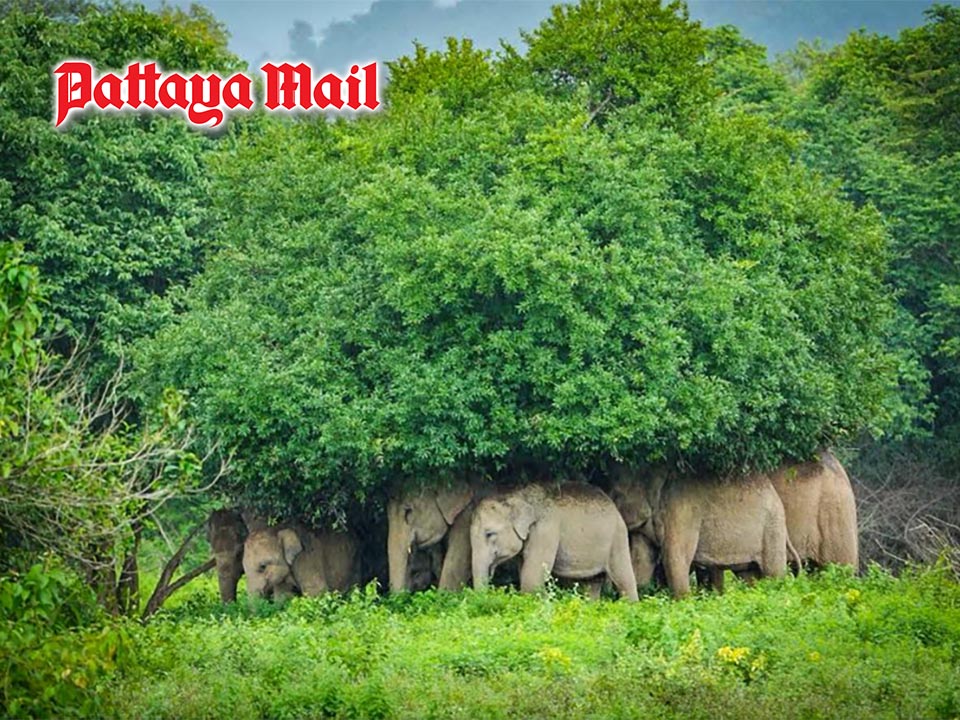
PRACHUAP KHIRI KHAN, Thailand – A heartwarming image of a large herd of wild elephants gathering beneath a big tree to shelter from the rain at Kui Buri National Park has gone viral, prompting a simple question: why do wild elephants hide from rain? Thailand’s Department of National Parks, Wildlife and Plant Conservation has explained that the behaviour is more than an adorable moment. It reflects how elephants manage their body temperature and protect members of their herd.
Elephant skin is not completely waterproof
Although elephant skin can be 2–3 centimetres thick, it contains numerous wrinkles and cracks that can retain moisture. Prolonged exposure to rain can cause elephants to lose body heat more quickly, particularly young calves that are less capable of regulating their body temperature than adults.
Elephants rely on their surroundings to regulate heat
Elephants do not have sweat glands and rely on their ears, blood vessels beneath the skin and various behaviours to regulate body temperature. They may spray themselves with water, bathe in mud or seek shade when conditions require it. Taking shelter beneath a large tree during heavy rain is another natural way for elephants to maintain a comfortable body temperature.
The herd protects its youngest members
Wild elephants live in family groups, generally led by an adult female. The herd’s social behaviour also plays an important role in protecting its members. Adult elephants can position younger calves towards the centre of the group, helping shield them from weather conditions as well as potential dangers in their surroundings. The viral image of the Kui Buri elephants gathered beneath one tree therefore offers a glimpse of the herd’s natural social behaviour rather than a random gathering.
Large trees provide shelter for wildlife
Trees with dense canopies provide more than shade from strong sunlight. They can also offer protection from rain and wind, making mature trees an important part of the habitat used by wildlife. The National Parks Department said the image is a reminder of the importance of healthy forests and ecosystems in supporting wildlife throughout changing weather conditions.
Kui Buri National Park continues to protect the habitat of wild elephants and the wider forest ecosystem on which they depend.
Source: Department of National Parks, Wildlife and Plant Conservation