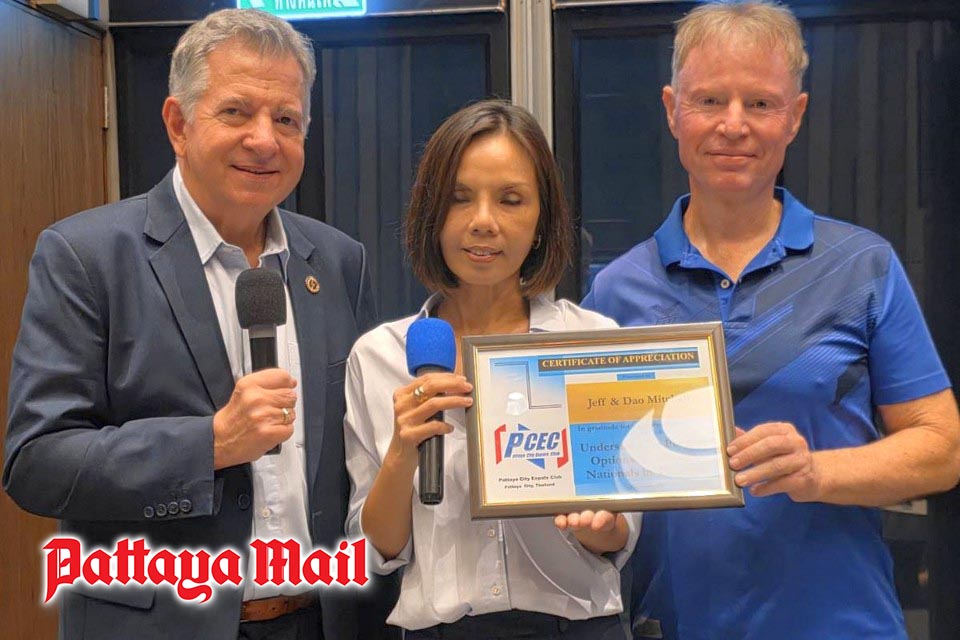
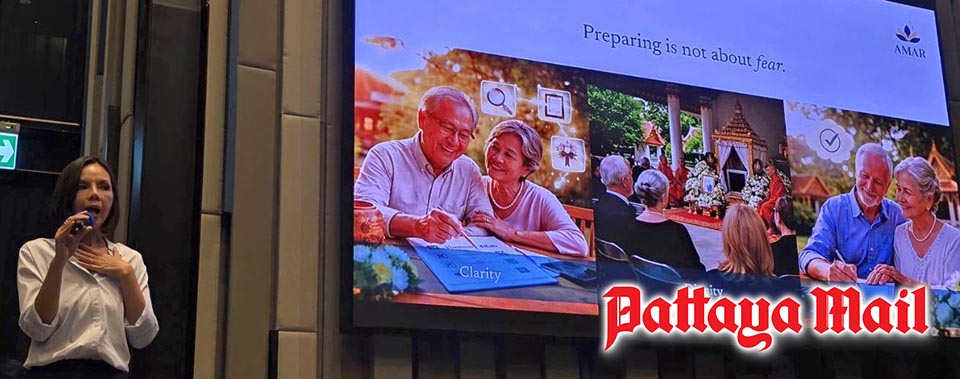
PATTAYA, Thailand – On 21 October, Jeff and Dao Mitchell, from AMAR Assistance, gave a presentation to the Pattaya City Expats Club on funeral options for foreigners in Thailand, offering practical advice on what families should do when a foreign resident dies and how advance planning can prevent delays, unexpected costs and disputes.
The speakers said arranging a funeral is difficult in any country, but foreign residents in Thailand may also face language barriers, unfamiliar customs and a process involving police, hospitals, district offices, embassies and funeral providers. Jeff warned that even a spelling error on a death certificate can create serious complications, particularly if a family begins the process without experienced guidance.
Their central recommendation was to plan before an emergency. Dao said people should discuss death openly and record their wishes for cremation or burial, religious observances, viewing of the body, clothing, photographs, the funeral’s size and style, and the eventual handling of ashes. Clear instructions, she said, preserve dignity and relieve relatives from having to guess or argue during a period of grief.
Jeff and Dao also discussed prepaid funeral plans, emphasizing that the written agreement can be as important as the money paid. A plan can provide a “script” for the funeral and identify the provider responsible for carrying it out. They said clients should understand payment arrangements, cancellation terms, geographical limits and what happens if death occurs outside Thailand.
For a death at home or outside a medical facility, the speakers advised calling police rather than personally transporting the deceased to a hospital. Police normally investigate and arrange the initial transfer to a mortuary. Because Pattaya has no forensic institute, the body may be sent to Bangkok for an autopsy, although Jeff cautioned that individual cases can vary.
After the authorities complete the required notifications, an embassy may need to issue authorization before a funeral company can take full control of the case. The provider can then help register the death, obtain documents, arrange return transport from Bangkok, organize a local cremation or burial, or coordinate international repatriation.
Repatriating a body requires a funeral home in the destination country to act as consignee and receive the remains. Ashes can often be hand-carried abroad with supporting documentation, while postal and air-cargo requirements depend on the destination country. The speakers advised families not to assume that ashes can simply be mailed without customs paperwork.
The presentation also highlighted the different procedures used by foreign governments. Dao said an American death is registered in Thailand before translated and legalized documents are submitted to the U.S. Embassy for a Consular Report of Death Abroad. British families follow the appropriate UK government process using the Thai death documentation.
Audience members asked about religious services, next-of-kin rights, body donation and people who die without relatives. The speakers said Christian and Muslim elements can often be incorporated into ceremonies at Thai temples, whereas some churches may require proof of baptism in that faith or regular attendance. Anyone wishing to donate a body for medical education should register with an accepting hospital in advance.
The couple also warned unmarried partners that years spent caring for someone may not give them legal authority after death. Embassies and officials may instead defer to a legally recognized next of kin, including an estranged relative overseas. They advised residents to review their wills, executors, property arrangements and decision-making authority with a qualified lawyer, noting that funeral providers do not handle probate or estate law.
Jeff and Dao closed with the message that funerals are not only about the deceased; they also give relatives and friends an opportunity to gather, grieve and offer support. Their advice to expatriates was to document their preferences, confirm who has authority to act, keep embassy and insurance information accessible, and ensure trusted people know which funeral provider to contact.
Following the presentations, MC Ren Lexander brought everyone up to date on upcoming Club events followed by the Open Forum portion of the meeting where questions are asked and comments made about Expat living in Thailand, especially Pattaya. To learn more about the PCEC, visit their website at https:/pcec.club. A video of the presentation will be uploaded to the PCEC’s YouTube Channel at https://www.youtube.com/@pcecclub6255/videos.