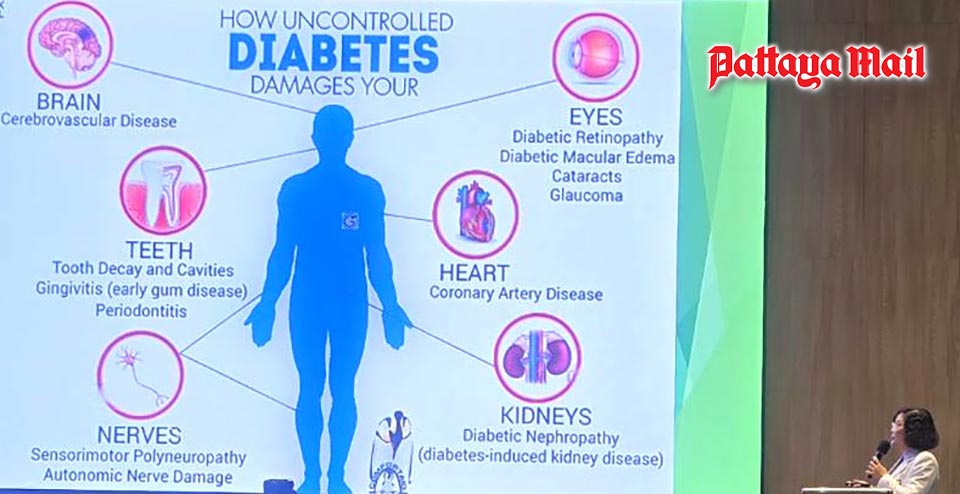
PATTAYA, Thailand – Members and guests of the Pattaya City Expats Club received a detailed briefing on diabetes prevention, treatment and diet when two specialists from Bangkok Hospital Pattaya (BHP) addressed the club’s weekly meeting on Wednesday, August 26.
Dr. Karnsiree Pariyakorn, an endocrinologist at BHP, opened the presentation with an overview of diabetes mellitus, describing it as a growing non-communicable disease driven by prolonged high blood sugar. She explained that diabetes can occur when the body does not produce enough insulin, when cells do not respond properly to insulin, or through a combination of both problems.
Although Dr. Karnsiree reviewed several types of diabetes, including type 1, gestational diabetes and diabetes caused by other medical conditions or medications, she focused mainly on type 2 diabetes, the most common form. She said risk factors include sedentary lifestyles, excessive food intake, being overweight or obese, chronic stress, family history, ageing, high blood pressure, abnormal cholesterol and physical inactivity.
She urged those at risk to be alert for symptoms such as excessive thirst, frequent urination, fatigue, unexplained weight loss, slow wound healing and tingling or burning sensations in the hands and feet. Screening, she said, is especially important for adults aged 35 and older, people who are overweight or obese with additional risk factors, those with a history of prediabetes, women who have had gestational diabetes and children with obesity-related risks.
A central message of the presentation was that lifestyle change remains one of the most powerful tools for preventing or managing diabetes. Dr. Karnsiree recommended losing 5 to 7 percent of baseline body weight for those who are overweight, engaging in at least 150 minutes of physical activity each week, reducing processed foods and sugary drinks, limiting alcohol and stopping smoking.
She also discussed medications used in diabetes care, including metformin for selected people with prediabetes and newer GLP-1 receptor agonists such as semaglutide and tirzepatide for weight management and diabetes-related risk reduction. She noted that treatment goals should be individualized, but that many adults with diabetes are advised to aim for an A1c below 7 percent, fasting blood glucose of about 80 to 130 mg/dL and blood pressure below 130/80 mmHg.
Dietician Nadia Sriadulphan followed with practical advice on everyday eating habits. She emphasized that people do not need to give up all of their favorite foods but should make healthier choices more often and pay close attention to portions, especially when eating carbohydrates such as rice, bread, pasta, potatoes, oats and fruit.
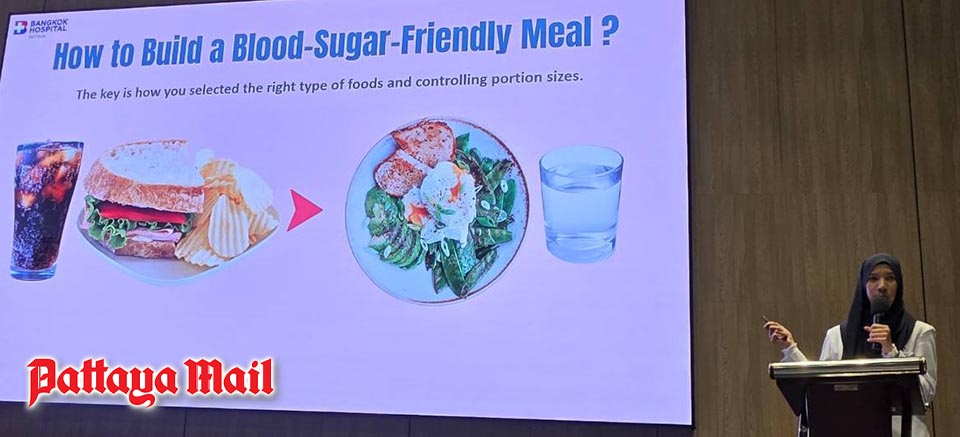
Nadia recommended the diabetes plate method: filling half the plate with high-fiber vegetables, one quarter with lean protein and one quarter with whole grains or other quality carbohydrates. She encouraged pairing carbohydrates with protein, fiber or healthy fats to slow the rise in blood sugar, such as eating fruit with Greek yogurt or rice with fish and vegetables.
She also warned members about so-called “healthy food traps,” including granola, smoothies, fruit juice and nuts, which can still contain large amounts of sugar, calories or concentrated carbohydrates if eaten or drunk in large portions. Her suggested swaps included water instead of soft drinks, grilled chicken instead of fried chicken, brown bread instead of white bread and yogurt with fruit instead of ice cream.
During the question-and-answer session, attendees raised concerns about the cost of diabetes medications such as Ozempic, the role of bariatric surgery, artificial sweeteners, milk and yogurt portions, alcohol consumption, phone apps that claim to measure blood sugar and whether white rice can remain part of a balanced diet.

In response to a question about a person with diabetes losing consciousness, Dr. Karnsiree advised that food or drink should not be given to an unconscious person because of the risk of aspiration. Instead, emergency help should be called, the person’s airway kept safe and blood sugar checked if a glucometer or continuous glucose monitor is available.
The overall message from both speakers was that diabetes prevention and management are built on consistent daily habits rather than perfection. Balanced meals, controlled portions, regular movement, medical monitoring and appropriate medication when needed can make a meaningful difference in long-term health.
Following the presentations, MC Ren Lexander brought everyone up to date on upcoming Club events followed by the Open Forum portion of the meeting where questions are asked and comments made about Expat living in Thailand, especially Pattaya. To learn more about the PCEC, visit their website at https:/pcec.club. A video of the presentation will be uploaded to the PCEC’s YouTube Channel at https://www.youtube.com/@pcecclub6255/videos.