A 60 days remembrance
Today marks sixty days since Barry Kenyon left us. On the evening of October 18, Barry was fatally injured in a tragic road accident on Thappraya Road in Pattaya while crossing the street on foot. His passing was sudden, shocking, and deeply felt across the expatriate and local communities alike. For many, Barry was a familiar byline, a respected commentator, and a trusted voice of reason. For others, he was a colleague, a confidant, or a guide. For me, he was all of those and something more.
More than a writer
Barry Kenyon was widely known for his long-standing contributions to Pattaya Mail and other publications, where his writing consistently reflected clarity, fairness, and an unflinching commitment to facts. He had the rare ability to explain complex issues law, policy, bureaucracy, community tensions without sensationalism. His articles did not shout. They explained. They contextualized. They respected the reader. Yet to reduce Barry to “a journalist” would be to miss the essence of who he was. Barry was a bridge. He stood at the intersection of cultures, institutions, and generations linking expatriates with local realities, and authorities with the lived experience of foreign residents. He understood Thailand deeply, not as a visitor passing through, but as someone who had listened carefully for many years.
Our conversations
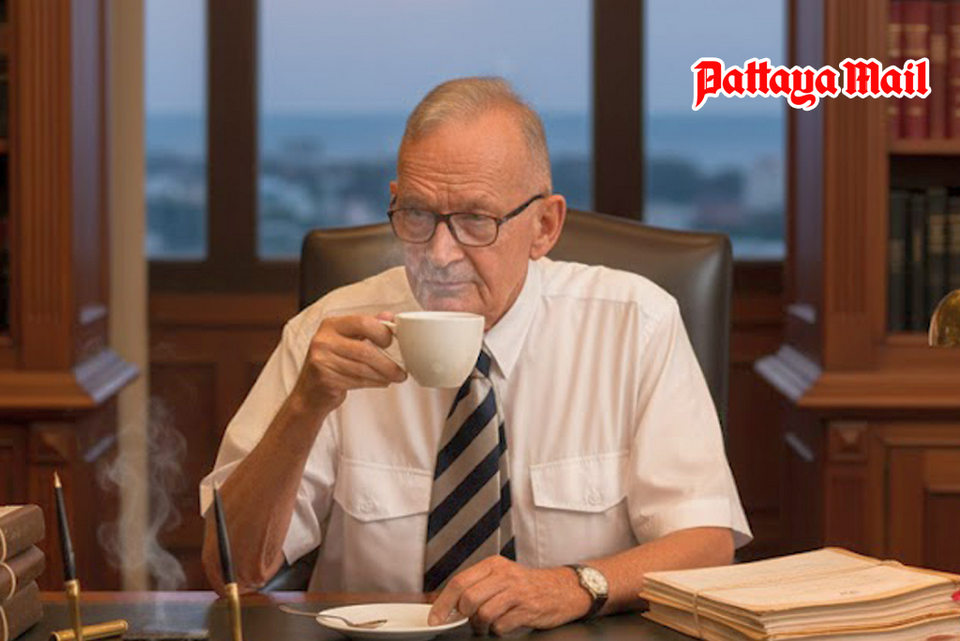
My relationship with Barry went beyond published articles. He would often message or call me three or four days in advance. He always had a topic in mind. Sometimes it was tax. Sometimes immigration. Sometimes a policy shift that had gone unnoticed. He would say, “I’d like to talk this through with you,” and we would set a time. When Barry came to my office, there was a ritual. We always began with hot black coffee. Every time, without exception, he would take a sip, smile slightly, and say, “This coffee is good.” Then the conversation would begin.
Those discussions were never rushed. Barry listened carefully, asked precise questions, and challenged assumptions without confrontation. He was not interested in headlines he was interested in understanding. Many of those conversations later became articles. Others simply became ideas that stayed with me. At one point, Barry said something that meant a great deal to me. He said, “We used to write separately. Now I come to interview you. Next time, we’ll put both our names on the same article.” That “next time” never came.
A mentor without formal titles
Barry never called himself a mentor. He didn’t need to. He taught by example how to navigate professional relationships, how to build networks without arrogance, how to speak firmly without hostility. He showed that credibility is built over years, not clicks, and that integrity is something readers feel even when they don’t consciously name it. For younger writers and professionals, Barry was proof that influence does not require noise. It requires consistency. For expatriates, he was often the first voice that articulated what many felt but struggled to express particularly around long-term residency, legal uncertainty, and the quiet anxieties of growing older in a foreign country.
His broader role
Beyond journalism, Barry’s role in the community extended into diplomacy and civic engagement. He had served as an honorary consul and remained deeply involved in community affairs long after formal titles ended. He understood institutions from the inside, but he never lost empathy for individuals navigating them. That balance institutional knowledge paired with human concern defined his work. When Barry raised concerns in print, it was never to inflame. It was to warn early, to encourage dialogue, and to prevent harm before it became irreversible.
The night he left
On the night of October 18, Barry was simply walking as he had done countless times before. There was no drama, no warning. Just an ordinary moment that ended extraordinarily badly. His death was not only tragic; it was symbolic of something fragile how quickly a familiar presence can disappear, and how much quieter a community becomes afterward. In the days that followed, messages arrived from readers, colleagues, officials, and friends. Many said the same thing in different words: “He helped me understand.” That is a rare legacy.
What remains
Barry is no longer here to ask the next question, to drop by the office, or to comment calmly when others rush to judgment. But his influence remains in the standards he set, in the conversations he shaped, and in the many people who learned, quietly, from watching how he worked. For me personally, his absence is felt most in the small things: the advance message with a topic, the chair across my desk, the shared coffee. We never did put both our names on the same article. But in many ways, this one is ours. Barry once told me that good writing is not about being remembered it is about leaving something useful behind. By that measure, his work will endure.
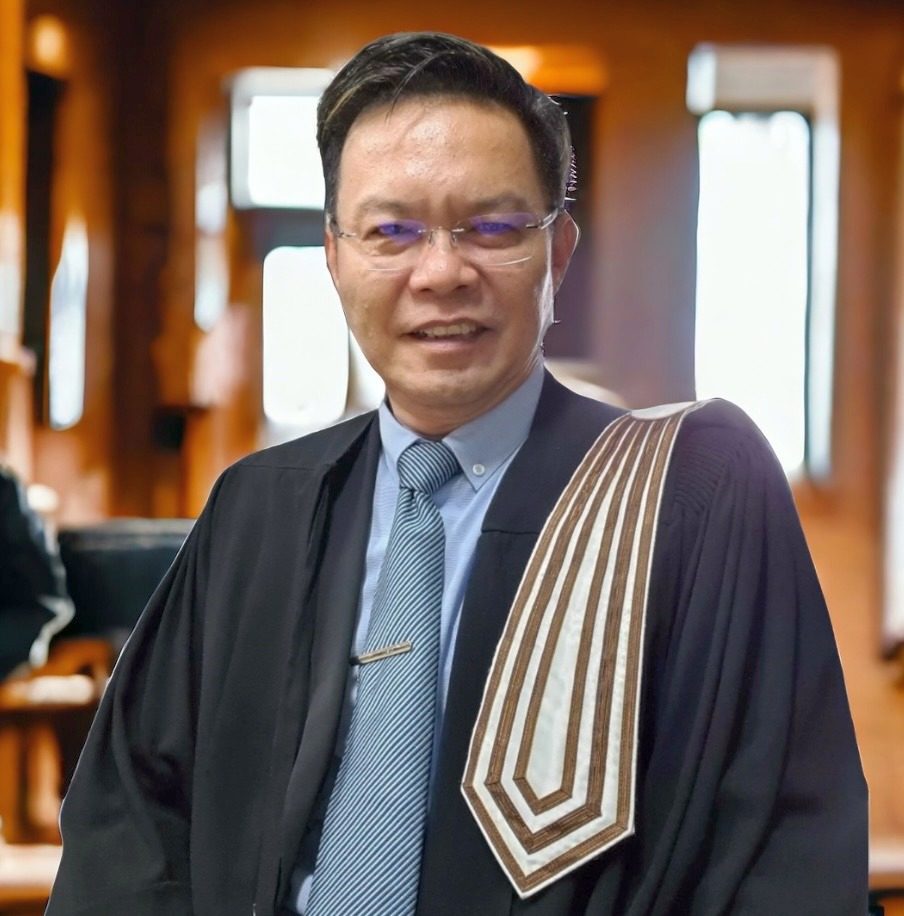 Victor Wong (Peerasan Wongsri)
Victor Law Pattaya/Finance & Tax Expert
Email: <[email protected]> Tel. 062-8795414