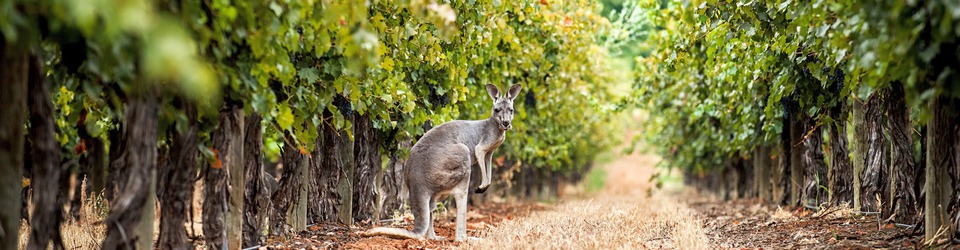
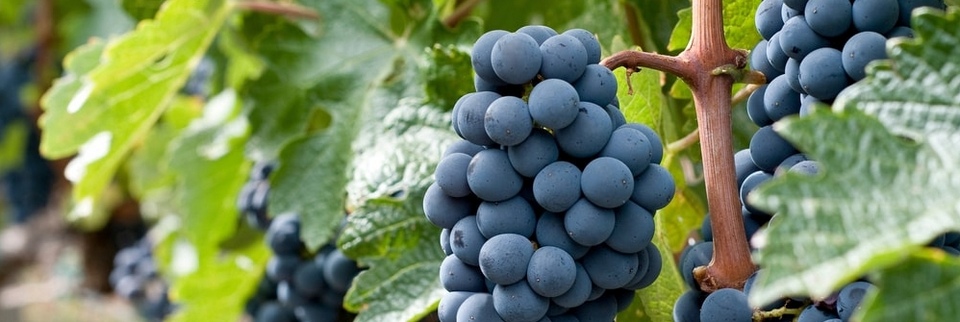
Merlot (MER-loh) is the only wine grape variety (as far as I know) that’s named after a bird. To be more precise, it’s named after the blackbird, which in French is merle. In a local dialect, merlot means a “young blackbird” and they evidently enjoy eating the grapes on the vine, no doubt to the irritation of the growers. The name could also be derived from the grape’s colour: a greyish blue-black like that of some young blackbirds, whose colour changes to a rich black as the birds become older. The large Merlot grapes grow in loose bunches and ripen a couple of weeks earlier than Cabernet Sauvignon with which they are often blended.
The world’s finest “classic” Merlot comes from Bordeaux, especially on the right bank of the River Gironde in communes such as St. Emilion, Pomerol and Fronsac. Along with Cabernet Sauvignon, Cabernet Franc, Malbec and Petit Verdot, Merlot is one of the primary grapes used in Bordeaux wine, or “claret” as it was traditionally known in Britain. Even today, some of the old-established wine merchants in Britain still use the word “claret” in their catalogues.
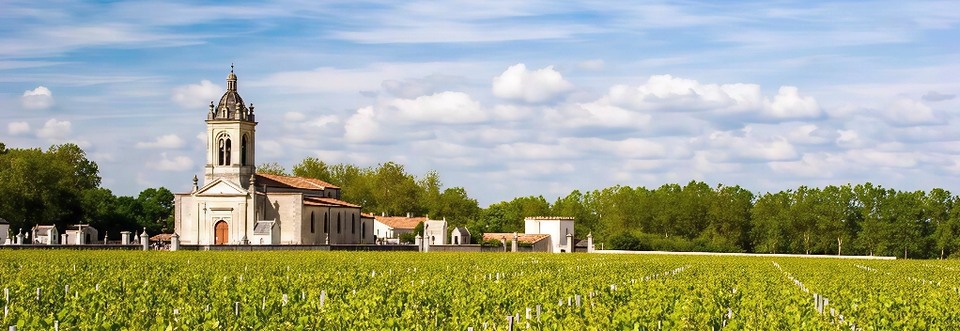
At the risk of over-simplifying things, there are two basic styles of Merlot. This is important because you might really enjoy one style, but feel completely indifferent to the other. It’s slightly more complicated because there is considerable variation within each style. You just need to remember that warm-climate Merlot favours late harvesting, thus emphasizing ripeness and producing full-bodied wines that are sometimes high in alcohol with velvety tannins and rich flavours of black fruit. If this sounds like your style, try a Merlot from Australia or Chile. In contrast, cool-climate Merlot (sometimes known as “Bordeaux style”) involves harvesting the Merlot grapes earlier. This retains more acidity and tannins and produces lighter wines that have fresh, red fruit flavours and sometimes a distinctive earthy, elemental quality. Although there are some notable exceptions, most French Merlots have this kind of taste profile.
The difference between the two Merlot styles becomes significant when you want to pair the wine with food. Generally, cool-climate Merlot works well with food with high levels of umami (savory) and salt flavours, such as mushroom dishes and sauces, bacon or pizza. It also makes a good partner pork chops, roasted vegetables and many light cheeses.
Warm climate Merlot makes a good partner for “heavier” food that’s high in fat and has rich flavours such as prime rib, grilled lamb chops, beef stew or roast duck. The fruity quality makes it an excellent partner for strong blue cheeses. Don’t pair it with acidic foods such as vinaigrettes or lemon sauces. Avoid warm-climate Merlot with fish, leafy greens or light dishes because it will usually overwhelm their flavours. There are exceptions of course. A light cool-climate Merlot could complement “meaty” seafood such as grilled swordfish or tuna. As I have so often said, there are no hard-and-fast “rules” about wine-food pairing, because it is partly subjective and partly common sense, but generally avoid pairing flavours that clash. Contrast between food and wine is fine, but not competition.
Coucou Merlot 2022 Pays d’Oc IGP, France. Bt 499 @ Tops.
Tops Supermarkets have an increasingly interesting selection of table wine at popular price levels. As you may recall, Tops is operated in Thailand by Central Food Retail, a subsidiary of Central Retail Corporation. It’s the largest supermarket chain in Thailand and operates 235 stores nationwide. The larger branches have a wide and interesting selection of wines and spirits.
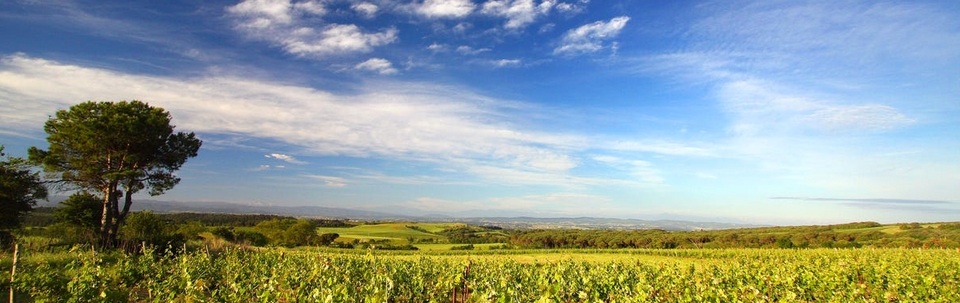
This is a typical cool-climate Merlot. Wine-maker Laurent Gauzi writes, “I was born in a vine-covered amphitheatre by the Mediterranean Sea. While I was studying to be a pharmacist, a wine tasting awakened the oenologist within me. I began by developing new wines for the largest French winemaker…I believe that the art of blending can elevate a terroir.” He is right. With many wines – and even the great wines of Bordeaux – the secret lies in the blending. And incidentally, the French word terroir is a catch-all term to describe the grape-growing environment and refers to local geography, soil composition, microclimate, exposure to sunlight and all the other factors that influence the grapes. The word terroir has no single-word equivalent in English and many wine experts are in hot disagreement about the exact definition.
Let’s decode the label, though it won’t take long. The word coucou hardly needs translation. If you need a hint, it’s a small bird. In ornithological circles, it’s known as Cuculus canorus. The expression Pays d’Oc tells us that the wine comes from the sprawling Languedoc-Roussillon region along the southern coast of France with its sunny Mediterranean climate and cool sea breezes. Pays means “countryside” and the odd-looking word d’Oc refers to the ancient local dialect in which oc means “yes”. It’s known as Languedocien and spoken in rural parts of southern and south-western France. Finally, IGP stands for Indication Géographique Protégée which is a guaranteed designation of origin.
This is the sort of everyday wine you’d fine in any decent French bistro. The fruit is reserved but there’s plenty of crisp, dry tannin. The wine is a rich, dark red and if you swirl it around your glass, you’ll see those typical “legs” appear on the inside of the glass, produced by warm temperatures and relatively high alcohol. This wine comes at 13% ABV and has the characteristic light Merlot aroma of red fruit and pleasing secondary aromas of herbs and white pepper. I thought there’s a suggestion of mint too and that elemental earthiness that so often comes with Merlot. I get the impression that the Merlot has been blended with something else, possibly Carignan though it doesn’t say so on the label.
On the palate, there’s a pleasing roundness, touches of spice and red fruit which is well balanced with the tannins. There’s a long, dry finish too, with the soft tannins producing a satisfying firm framework. The makers suggest a serving temperature of 12-16°C but I think that might feel uncomfortably chilly and therefore too tannic in our tropical climate. I could happily enjoy this wine at the ambient temperature and it would make an excellent partner for most red meat dishes. It would work well with pasta and pizza too, unless you are a purist and insist on drinking Italian wines with these popular dishes. It would even enhance a lowly beefburger, especially one with a rich mushroom sauce.
Deakin Estate Merlot, Australia Bt 650 @ Wine Connection.
In contrast, here’s a typical warm-climate Merlot. Wine Connection always have an interesting selection of quality wines and invariably have special offers available. There are over eighty outlets Thailand and Singapore and three branches in Pattaya.
The well-known winery Deakin Estate lies in the Big Rivers region of south-east Australia, a grape-growing zone in New South Wales. On the map, it’s down near the right-hand corner of the country. This wine is a subdued maroon-red and, like the Coucou you’ll notice “legs” appearing on the sides of the glass when it’s swirled around. The aroma is typical warm-climate Merlot: plenty of rich cherry on the nose with secondary reminders of herbs, mint and sweet dark fruit. The wine is remarkably smooth; dry of course but plenty of plummy fruit and a pleasing dash of acidity which helps to brighten the taste. Warm-climate Merlot can sometimes be rather heavy, but even at 13.5% ABV this one is pleasantly medium-bodied. As a bonus, the wine has an attractive long and dry finish.

The wine is far less commercial than I was expecting and the wine-makers have produced a classy little wine for the price: an easy drinker with something to say. It would make a fine partner for foods which are fairly substantial, such as roasts, grills or pasta in a hearty sauce.
And by the way, because Merlot is grown in many different parts of the world, it has acquired dozens of synonyms. Its alternative names include Bidal, Bini Ruzh, Crabutet, Langon, Lecchumskij, Pikard and the somewhat daunting Odzhaleshi Legkhumskii. And in case you are wondering, it comes from Georgia in Eastern Europe. Georgia is considered one of the very oldest wine-producing countries in the world: they’ve been making wine there for at least 8,000 years. I bet you didn’t know that.