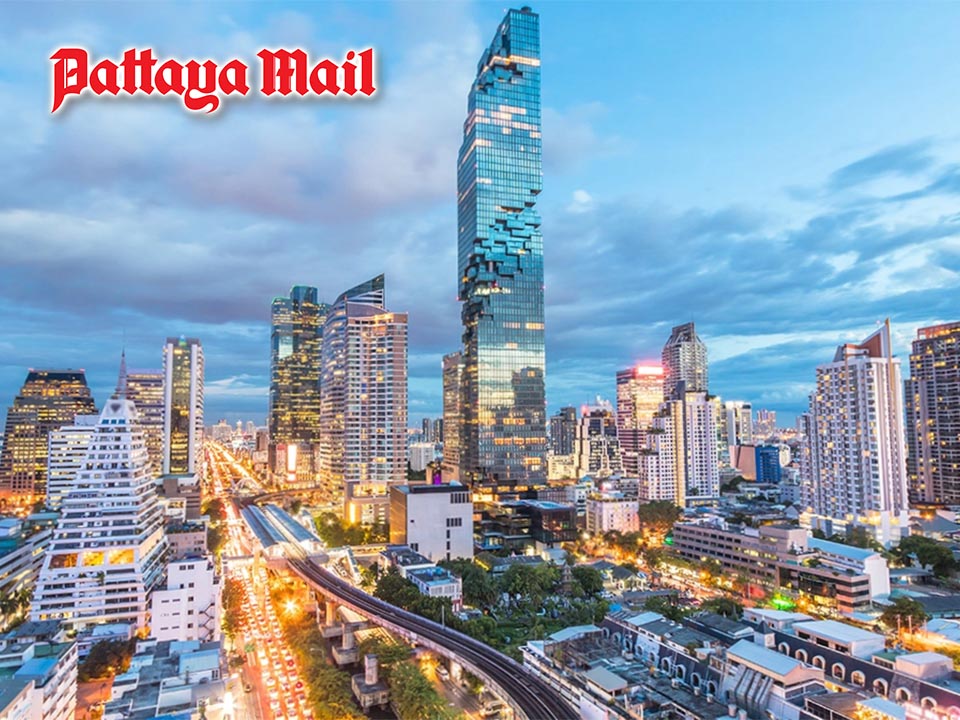
BANGKOK, Thailand – Thailand’s ambition to become a high-income economy by 2037 will depend heavily on its cities, but the country cannot rely on Bangkok alone to drive future growth, according to a new World Bank report. The report, “Thailand Cities of the Future: Urban Foundations for a High-Income Economy,” says around 89% of Thailand’s GDP growth between 2010 and 2020 came from urban districts, making cities central to the country’s economic future.
Yet Thailand’s urban economy remains heavily concentrated in Bangkok. The capital generates close to half of national economic output and is nearly 27 times larger than Chiang Mai, the country’s second-largest city. The World Bank says this concentration helped support Thailand’s development, but the costs are rising. Congestion alone is estimated to cost Bangkok between 7% and 10% of its gross regional product each year, while climate risks and pressure on infrastructure are adding further costs. At the same time, secondary cities have significant unrealized potential.
Thailand needs faster growth
The challenge is particularly significant because Thailand’s economic growth remains below the level required to reach high-income status. The World Bank estimates that real GDP per capita grew by about 2.2% annually between 2021 and 2024. To reach high-income status by 2037, Thailand would need average annual GDP-per-capita growth of around 5.4% over the coming decade.
That gap makes productivity, investment and job creation in Thailand’s cities increasingly important.
Stephen N. Ndegwa, World Bank Division Director for Thailand and Myanmar, said building future cities was not simply an urban-planning issue but one involving growth, competitiveness, jobs and resilience. He said unlocking the potential of secondary cities and giving them stronger economic roles that complement Bangkok would be central to Thailand’s next phase of growth.
Bangkok still has a central role
The World Bank is not calling for Bangkok to be weakened or replaced. Instead, its report proposes a stronger network of cities, with Bangkok continuing to serve as the country’s main economic anchor while selected secondary cities develop complementary roles. The report identifies five ingredients for a stronger multi-city system: complementary economic specialization, productive density, strong connectivity, resilient infrastructure and effective institutions.
Under the proposed approach, Bangkok would continue developing as a national and international center for innovation, finance and high-value services while other cities build on their own economic strengths. The report argues that Thailand should therefore avoid treating urban development as a choice between Bangkok and the provinces. The objective is to make the cities work together as a more productive national network.
Secondary cities have room to grow
The World Bank recommends three parallel tracks. The first is to strengthen Bangkok by addressing congestion, improving resilience to flooding and extreme heat, and supporting its role in national and global economic activity. The second is to build stronger foundations across Thai cities, including better planning, local fiscal and institutional capacity, transport links, digital connectivity and resilient infrastructure.
The third is to prepare selected secondary cities for larger economic roles, with investment concentrated where infrastructure and services can reinforce existing economic strengths.
That could allow cities to develop specialized roles in areas such as advanced manufacturing, digital services, sustainable and wellness tourism, agribusiness and creative industries. Rather than spreading investment thinly across every location, the World Bank argues for coordinated investment in places where infrastructure, skills, businesses and services can reinforce one another.
A more connected urban economy
The report’s central message is that Thailand’s next stage of growth requires a more effective network of cities rather than continued dependence on a single dominant urban center.
Stronger secondary cities could attract investment, create quality jobs closer to where people live and help businesses connect with domestic and global markets.
For Bangkok, a stronger network could also ease some of the pressures created by excessive concentration, particularly congestion and infrastructure strain. The World Bank says the objective is not to create competing cities but complementary ones, allowing different urban centers to specialize while remaining connected to one another and to international markets.
For Thailand’s high-income ambition, the report puts cities at the center of the challenge: Bangkok remains indispensable, but the next generation of economic growth will require more Thai cities to become productive engines in their own right.