PATTAYA, Thailand – Every time heavy rain hits Pattaya, the familiar response is to close roads, pump out water and deal with flooding one problem at a time. But the city is now working toward a different approach: knowing where water is coming from and when it is likely to reach vulnerable areas before the flooding begins.
The shift is being driven by Pattaya’s smart water management system, centered on a War Room at the city’s Nong Yai Wastewater Treatment Plant. The system uses artificial intelligence, cameras, water-level sensors and flow meters to monitor conditions inside drainage pipes and on road surfaces in real time. Rather than waiting for floodwater to appear on a road, officials aim to track how much water is moving from eastern Pattaya toward the city, how quickly it is travelling and which areas are likely to be affected.
The system is also designed to bring rainfall and other water-related information into the same monitoring platform, giving agencies a shared picture of developing conditions. That could allow officials to prepare earlier, including adjusting drainage gates, closing roads and sending personnel to flood-prone locations before conditions deteriorate. The city’s first phase was expected to begin operating in July 2026, with a second phase expanding the monitoring network to more than 100 locations. Automatic warning displays and digital traffic alerts are also planned for several repeatedly flooded roads.
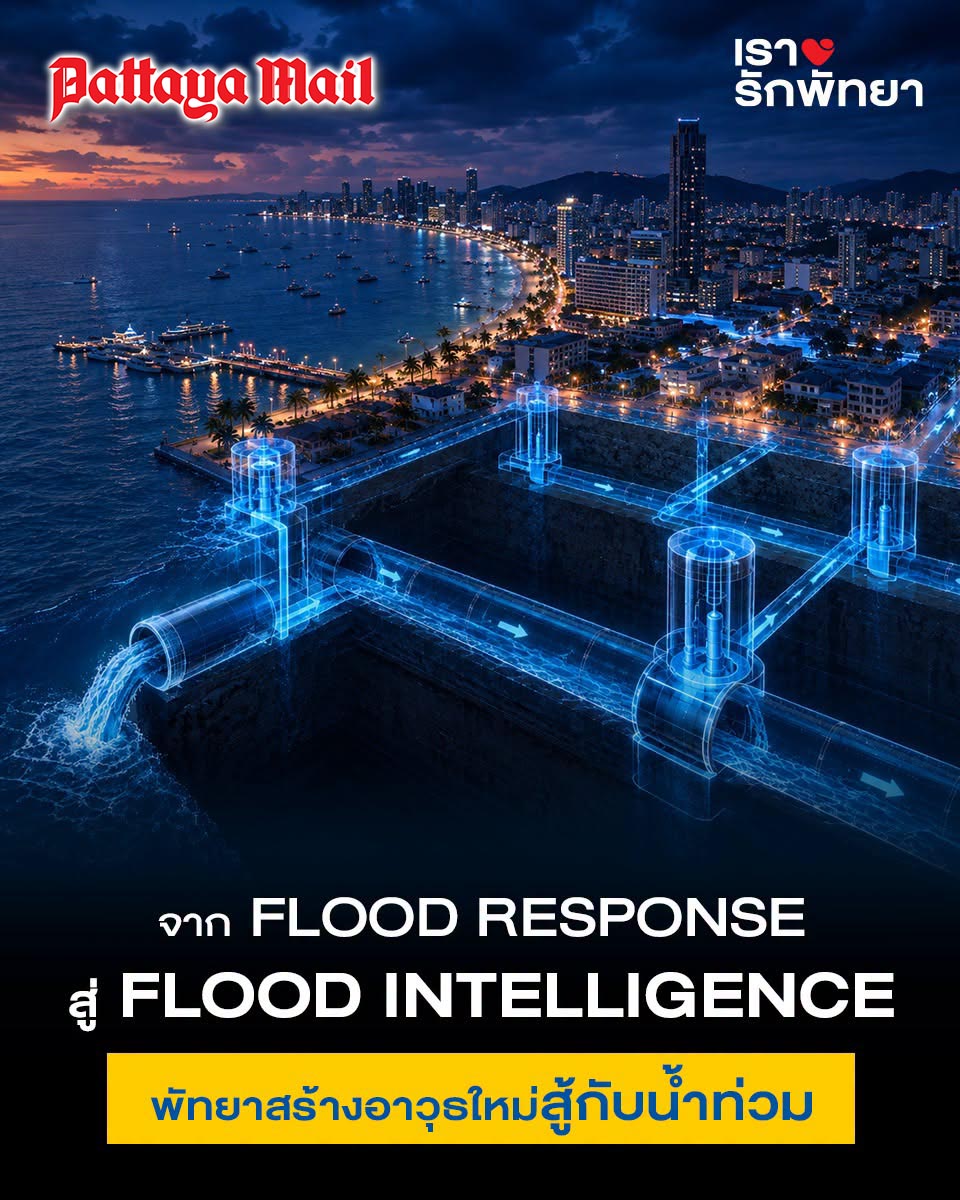
Pattaya is also preparing a major underground water tunnel project in the city center, which is expected to increase the city’s ability to handle heavy rainfall. The project is estimated to take about four years to complete, with a projected capacity of around 130 cubic meters per hour. The wider idea is to combine Flood Intelligence with physical infrastructure. Sensors and data can provide early warning and help officials coordinate a response, while larger drainage projects can increase the amount of water the city is able to move.
Pattaya’s approach also reflects lessons from other cities. Tokyo and Seoul are known for major underground flood-control infrastructure, while Singapore has developed extensive sensor-based monitoring, data analysis and public warning systems. Copenhagen has also explored underground “cloudburst” tunnels and urban designs that help store, slow and drain stormwater.
The goal is not simply to copy another city, but to combine useful elements into a system suited to Pattaya’s own geography, drainage network and flood risks. For residents and businesses, the hoped-for change is straightforward: fewer surprises, earlier warnings and a faster response when heavy rain threatens. The city’s challenge now is to turn the technology and planned infrastructure into a system that works reliably when the next major storm arrives.