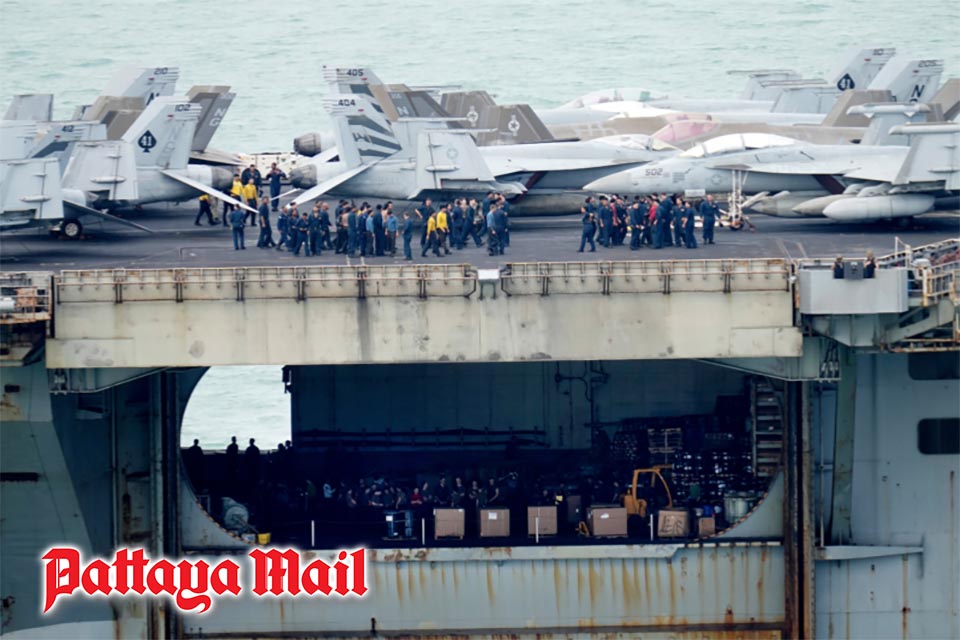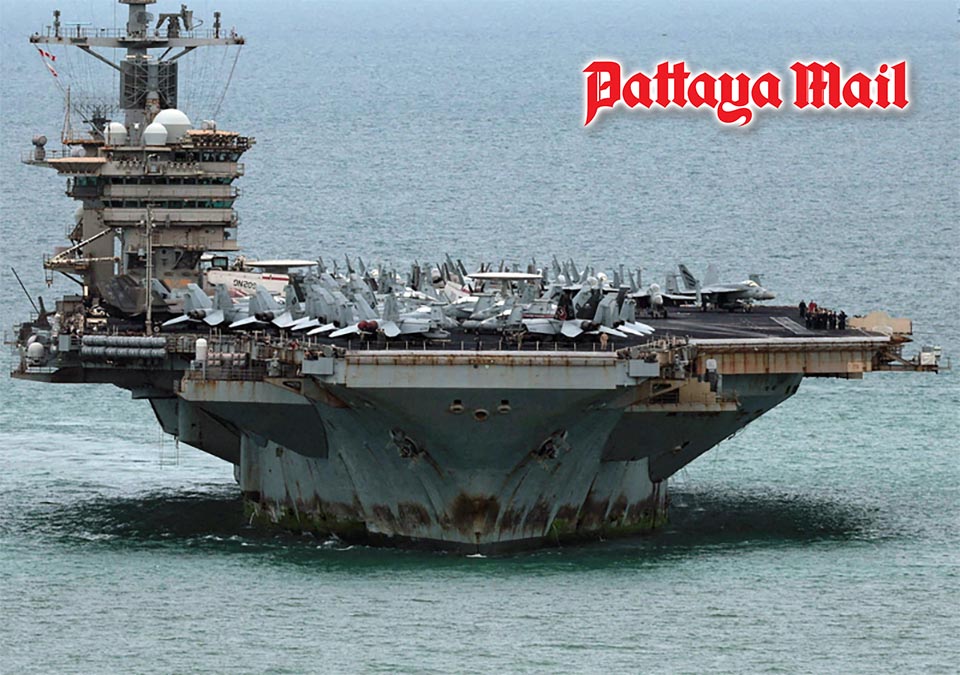
BANGKOK, Thailand – The arrival of the nuclear-powered USS Abraham Lincoln at Laem Chabang has provided a high-profile real-world example of nuclear technology at sea, while Thailand continues to examine the potential use of small modular reactors (SMRs) for future electricity generation.
Speaking at the Prachachat Business annual seminar “Beyond ESG: Thailand Transition” at the Siam Kempinski Hotel, Warit Rattanachuen, Deputy Governor for Strategy at the Electricity Generating Authority of Thailand (EGAT), discussed the potential of SMR technology and pointed to the USS Abraham Lincoln, currently docked in Chonburi, as an example of how compact nuclear reactor technology can be deployed.
SMRs are nuclear reactors designed on a smaller scale than conventional nuclear power plants, with modular construction intended to simplify manufacturing and deployment. However, the USS Abraham Lincoln uses two A4W naval nuclear reactors designed specifically for Nimitz-class aircraft carriers, rather than a commercial SMR design. The comparison highlights the broader potential of compact nuclear reactor technology rather than indicating that the carrier operates a standard commercial SMR.
The Nimitz-class carrier is powered by two A4W nuclear reactors and has a full-load displacement of more than 100,000 tons. Its nuclear propulsion system gives the vessel a speed of more than 30 knots and allows it to operate for many years without conventional refueling. The USS Abraham Lincoln measures about 333 meters in length and has a crew and air wing numbering around 5,000 personnel. It can operate approximately 90 aircraft, including fixed-wing aircraft and helicopters.
The carrier’s nuclear power system provides the continuous energy required to propel the enormous vessel while also supplying electricity for onboard systems and other essential operations.
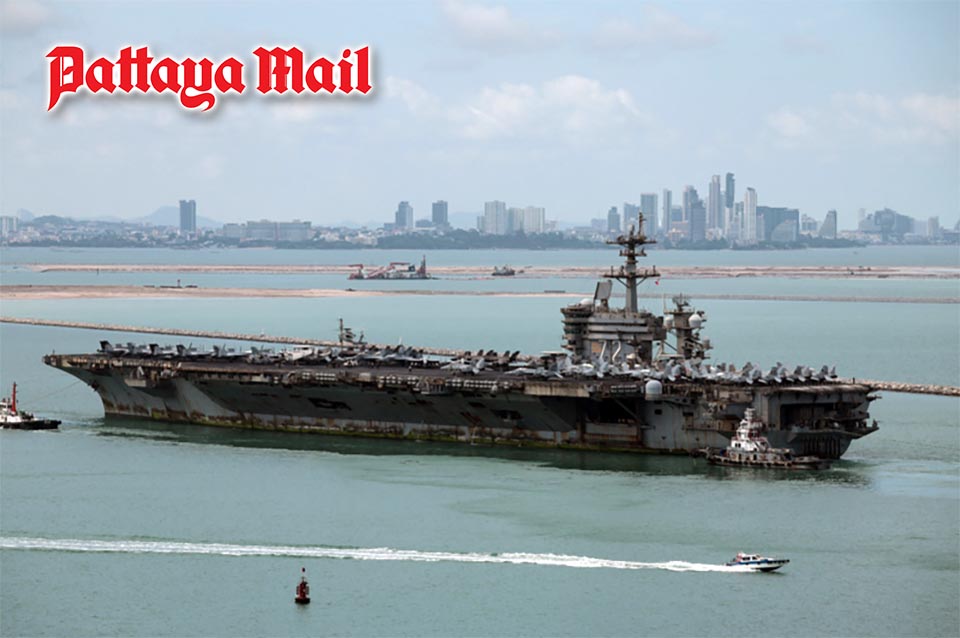
Its ability to maintain high speeds is particularly important for aircraft-carrier operations. The carrier must generate sufficient airflow over its flight deck to assist aircraft launches, while its large size and heavy displacement require a powerful and reliable propulsion system.
The USS Abraham Lincoln’s nuclear reactors also allow the carrier to remain at sea for extended periods without the need to carry large quantities of conventional propulsion fuel. The A4W reactor cores are designed for long operating periods between refuelings, contributing to the carrier’s ability to undertake lengthy deployments.
The carrier arrived at Laem Chabang on Sept 2 following a 286-day deployment and is making a five-day port visit in Thailand. Approximately 5,000 personnel are aboard the ship, which is being accompanied by other US Navy vessels during the visit.
For Thailand, the discussion comes as authorities consider whether nuclear power could become part of the country’s longer-term energy mix. Warit said any move toward SMR technology would need to take into account legislation, regulatory oversight, safety, nuclear waste management and public acceptance. Thailand is also examining both Western and Eastern technologies, with geopolitical considerations forming part of the decision-making process.

China and Russia are currently among the countries operating SMR projects, while development in some Western countries slowed following the Fukushima nuclear disaster in Japan. Thailand is now studying the available technologies and the conditions required for their safe deployment.
SMRs are increasingly being considered as one possible option for balancing cleaner electricity generation, energy security and long-term electricity costs.
The USS Abraham Lincoln’s presence at Laem Chabang therefore offers Thailand an unusually visible demonstration of what nuclear-powered maritime technology can achieve, while the country’s own nuclear-energy plans remain focused on whether and how SMRs could eventually be introduced for civilian power generation.