A couple of days ago, I was driving over to our local Tops supermarket when the name of Franz von Suppé suddenly drifted into my mind. If this name doesn’t ring any bells with you, it’s not surprising, for although he was a well-known composer during the 19th century, much of his music – with a handful of notable exceptions – has sadly fallen into oblivion. But it’s curious how names, words or sometimes images of places and people suddenly drift into the mind for no obvious reason. Perhaps you have experienced something similar. Apparently, it’s a fairly common phenomenon. I would guess that the experience might be brought about by external “triggers”, whether or not we are aware of them. They could be images, sounds or even smells.
You might recall that famous example in a descriptive scene in Marcel Proust’s epic novel In Search of Lost Time. The narrator tastes a madeleine (a small, shell-shaped sponge cake) soaked in lime blossom tea. He instantly feels an intense wave of pleasure, and the taste of the cake brings a vivid childhood memory of his aunt offering him madeleines many years earlier. I suppose most people have experiences of this sort, when memories flood back after hearing a sound, seeing something, or in the case of the navel-gazing Proust, tasting something. The sensation is often called, not surprisingly, The Proust Effect.
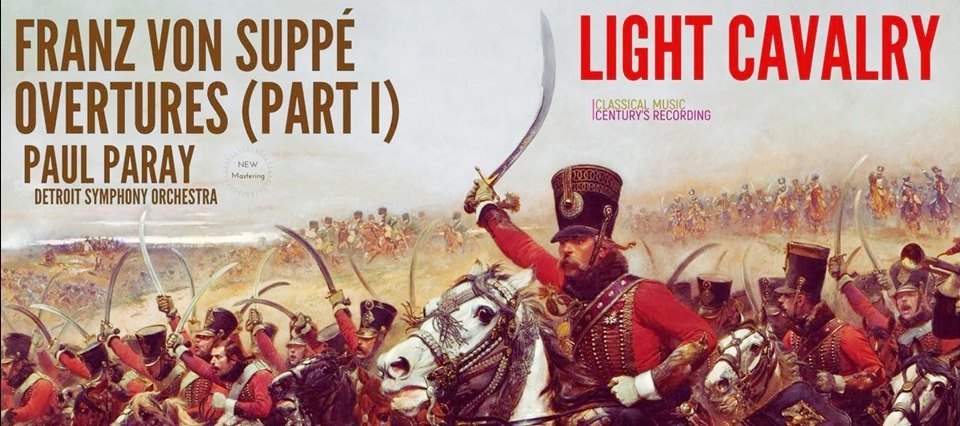
But it’s even more perplexing when an involuntary memory pops into one’s mind for no obvious reason, such as the name Franz von Suppé. I can only assume some unconscious trigger occurred – perhaps hours earlier. Anyway, the unexpected experience inspired me to look up Franz von Suppé when I returned home, because the last time I heard his music, I was only about eight or nine years old. After a bit of mental ruminating, the memories have become clearer. My father had acquired some records of Suppé overtures, the few pieces of music for which Suppé is still remembered. His name, in case you are wondering, is pronounced rather like “soo-pay”. Each of his overtures typically lasts only about seven or eight minutes, which is probably close to the endurance limit for the average nine-year-old. The overture that sticks in my mind is Light Cavalry, a jolly romp with loud brass fanfares, plenty of hearty thumps from the percussion, and some jolly, catchy tunes. Listening to the overture again decades later, I can see why it’s ideal music for young children. The downside is that “easy-on-the-ear” music like this tends to lose its appeal over time. There’s really not enough to sustain repeated listening.
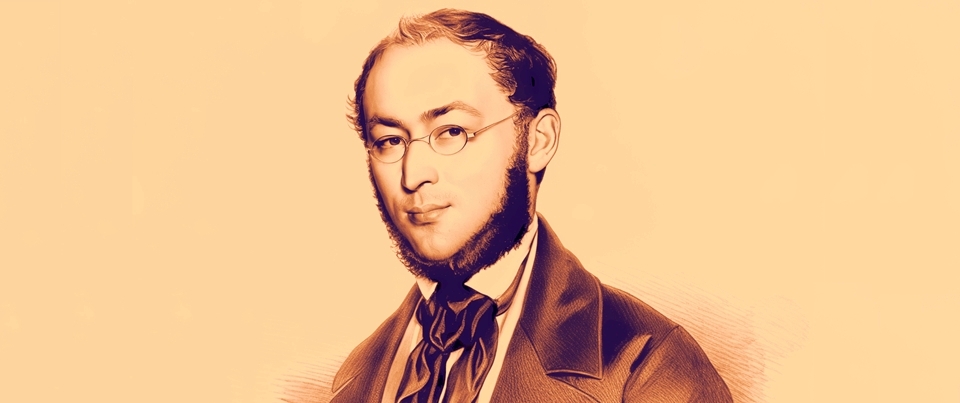
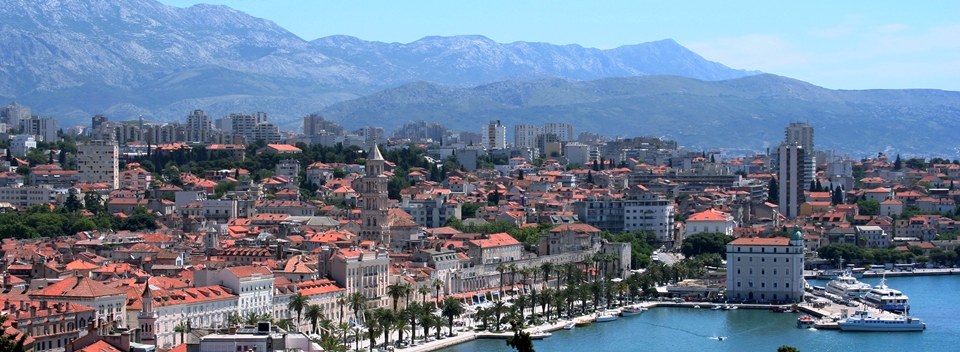
Suppé was born in the seaside town of Spalato, now known as Split. Today, it’s Croatia’s second-largest city and sits on the eastern shore of the Adriatic Sea. As a young child, Suppé rejoiced in the name of Francesco Ezechiele Ermenegildo Cavaliere Suppé Demelli. He began composing music at an early age, encouraged by the local bandmaster and the cathedral choirmaster. His father evidently wanted him to be a lawyer, but in Milan, the young Franz met Rossini, Donizetti, and Verdi and eagerly attended performances of their operas. After his father died in 1835, the family moved to Vienna, where Suppé began formal musical study under Ignaz von Seyfried, a former pupil of Mozart.
From 1840 onwards, Suppé worked as a composer and conductor in several theatres in Vienna. He composed about 30 operettas and 180 musical plays, ballets and other stage works. Today, only his overtures are performed and little else. Even so, Suppé is considered a master of the light opera genre, and the Viennese counterpart to Jacques Offenbach and Gilbert and Sullivan.

Traditionally, the overture was a short orchestral opening piece played before an opera, designed to convey the opera’s general mood and allow the audience to settle down. By the end of the eighteenth century, popular overtures were often played as separate pieces in the concert hall. Not long afterwards, the so-called “concert overture” began to appear. They were intended as stand-alone orchestral pieces invariably played at the beginning of a concert. The word “overture” was adopted possibly because no one could think of anything more appropriate. Many concert overtures were based on literary themes, and it’s generally thought that the first genuine concert overture was A Midsummer Night’s Dream (1826), composed by the seventeen-year-old Felix Mendelssohn and inspired by Shakespeare’s play. He wrote it after reading a German translation of the play that same year. Mendelssohn went on to write several other notable concert overtures such as Calm Sea and Prosperous Voyage (1828) and The Hebrides (1830).
By the middle of the nineteenth century, the concert overture was a firmly established genre and remained a favourite among composers for decades. Rimsky-Korsakov’s Russian Easter Festival Overture springs to mind, as does Tchaikovsky’s pot-boiler, the 1812 Overture. The twentieth century saw countless others appear, including Dmitri Shostakovich’s Festive Overture and Walton’s Portsmouth Point. Incidentally, in 1956 Malcolm Arnold wrote A Grand, Grand Overture, a spoof of the heroic concert overtures of the late nineteenth century. It was scored for an enormous orchestra with organ, three Hoover vacuum cleaners, an electric floor polisher and four rifles. Franz von Suppé’s overtures were the traditional type and intended for performance before an opera.
Franz von Suppé (1819–1895): Overture, Light Cavalry. The Cleveland Orchestra cond. Franz Welser-Möst (Duration: 06:48; Video: 1080p HD)
This is the overture to Franz von Suppé’s operetta of the same name, given its first performance in Vienna in 1866. These days, the opera is rarely heard, yet the overture is one of Suppé’s most popular compositions and, like Suppé’s other overtures, has acquired an identity of its own, completely detached from the opera to which it originally belonged. Dr Michael Fink writes that “The operetta Light Cavalry takes its name from the age-old practice of troops bearing lightweight types of weapons and riding small but very fast-galloping horses.”
It was fun listening to this merry piece after such a long time. The work begins with dramatic brass motifs that develop into a loud, fanfare-like theme, with strings scurrying in the background. A fast-paced, scampering theme appears from the strings, which unfortunately reminded me of Bugs Bunny cartoons. The music quickly switches to a bouncy horse-prancing melody, which you will surely recognise even if you haven’t heard the overture before. In some ways, it’s almost formula music but brilliantly orchestrated and full of interest. An obligatory pastoral middle section, introduced by a clarinet solo, leads into a distinctly soulful Hungarian gipsy-style melody played by the strings. Predictably, the prancing horses return with a vengeance, and the theme is taken up by the full orchestra, which drives the music into a colourful climax.
Franz von Suppé: Overture, Poet and Peasant. Vienna Chamber Orchestra, cond. Francisco Navarro Lara. (Duration: 11:16; Video: 1080p HD)
Although this overture was written twenty years earlier in 1846, it seems rather more sophisticated than Light Cavalry. The overture mirrors the operetta’s central theme: the contrast between lofty artistic ideals (the poet) and the lively rhythms of everyday life (the peasant). Yet it shows the characteristics of Suppé’s style – sudden changes of mood, tempo and colour and of course dazzling orchestration. It has become a worldwide concert favourite. The work opens in a dignified fashion, with horns and low brass playing a solemn chorale-like theme.
A charming melody on the solo cello, accompanied softly by the harp, reveals Suppé as a master of expressive themes. This solo is among the most famous in orchestral music. The woodwinds enter with graceful phrases suggestive of a Viennese waltz. Suddenly (at 04:35), the drama begins; the mood changes from lyrical to tempestuous, and the well-known syncopated theme appears. Eventually, the Viennese waltz returns, beautifully shaped by conductor Francisco Navarro Lara. It finally turns into a fast, energetic staccato section that drives the overture to a powerful, triumphant orchestral climax.