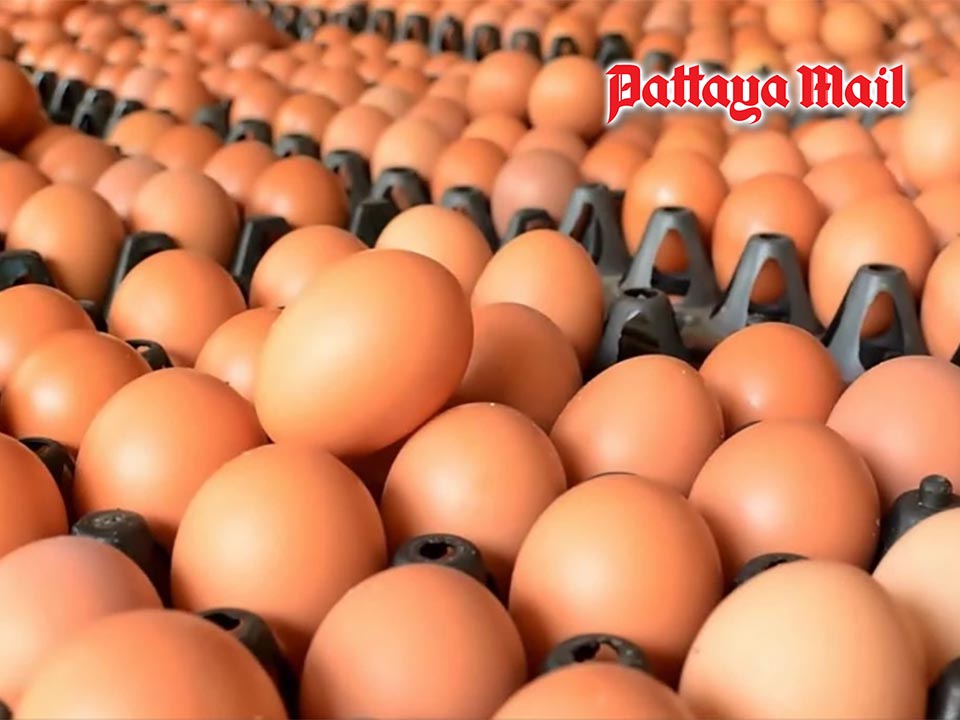
BANGKOK, Thailand – Egg prices in Thailand have climbed to their highest level in 15 years, with a tray of the largest No. 0 eggs now selling for 160 baht, following a 20-satang-per-egg increase in farm-gate prices earlier this month. A survey of fresh markets and egg retailers found retail prices had risen after four egg-farming cooperative networks raised the mixed-size farm-gate price by 20 satang per egg to 4 baht, effective August 7. Current retail prices range from 160 baht per tray for No. 0 eggs to 90 baht for No. 6 eggs.
The prices work out to approximately:
- No. 0: 160 baht per tray, or 5.33 baht per egg
- No. 1: 150 baht, or 5 baht per egg
- No. 2: 140 baht, or 4.66 baht per egg
- No. 3: 130 baht, or 4.33 baht per egg
- No. 4: 120 baht, or 4 baht per egg
- No. 5: 105 baht, or 3.50 baht per egg
- No. 6: 90 baht, or 3 baht per egg
No. 3 eggs, among the most commonly purchased sizes by households and restaurants, now average 4.33 baht each. Historical figures show that the 4-baht farm-gate price is the highest level seen in 15 years, excluding a brief spike to around 7 baht per egg during the major floods under the Yingluck Shinawatra government in 2011. Egg prices previously reached 3.30 baht per egg in 2004 during the bird flu outbreak, 2.32 baht in 2007 and 2.95 baht in 2008. Prices reached 2.71 baht in 2009, when the government introduced a weight-based egg pricing scheme that lasted only three months.
During the 2011 floods, prices briefly surged to 7 baht per egg. Under the Prayut Chan-o-cha government, prices reached 3.30 baht in 2014 and 4 baht in 2023. Prices later stood at 3.60 baht during the Srettha Thavisin government in 2024 before rising again to 4 baht in 2026 under Prime Minister Anutin Charnvirakul. The latest increase means consumers are now paying significantly more for a staple household food, with the current level marking the highest sustained farm-gate price in roughly 15 years.