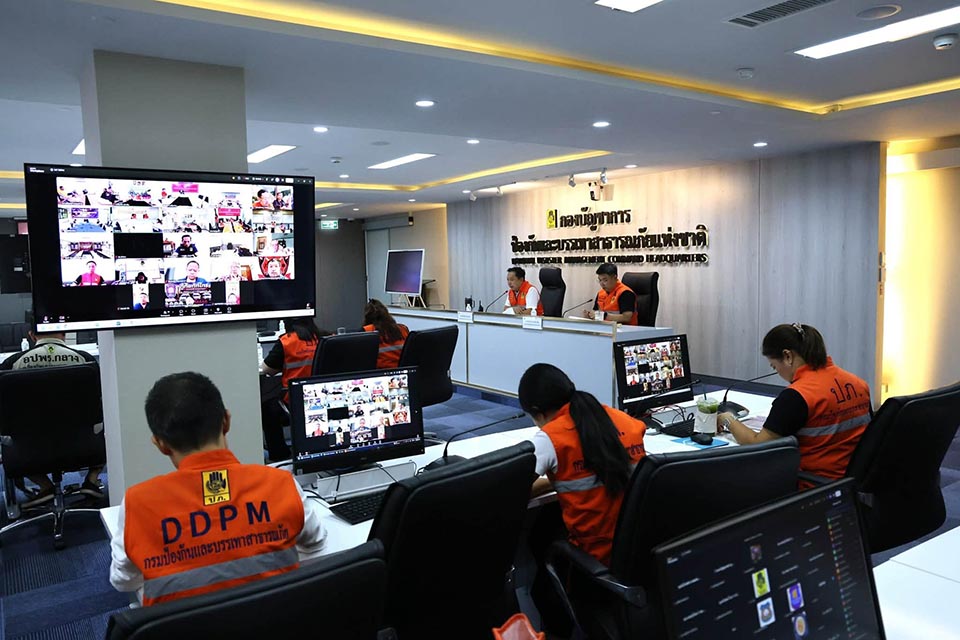
BANGKOK, Thailand – The Department of Disaster Prevention and Mitigation (DDPM) has ordered 17 northern provinces to strengthen flood preparedness as forecasts indicate above-normal rainfall in August, with officials instructed to maintain 24-hour monitoring and response readiness. DDPM Director-General Teerapat Kachamat chaired a Situation Awareness Team (SAT) meeting with DDPM executives, provincial disaster prevention offices, regional disaster prevention centres, related agencies, and rescue foundation representatives from the North to review current flood conditions and preparedness measures. Teerapat said weather forecasts show rainfall during August is expected to exceed normal levels, particularly in western Thailand, the North, upper Northeast, and eastern regions. Rainfall is expected to decrease in September and October before shifting heavily toward the South in November.
He instructed all provinces to closely monitor weather conditions and prepare emergency response plans in advance to minimize impacts on communities. Recent flood situations in several northern provinces have improved, including Chiang Rai, where flash floods and overflowing rivers affected three districts. Authorities said the establishment of a parallel flood monitoring centre operating around the clock helped protect key economic areas. In Phetchabun, runoff from Lom Kao District flowed into outer areas of Lom Sak District, prompting officials to deploy water pumps and accelerate drainage operations. Early warnings through the Cell Broadcast system allowed residents to move belongings to higher ground in time. In Phitsanulok, heavy rainfall caused the Lam Fia waterway to overflow and affect homes, with local authorities and DDPM Region 9 deploying disaster machinery, boats, and water pumps to assist residents and drain floodwaters.
Meanwhile, Chiang Mai has implemented proactive measures to prevent urban flooding, while major reservoirs remain capable of supporting additional water volumes. The DDPM chief instructed regional and provincial disaster offices to position emergency machinery in high-risk areas before incidents occur, while coordinating with local administrative organisations, civil defence volunteers, and rescue networks for rapid assistance. Authorities were also urged to continue public warnings through Cell Broadcast, social media, community broadcast towers, local radio stations, and village leaders to ensure residents receive timely updates. (TNA)