A couple of weeks back, a friend was telling me about his childhood in England many years ago, and how he was thrilled and overjoyed upon first hearing something by Bach. Such was the elation that he wanted to hear the piece over and over again and eventually managed to find a recording. I can’t remember what the piece was, but it was fascinating that this powerful memory has stayed with him to this day.
My own musical Road to Damascus experience was rather more mundane than the music of Bach. It was the 1940s popular song Buttons and Bows, which was initially made famous by Dinah Shore. It was an enormous hit in Britain and America in 1948 and begins, somewhat ungrammatically, with “East is east, and West is west, and the wrong one I have chose.” Although I was an infant at the time, I absolutely adored the song and begged my father to buy me the record, which he did, despite his disdain for jazz and popular music. I learned to play the tune on the mouth-organ and later on the piano. I suppose this experience might, in some small way, have contributed to my later decision to follow a career in music.
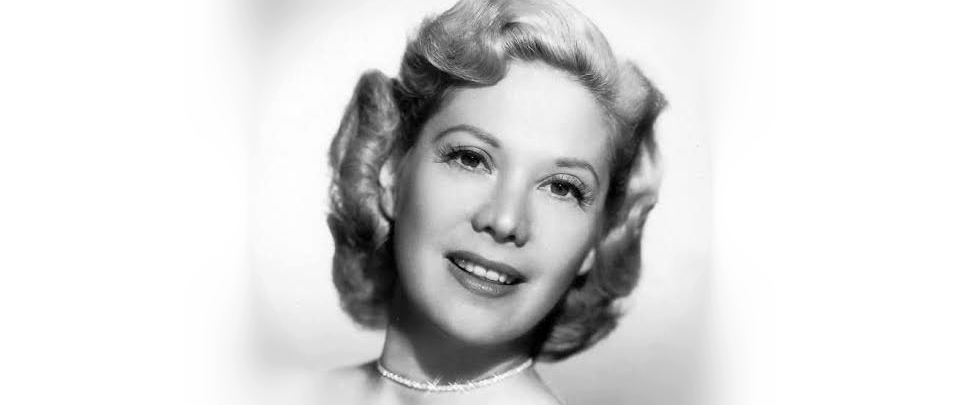
Yesterday, I listened to the recording once again on YouTube, and it still holds its magic, for me at any rate. It’s a catchy song about a city girl from America’s east who finds the rural gun-slinging western lifestyle – and the rustic clothing – not much to her taste. Dinah Shore gives the song a slightly facetious, cheeky, sassy delivery, which adds to its charm. The lyrics, by Ray Evans, contain some delicious alliteration such as “my bones renounce the buckboard bounce”, a phrase which, as a child, I couldn’t possibly have appreciated. But even so, as I type these words, the song is churning endlessly through my mind like a dish-washing machine on full power. Only a few years later, I had another magical encounter with Stravinsky’s Firebird Suite, which rather put Buttons and Bows in the shade for a time. But looking back, I suppose they were simply different kinds of magic.
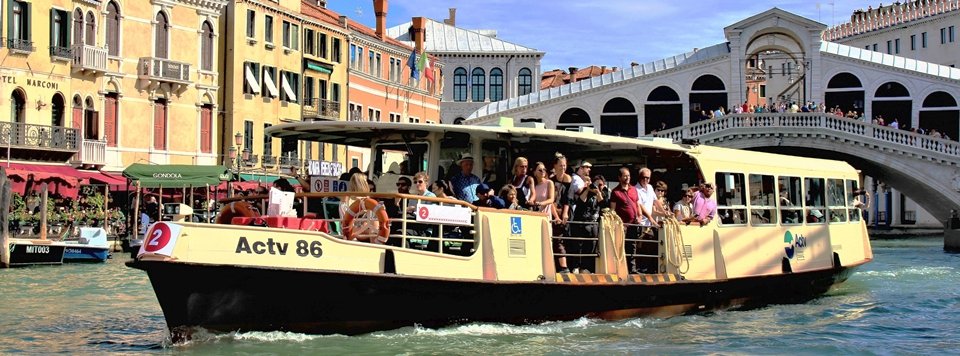
Perhaps you’ve had a similar magical encounter, not necessarily with a piece of music, but with a poem, a story, a painting, or even a place. Many years ago, I made my first visit to Venice after driving across Europe to get there. We arrived after dark, during a torrential thunderstorm, and drove the car into a dingy, cavernous car park. When the rain finally stopped, we took a waterbus – or vaporetto as they are known locally – and headed down the Grand Canal. We chugged majestically along the glistening water, illuminated by countless light bulbs outside the restaurants, shops, and hotels lining the banks. The thunderstorm had made the sea-air crisp and clean, and it was like being on the set of a fabulous open-air grand opera. The hotel turned out to be an old, rambling, slightly spooky place near the Rialto Bridge, but Venice was every bit as wonderful as I had hoped, full of magic and charm.
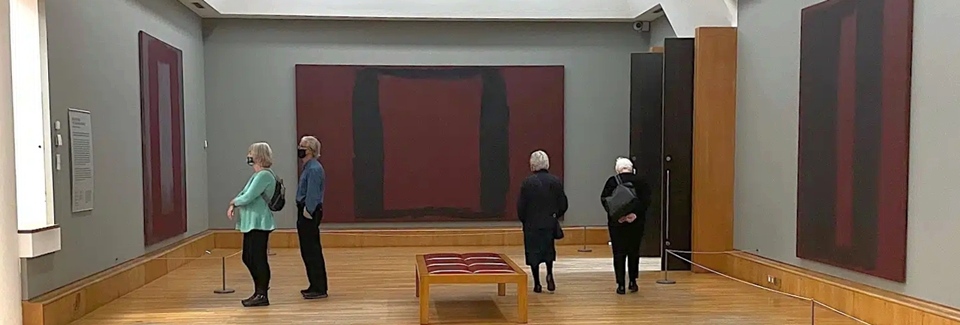
Other first encounters have been equally magical; my first visits to places as different as Paris, New York, Leningrad, Hong Kong, Bali and Luang Prabang. They each cast their own distinct spell. These occasions occur only once, of course, because you can only make one “first visit”. After that, although some of the excitement and anticipation may still be here, it’s never quite the same. I have vivid memories of seeing Mark Rothko’s so-called Seagram Murals for the first time at a special exhibition at London’s Tate Gallery. They are vast canvases of out-of-focus floating fields of rich and sombre colours. I was transfixed by these enormous expressions of darkness and found them absolutely breathtaking. I still feel a shudder of nervous excitement even thinking about them. Now that was really a magical encounter.
For many years, some psychologists believed that a person’s negative memories have more impact than positive ones. However, a recent study by researchers at Southampton University has revealed that “good” memories can often be stronger than “bad” ones. The research showed that memories of pleasant events can persist longer than those of negative experiences. Perhaps over time, the brain tends to “strip away” negative memories, allowing positive memories to dominate. Maybe it’s the same for you, but I have always found that positive memories push the less attractive ones into the back seat. I certainly remember playing Buttons and Bows on the mouth-organ much more clearly than the time my father belted me on the bottom for swearing at our maid.
In 1962, the Russian composer Dmitri Shostakovich visited the Edinburgh International Festival. It was something of a historic occasion and a significant cultural event, because the entire festival programme was dedicated to his music. This stemmed from a desire to bridge the Cold War and bring Western audiences the wealth of Russian classical music from behind “The Iron Curtain”. This, you may recall, was the ideological, political and physical boundary that divided Europe from about 1945 until 1991.
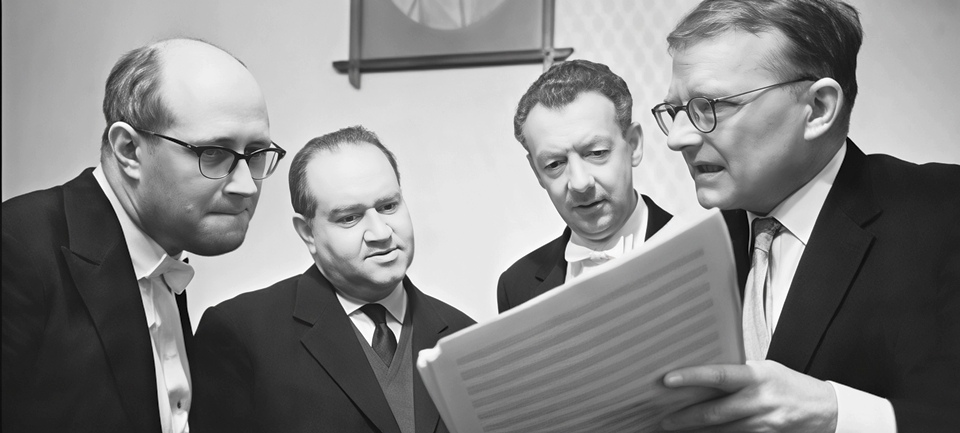
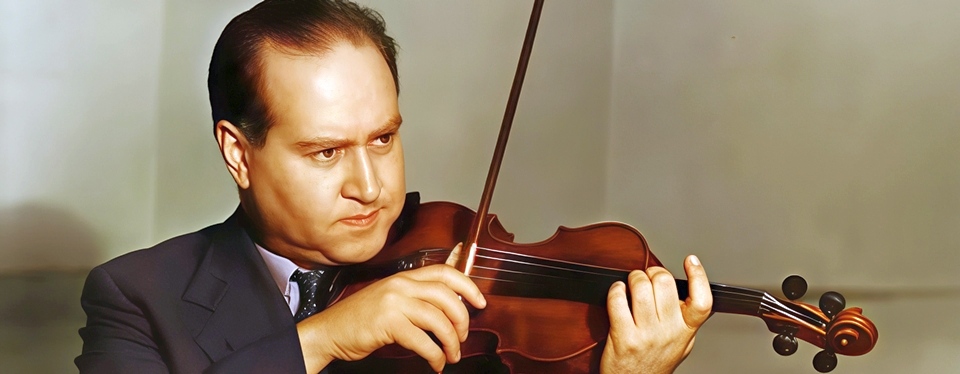
Shostakovich’s Violin Concerto No. 1 was a highlight of the festival. It was performed on 7th September 1962 by the illustrious Soviet violinist David Oistrakh, accompanied by the Philharmonia Orchestra with the brilliant Russian conductor Gennady Rozhdestvensky. The concert was broadcast live on television, and two hundred miles away, on a small island off the coast of North Wales, I watched it at home. It was a stunning performance and, for me, almost a life-changing experience.
Dmitri Shostakovich: (1906-1975): Concerto No 1 in A minor Op. 77. Kevin Zhu, (vln), Belgian National Orchestra cond. Antony Hermus (Duration: 40:53; Video: 1080p HD)
This powerful and highly personal concerto was composed at a time when Soviet composers were restricted by the Stalin government’s ludicrous obsession with Socialist Realism and what it called “formalism”. The government forced Soviet composers to write “accessible and happy” music for the people in a straightforward, easy-on-the-ear style and to avoid abstract, complex music. Western and other undesirable influences were not allowed. Shostakovich and other composers had already been censured by the government for writing music considered too “formalist” and therefore forbidden. Although the concerto was completed in 1948, Shostakovich delayed the premiere until 1955, when it was performed by David Oistrakh with the Leningrad Philharmonic under Yevgeny Mravinsky. This was two years after Stalin’s death, by which time the pointless Soviet preoccupation with formalism had begun to fade. Despite its challenging nature, the concerto had an excellent reception from the audience.
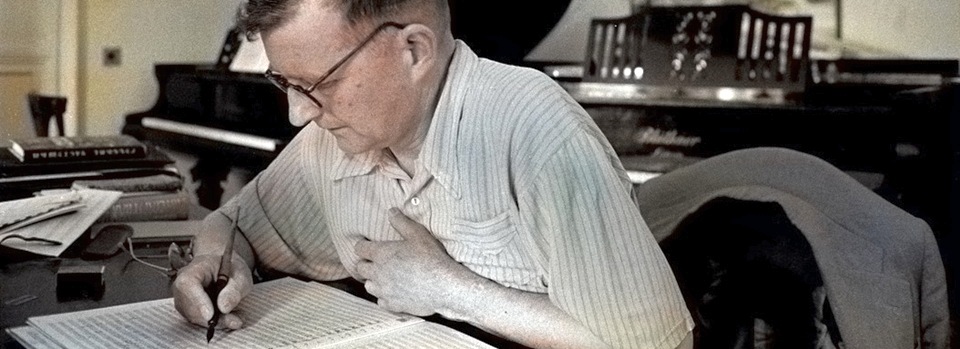
According to the violinist and conductor Leonidas Kavakos, this concerto is “one of the most powerful classical works ever written”. It is tempting to wonder how much of the music was directly influenced by the horrors of the oppressive Stalin regime. Most of it, I would venture. The instrumentation is slightly odd in that it’s scored for three of each woodwind, four horns, tuba, two harps, percussion and strings. Strangely enough, Shostakovich didn’t include trumpets or trombones. Traditionally, concertos have three movements, but this one has four, each growing in length and intensity. It is an astonishing, tremendously virtuosic work, sometimes with Baroque influences, sometimes with Jewish klezmer-inspired music, sometimes with intensely jarring dissonances, and even includes the composer’s name in a musical cypher. Stalin and his cronies would have banned it outright.
The American historian Harlow Robinson writes, “The concerto makes extraordinary technical demands on the soloist…the original version provides no break after the exhausting cadenza, which proved too much even for David Oistrakh. He asked Shostakovich to give him a rest for the first eight bars of the finale, so ‘at least I can wipe the sweat off my brow.’ Shostakovich agreed, and instead gave the theme to the orchestra.”
The work opens with an impressionistic Nocturne and introduces an unsettling, dark mood with cellos and basses, as the violin soloist plays a meditative soliloquy: a wayward melody that seems to be ever searching for something out of reach. The soloist is supported by dark, dissonant harmonies, and the movement ends as mysteriously as it began. The second movement is a fast-paced scherzo – a wild, unhinged, frenetic and desperate dance in which thematic elements are thrown vigorously between soloist and orchestra. Suddenly (at 16:38), a strident theme appears, a typical Shostakovich melody full of fire and drive. The movement thunders on relentlessly and joyfully, then, without warning, comes to a sudden halt.
The third movement is among the composer’s most powerful creations. It’s a passacaglia, a type of theme and variations in which a complex bass line is repeated as new melodies and textures are introduced above it. The bass line in this case is a heavy, oppressive figure introduced by the cellos and basses, with the horns repeating pulsing figures and arpeggios. The music turns into a quiet but passionate hymn of longing, followed by a lyrical melody from the solo violin. But then the mood changes again, becoming more passionate and triumphant as rich harmonies flow and the passacaglia theme is heard repeatedly. The music quietens, and it leads seamlessly into a lengthy solo cadenza. Another musical idea creeps into the violin solo and becomes increasingly animated and fiercely dissonant before hurling itself into the wild finale, a “burlesque”, as the composer called it. The music literally flies along, with thrilling, virtuosic playing from the soloist, who barely has a moment’s rest throughout this bristling, animated finale.
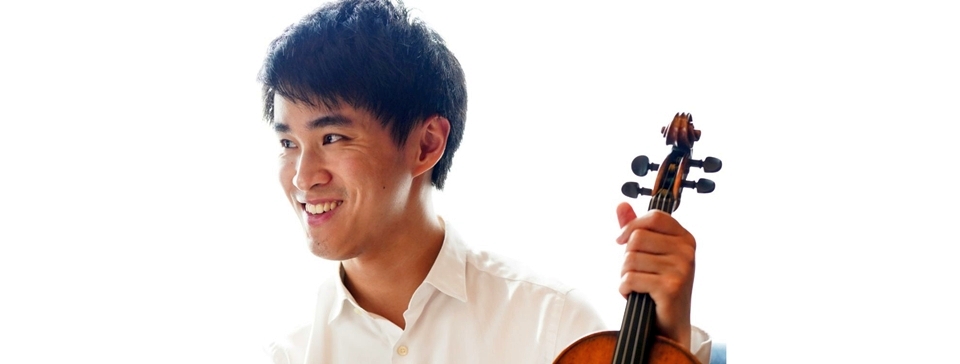
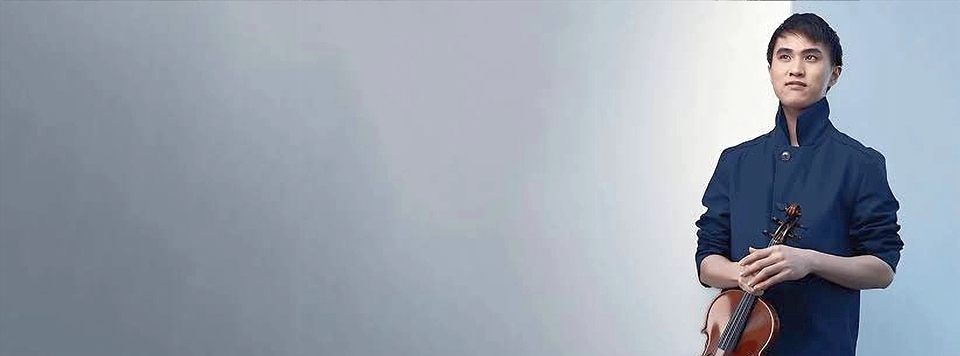
And this particular soloist is absolutely stunning. American violinist Kevin Zhu was twenty-four when this recording was made. He started playing the violin when he was three years old and later went to school in California. At the prestigious Juilliard School in New York, he studied with the great Itzhak Perlman. He has performed worldwide and currently plays a Stradivarius violin built in 1722. It’s known as the “Lord Wandsworth” Stradivarius, a unique and prized instrument currently valued at between 10 and 15 million US dollars. The instrument is on long-term loan to him from the Ryuji Ueno Foundation and the Rare Violins in Consortium. At the end of the performance, Kevin receives – quite rightly – a standing ovation from the audience, which brings the concert to a touching and heart-warming conclusion.