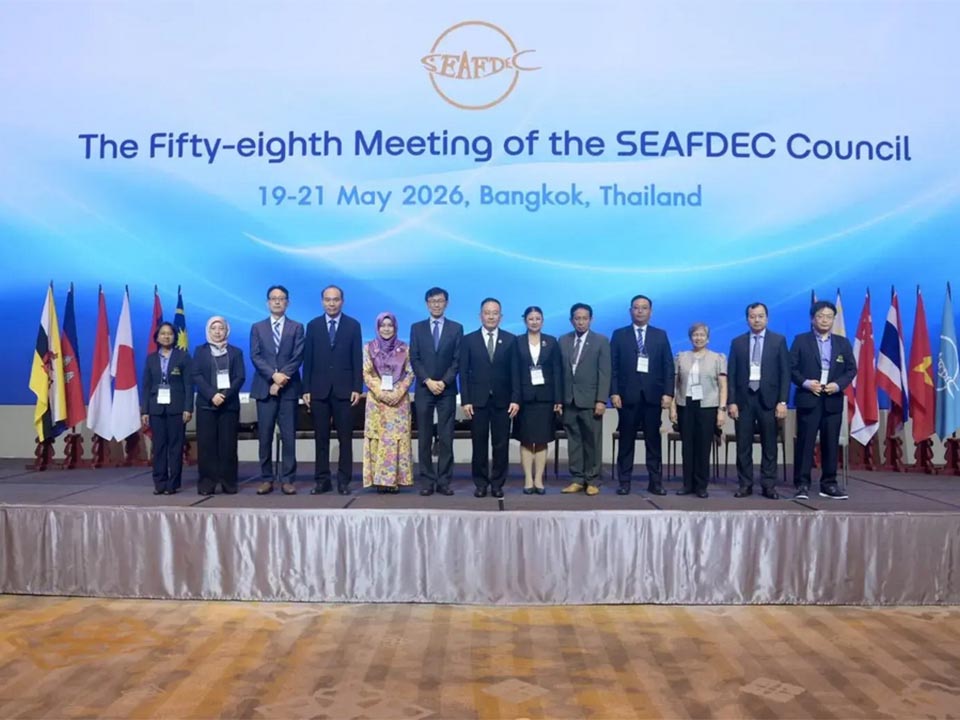
BANGKOK, Thailand – Thailand is hosting the 58th Meeting of the SEAFDEC Council (58CM) from May 19–21, in Bangkok, bringing together member countries and international organizations to strengthen cooperation on sustainable fisheries and regional food security. The meeting, organized by the Department of Fisheries, is being held at the Grand Centre Point Prestige Hotel and includes representatives from 11 member countries: Thailand, Brunei Darussalam, Cambodia, Indonesia, Japan, Laos, Malaysia, Myanmar, the Philippines, Singapore, and Vietnam, along with delegates from eight international organizations and more than 100 participants from agencies under the Southeast Asian Fisheries Development Center (SEAFDEC).
Director-General of the Department of Fisheries Thitiporn Laoprasert said the meeting serves as a regional policy platform to discuss fisheries and aquaculture cooperation, monitor implementation progress, and shape future regional strategies. Key agenda items include combating illegal, unreported, and unregulated (IUU) fishing, addressing marine debris and abandoned fishing gear, and advancing fisheries resource assessments with hydroacoustic technology to support sustainable marine resource management.
Participants are also discussing international regulatory developments, including outcomes from the Convention on International Trade in Endangered Species of Wild Fauna and Flora (CITES) CoP20 meeting, the development of regional fisheries databases, and the preparation of the Southeast Asian State of Fisheries and Aquaculture report (SEASOFIA 2027). A special lecture on sustainable fisheries highlighted major global challenges facing the sector, including climate change, overexploitation of marine resources, pollution, rising production costs, stricter trade requirements, and geopolitical tensions. The Director-General said hosting the meeting would reinforce regional fisheries cooperation, promote sustainable resource management, strengthen the competitiveness of its fisheries sector, and support long-term food security under the “Fisheries Connect for Sustainability” framework. (NNT)