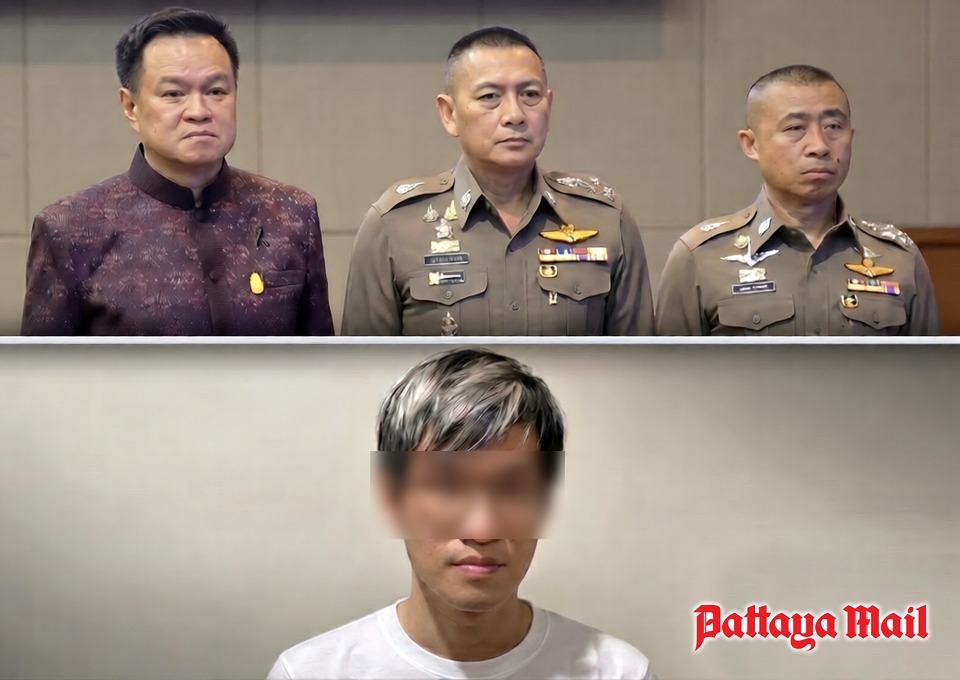
PATTAYA, Thailand – The idyllic image of Pattaya as a premier tropical getaway and a bustling hub for international investment is facing a critical turning point. Over the past few weeks, a series of high profile law enforcement crackdowns across Chonburi has sent shockwaves through both the local community and the corridors of power in Bangkok.
The primary catalyst for this sudden shift was the chilling exposure of a foreign linked criminal safehouse in Huay Yai. The case involved a 30 year old Chinese national, Mingchen Sun, who was apprehended following a routine car accident in Na Jomtien. The subsequent raid on his luxury villa uncovered what authorities described as a miniature military arsenal.
Inside the residence, police seized high powered M4 assault rifles, full ammunition magazines, tactical body armor configured for suicide vests, and over eight pounds of military grade C4 plastic explosives. Intelligence retrieved from the suspect’s devices indicated advanced plotting, including the use of AI tools to calculate blast radiuses and evidence of tactical training in neighboring countries.
This dramatic discovery of an active Chinese criminal cell operating armed safehouses right on the outskirts of Pattaya has escalated to the highest levels of government. Deputy Prime Minister and Minister of Interior, Anutin Charnvirakul, has publicly signaled a potential reevaluation of Thailand’s generous Visa Free policies. While aimed at boosting tourism, the government is now deeply concerned that these open border measures are being exploited by transnational criminal syndicates to establish deep rooted operations on Thai soil.
For Pattaya’s business sector and its legitimate expatriate community, this shifting landscape introduces a complex mix of challenges and opportunities.
The legal shift from hospitality to strict scrutiny
For the past year, Thailand’s economic strategy relied heavily on aggressive tourism promotion, expanding visa free entry to dozens of nationalities. However, the recent crime wave has forced a sharp pivot toward national security and strict regulatory compliance. Legally, we are seeing immediate repercussions in several areas
Heightened Chonburi immigration vigilance
Expect a rigorous enforcement of existing immigration laws. This includes intensified scrutiny of TM.30 (Notification of Residence) compliance, meticulous background checks during visa extensions, and a zero tolerance approach to overstayers.
The Visa free dilemma
If the government modifies the Visa Free or Visa on Arrival frameworks, it could introduce stricter prescreening mechanisms, mandatory proof of financial subsistence upon arrival, or stricter limitations on the duration of stay and consecutive entries (visa runs).
Business license and nominee crackdowns
Criminal networks rarely operate in a vacuum. They require local infrastructure. In tandem with immigration raids, the Department of Business Development (DBD) and local law enforcement are intensifying audits of foreign managed businesses and suspected nominee corporate structures used to lease property or front illicit operations.
The Business impact short term pain, long term stability
The business community in Pattaya is viewing these developments with a mix of anxiety and cautious optimism.
1. The real estate and corporate sector
In the short term, stricter corporate scrutiny may slow down the pace of new company formations and property transactions as legal firms conduct deeper due diligence to comply with the tightening environment. However, cleansing the market of illicit actors protects legitimate investors. A transparent, strictly regulated property market prevents artificial price inflation driven by gray market capital and ensures that legal titles and business investments remain secure and uncompromised.
2. Tourism and the hospitality industry
Pattaya’s hospitality sector thrives on accessibility. Any rollback or tightening of Visa Free entries could cause a temporary dip in casual tourism numbers. However, local business leaders argue that shifting the focus from quantity to quality is essential for Pattaya’s long term brand. Eliminating criminal elements improves safety, which is the primary factor in attracting high spending, long term tourists, digital nomads, and affluent retirees.
3. The legitimate expat community
For law abiding expatriates, the impending policy shifts mean one thing. Compliance is non-negotiable. The days of cutting corners on visa documentation or neglecting local reporting requirements are gone. While the administrative burden at Jomtien Immigration may increase in the coming months, a safer city with a transparent legal framework ultimately benefits the entire long term expat community.
Navigating the new era: the path forward
Pattaya is evolving from a nightlife destination into a sophisticated eastern economic hub. This transition requires a mature legal environment. While the current crackdowns and political rhetoric regarding visa restrictions may seem alarming, they represent a necessary correction.
▪For businesses and foreign residents in Pattaya, the strategy forward is clear:
▪ Ensure all corporate structures, employment permits, and visas are fully compliant with Thai law
▪ Engage only with reputable, licensed legal and financial professionals
▪ Recognize that a safer, well regulated Pattaya is fundamentally better for business sustainability and property values
The government’s message is not that Thailand is closing its doors to the world. It is simply ensuring that those who enter respect the house rules. For Pattaya’s legitimate business and expat community, that is a policy change worth supporting.