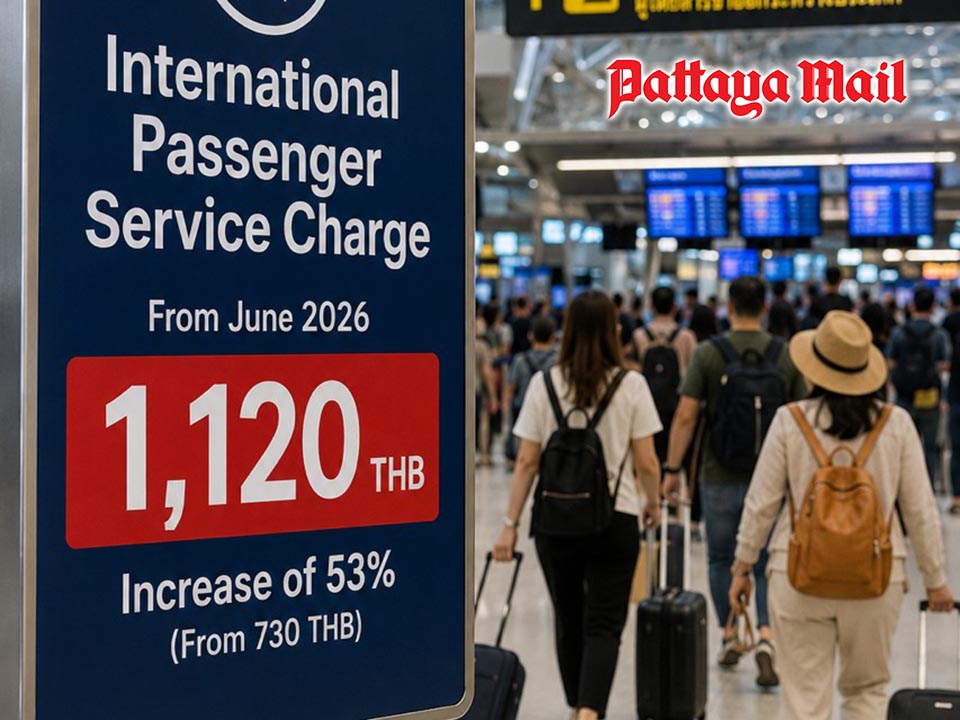
BANGKOK: Airports of Thailand (AoT) has confirmed a planned 53% increase in the international Passenger Service Charge (PSC), raising it to THB 1,120 from June. While authorities argue the adjustment will not significantly impact travel demand, the move comes at a sensitive moment for Thailand’s tourism industry and risks reinforcing growing concerns over rising travel costs.
Timing raises industry concerns
Thailand’s tourism sector is no longer in a post-pandemic rebound phase where demand naturally outstripped supply. Regional competition is intensifying, particularly from countries such as Vietnam, which continues to position itself aggressively with lower operating costs, expanding aviation capacity and fewer direct charges imposed on visitors.
At the same time, many Thai tourism operators are struggling to stabilise performance. Hotels are managing rising labour and utility expenses, airlines face fuel price pressures and route competition, and smaller businesses continue to recover from prolonged disruption in recent years. Against this backdrop, the scale and timing of the airport charge increase is drawing scrutiny.
Profitable airport operator
AoT reportedly posted profits of around THB 25 billion last year. Within the tourism sector, this raises a key question: why implement such a significant passenger charge increase at a time when the organisation is already highly profitable?
For industry stakeholders, the issue is not only infrastructure funding but also perception and balance. Many argue that while airlines, hotels and tour operators are working to protect already narrow margins, additional cost pressures on travellers risk undermining broader recovery efforts.
Longstanding pattern of rising fees
Thailand’s international passenger service charges are not new. They have evolved over decades, particularly since aviation modernisation efforts in the mid-2000s. Since 2007, travellers have gradually absorbed a series of increases linked to airport expansion and infrastructure upgrades.
There is broad acceptance within the industry of the need for modern facilities, improved safety standards and efficient passenger services. The development of Suvarnabhumi Airport remains a landmark national achievement. However, long-time industry observers note that tourism-related fees have repeatedly been revisited during periods of revenue pressure or infrastructure expansion, often resurfacing in different forms over time.
Competitiveness becomes the central issue
While individual fee increases may appear minor when embedded in airline ticket prices, the broader concern is cumulative cost perception. Today’s travellers compare destinations instantly, factoring in airfares, airport charges, accommodation taxes and visa requirements. Thailand’s long-standing strength as a leading global tourism destination can no longer rely solely on reputation and historical appeal. Value perception is now a decisive factor in destination choice.
Tourism requires balance, not barriers
Tourism remains one of Thailand’s most important economic sectors, supporting millions of jobs across hospitality, transport, retail and entertainment. Industry stakeholders increasingly argue that policy direction should focus on stimulating demand and maintaining competitiveness, rather than adding incremental costs to travellers.
While continued investment in airport infrastructure is essential, the sector is calling for a more carefully balanced approach that considers both long-term development and short-term competitiveness. In an increasingly competitive regional market, even modest cost increases can influence traveller decisions.
About the Author
Andrew J. Wood is a Bangkok-based travel writer and respected tourism expert. A former hotelier, he has lived in Thailand since 1991. A past President of Skål Asia and long-time tourism industry leader, he writes extensively on hospitality, travel and tourism trends across Asia.