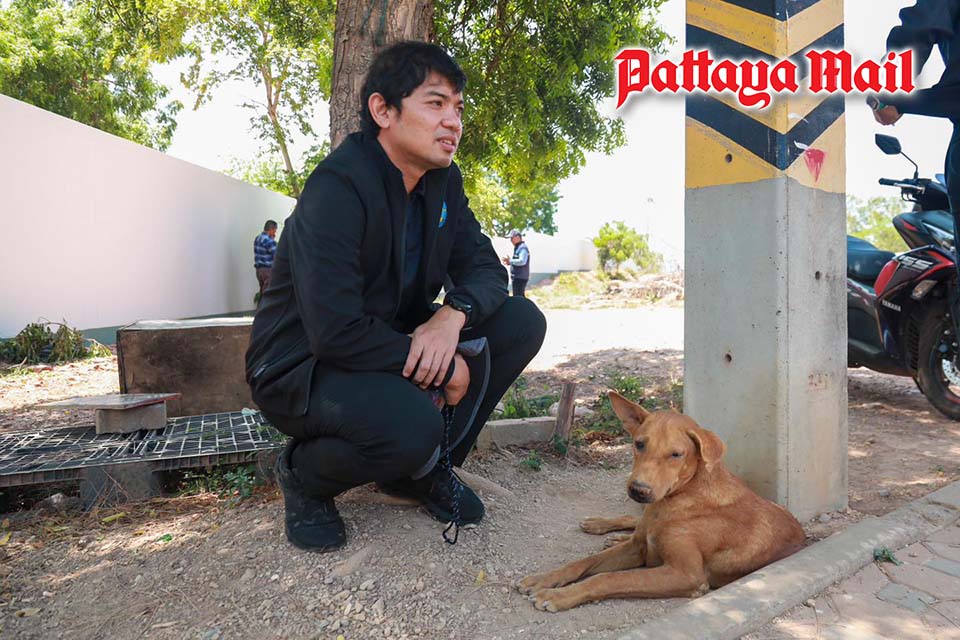
PATTAYA, Thailand – City officials have rolled out a new initiative on Koh Larn aimed at addressing long-standing concerns over stray dogs while balancing public hygiene and animal welfare.
Deputy Mayor Manot Nongyai, along with senior officials, visited the Ta Rai Pier area to oversee the launch of the project, which focuses on improving the quality of life for so-called “community dogs.”
The plan introduces 10 designated feeding zones across the island’s four main roads, allowing residents and visitors to feed dogs in a more controlled and sanitary manner. The first pilot point has been established near Ta Rai Pier.
Officials say the move comes after sterilization efforts carried out in partnership with Soi Dog Foundation. While feeding stray dogs has often been driven by compassion, authorities noted it has also led to issues such as food waste left on streets and potential public health concerns.

Each feeding point will be equipped with proper food and water containers, with local animal welfare volunteers tasked with maintaining cleanliness. Municipal staff from Pattaya’s Koh Larn office will conduct inspections at least twice a week.
The initiative is based on a longer-term “community dog” concept, which shifts the perception of strays into animals cared for collectively by the community. Combined with ongoing sterilization programs, officials expect the population of stray dogs to gradually decline over the next seven to eight years.
Looking ahead, the city plans to install around 50 feeding station units across the island to ensure wider coverage. Authorities are also urging the public to help maintain the facilities, emphasizing that the project’s success depends on community cooperation.
Officials believe the approach will not only improve animal welfare but also enhance the island’s image as a clean and tourist-friendly destination.