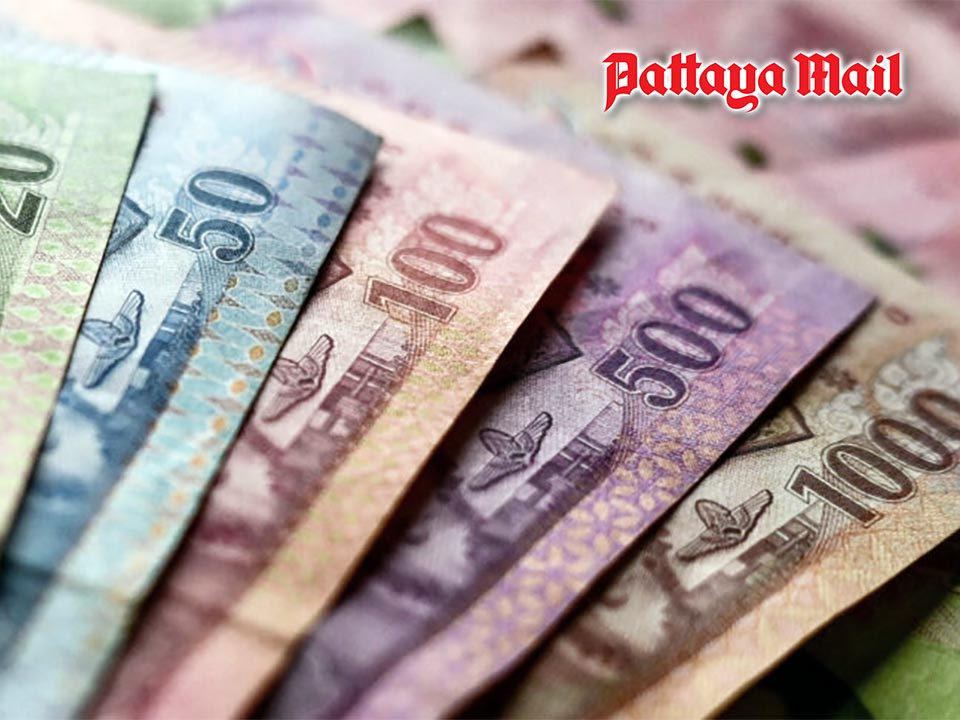
PATTAYA, Thailand – The Thai baht opened weaker on April 23 at 32.28 per US dollar, compared to the previous close of 32.18, as global risk sentiment shifted amid escalating geopolitical tensions and rising oil prices.
According to Krungthai GLOBAL MARKETS, the currency is expected to trade within a range of 32.10–32.45 per dollar over the next 24 hours, with near-term pressure driven by renewed instability in the Middle East.
Markets reacted to reports of heightened tensions between the United States and Iran, raising concerns over the prospects of a second ceasefire negotiation round. The uncertainty pushed crude oil prices higher, with Brent crude briefly testing the 105 US dollar per barrel level, reinforcing inflationary and risk-driven flows across global markets.
Investors are now focusing on key upcoming data releases, including April Purchasing Managers’ Index (PMI) figures from major economies such as the United States, the eurozone, and the United Kingdom. These will offer insight into how geopolitical tensions are affecting global business activity.
In the US, traders are also watching weekly jobless claims and regional Federal Reserve business surveys for signals on economic momentum, while in Asia, attention is turning to Japan’s March inflation data, which could influence the Bank of Japan’s monetary policy outlook.
Krungthai analysts noted that the baht is currently facing two-way volatility risk, heavily dependent on developments in the Middle East. If tensions escalate further—particularly through expanded military actions or disruptions to energy supply routes—the baht could come under additional pressure.
In a more severe scenario, analysts warned that the currency could weaken toward 32.50 per dollar, and potentially test 33.00 if geopolitical risks intensify alongside foreign dividend outflows later in April and early May.
Despite short-term volatility, market participants are expected to remain highly sensitive to both geopolitical headlines and commodity price movements, especially oil, which continues to play a key role in shaping currency direction.