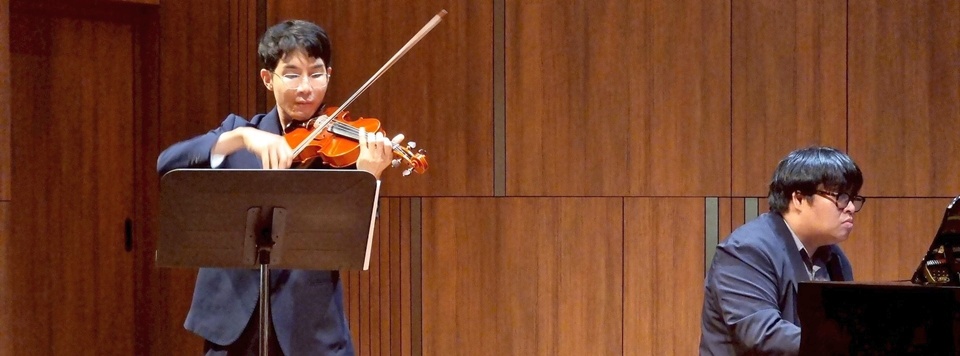
PATTAYA, Thailand: The last concert of the season at Ben’s Theater, Jomtien was given by violinist Chasa Niyomsub and pianist Anant Changwaiwit who presented a programme of Bach, Beethoven, Bartók, Greig and Sarasate. One of the regular guests thought that it was “the best concert ever.” It was indeed a memorable concert. But what makes a concert memorable? What are those special qualities that makes one concert stand from the others?
The famous Spanish cellist Pablo Casals once said something like, “Don’t just play the notes…play the meaning of the notes.” To many people, that advice might sound somewhat enigmatic, but experienced musicians will know exactly what Casals was talking about. As the conductor Leopold Stokowsi famously remarked to his orchestra, notes are “just black marks on white paper.” The “black marks” of course, are sets of instructions (and sometimes difficult instructions at that) which are written down by the composer using a code known as music notation. The task of the performers is not simply to convert these instructions into sound, but to convert them into music. If the performers can convert them into expressive and meaningful music, so much the better.
In years gone by, I have given countless concerts, either as an instrumental player or as a conductor. I’ve been on both sides of The Fourth Wall, the name that theatre people give to the invisible barrier between performer and audience. So often, I have seen professional musicians play expressively and faultlessly but they remain “behind the wall” and seem to forget the audience are there. What was special about this recital was that the two musicians, and especially violinist Chasa Niyomsub engaged with the audience through the music. And this one of the things that made their concert so memorable.
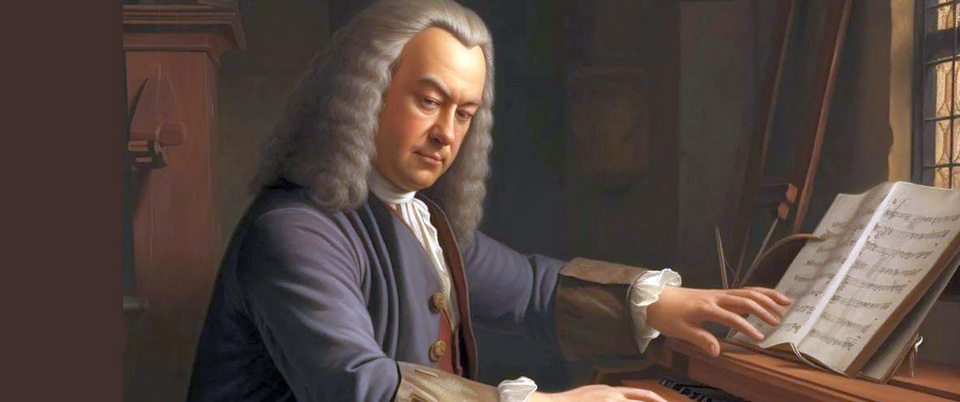
The programme opened with three movements from Bach’s Partita No. 3 in E Major for unaccompanied violin. Completed in 1720, it’s from a set of six sonatas and partitas which to this day remain essential repertoire for all advanced violinists. Chasa really brought the music to life with sensitive and graceful playing. The staccato notes sounded delicate and perfectly placed and the legato passages were broad and lyrical. His intonation throughout the concert was exemplary and I was especially impressed by his superb tone quality, his sense of phrasing, his expressive performance and the careful placing of notes. As he plays, Chasa often moves freely and brings lightness and charm to the music.
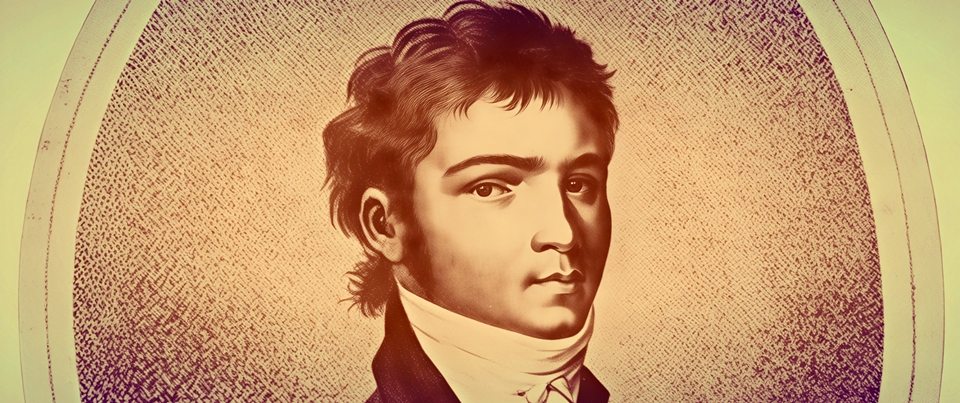
Chasa was joined by pianist Anant Changwaiwit for Beethoven’s Violin Sonata No. 5 in F major, Op. 24 affectionally known as the Spring Sonata. Beethoven wrote ten sonatas for violin and piano and this one, completed in 1801 is among the best-known. It has an optimistic mood and from the opening notes, Chasa and Anant brought refreshing new life to the work. From the beautifully played opening bars, one somehow sensed that this would be an insightful performance. The slow movement opens with a wistful melody on the piano played with remarkable sensitivity by Anant. Later, the piano plays a more elaborate version of the original melody, again with “nods of agreement” phrases from the violin, perfectly phrased by Chasa.
This must surely be one of Beethoven’s most beautiful slow movements, a melody of almost heart-breaking melancholy and gentle key changes that move like quietly shifting colours. Chasa played with great sensitivity and warmth, beautiful string tone and perfectly-judged dynamics. The overall effect created by Anant and Chasa was magical – I can think of no other word. There were many more “magical moments” during the concert; little snapshots in time of such remarkable beauty that words fail. Finally, the piano and violin exchange musical phrases with splendid precision and Chasa created a memorable ending to the movement.
The brief, dazzling and witty scherzo is fascinating in its use of cross-rhythms. Anant and Chasa gave a sparkling performance with a compelling sense of style and ensemble. The joyful finale is reassuring and confident, almost dance-like at times, though more of a country romp than a stately ballroom dance. Chasa and Anant provided a lively and high-spirited performance with excellent precision and sense of ensemble, with melodic phrases being thrown perfectly between the piano and violin. The movement was also a showcase for their virtuosic skills and they kept the energetic pace throughout, finally bringing the movement to a heroic conclusion.
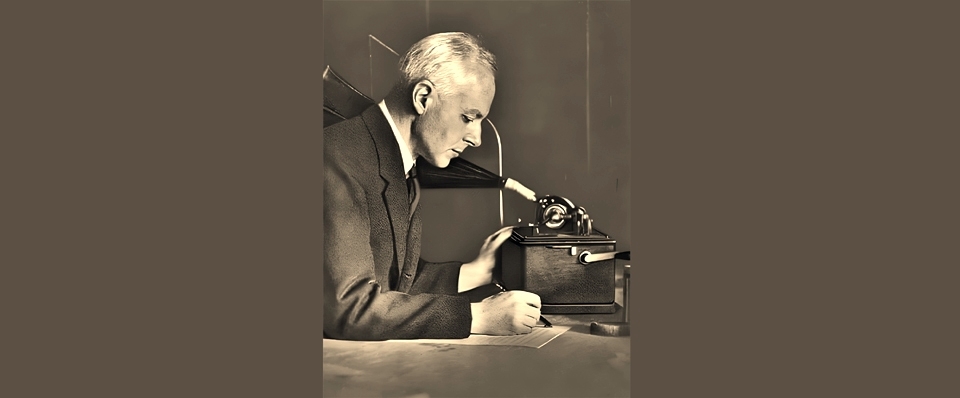
Between 1909 and 1914, Hungarian composer Béla Bartók travelled to some of the remotest regions of the country to record countless examples of folk music on an Edison phonograph recorder. He later transcribed them into music notation. One of the many outcomes of his travels was the Romanian Folk Dances, a suite of six pieces based on folk tunes which Bartók recorded in Transylvania. In 1917, he orchestrated the pieces and authorized several instrumental versions such as Zoltán Székely’s version for violin and piano. This adaption features many string techniques such as double-stopping, artificial harmonics and an advanced bowing technique known as sautillé, which is achieved by rapidly “bouncing” the bow on the string. Some of the dances are extremely short. The second one, entitled Brâul lasts for just 25 seconds. If you sneeze, you could miss it.
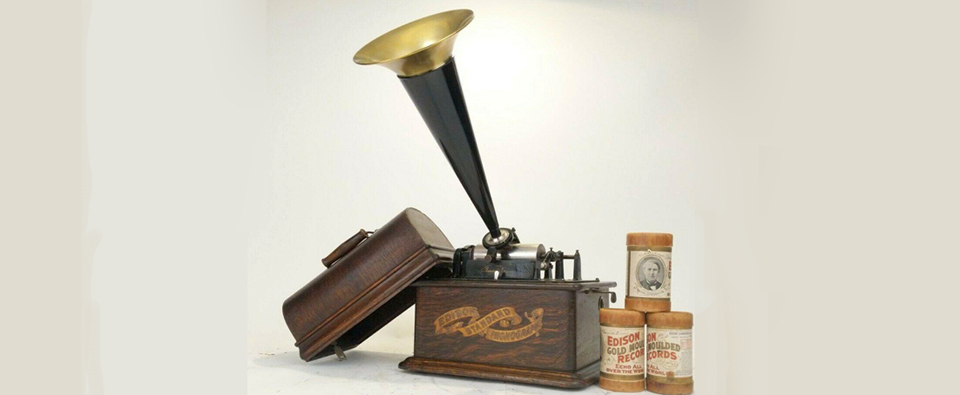
Chasa and Anant caught the spirit of the music from the start: pounding piano chords and a declamatory gypsy-like theme which leads into a gentler melody with difficult double and triple-stopping in the violin part. The second dance was played with a perfect sense of pace and excellent ensemble. I was impressed with the delicate pianissimo violin tone in the third dance, entitled Topogó. The piece uses a tonality known as the Romanian Minor Scale and the unworldly melody is played on the violin’s harmonics throughout, creating a strangely eerie sound.
Chasa and Anant gave a captivating performance. In the fourth movement, Chasa played the haunting violin melody with passion and created a wonderful sense of dark foreboding, drifting between major and minor tonalities. The work concludes with two lively dances in which the violin uses open strings under melody to create a rustic, bagpipe-like effect. Chasa and Anant took the various technical demands in their stride and although the work was great fun to hear, it was hard work for Anant and Chasa who gave a stunning performance.
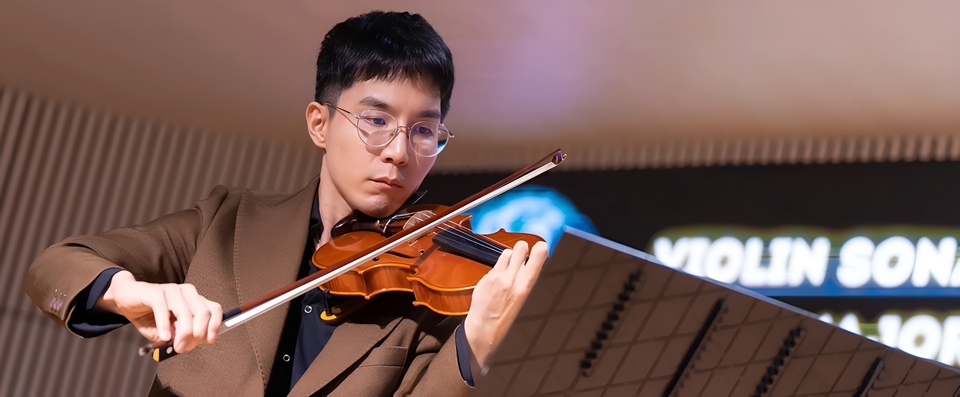
Chasa Niyomsub has appeared as a soloist with several orchestras and he’s an active concert violinist. He began his studies at the age of eleven and later received awards at the Settrade Music Competition. Chasa studied with the Austrian classical violinist David Frühwirth and for a time played in the first violin section of the Thailand Philharmonic Orchestra. He plays a violin made by Francesco Bissolotti, one of the greatest Italian violin makers of the 20th century. Chasa is especially dedicated to teaching and his students have won prizes at major international competitions.
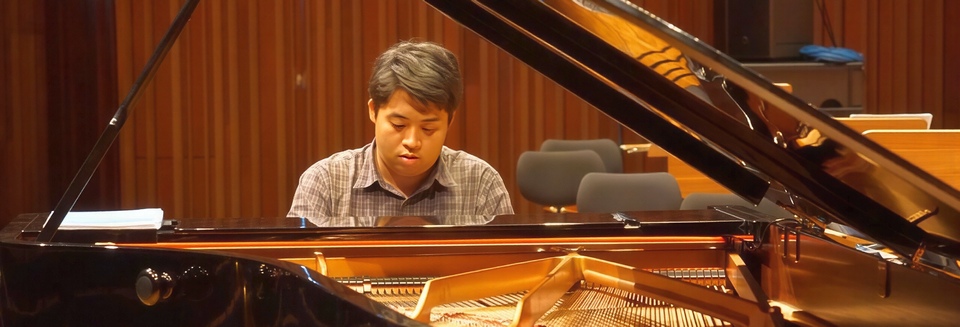
Anant Changwaiwit is one of Thailand’s most sought-after performers. He has an active career spanning solo recitals, concerto performances and chamber music engagements. Critics have praised him as a virtuoso pianist of “imagination and insight” and he’s admired for his expressive artistry. He has appeared for three consecutive concert seasons with the Thailand Philharmonic Orchestra. Last year at Ben’s Theater Jomtien, Anant performed the two most difficult works in the piano repertoire: Ravel’s Gaspard de la nuit and Balakirev’s Islamey. Anant completed his Bachelor of Music in Piano Performance with first-class honours from the College of Music, Mahidol University. He currently serves on the piano faculty at both the Mahidol University College of Music and Aum Aree Music School.
The second part of the concert opened with a performance of Grieg’s Violin Sonata No 3, which the composer began in the autumn of 1886. This sonata brings the influence of Schumann and Mendelssohn and it’s imbued with the character of Norwegian folk music. Chasa and Anant launched into the dramatic opening of the sonata with tremendous energy. It was a thrilling moment. The music leads into the broad sweeping melody that dominates the movement and highlighted Chasa’s rich and luminous violin tone. The movement is often agitated but there are lovely lyrical reflective moments which take phrases from the first melody. It was a lovely performance.
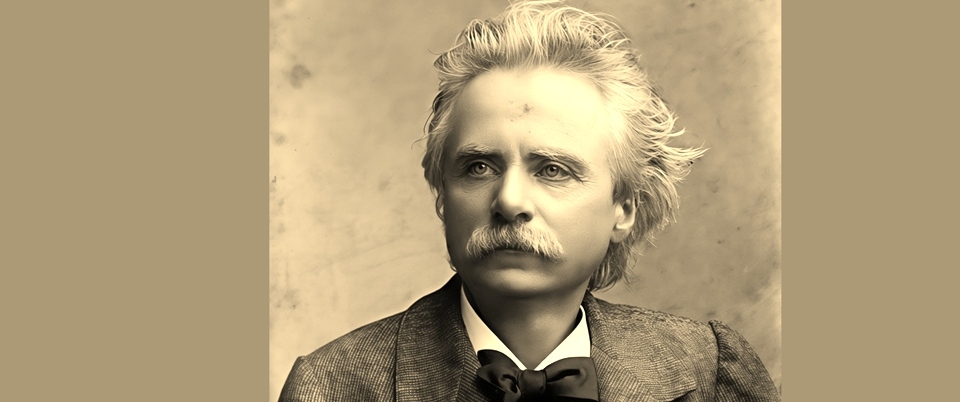
The second movement opens with a folk-like melody played by on the upper notes of the piano and Anant gave a thoughtful and delicate performance with remarkably sensitive playing which was close to perfection. It was another of those magic moments. Chasa’s performance of the same melody was mesmerizing and incredibly expressive. I especially enjoyed his subtle use of portamento. The music turns into a light, staccato dance-like movement with playful pizzicato on the violin and the musicians brought out the entrancing dance-like quality of the music.
The final movement is a jolly dance-like melody with a sparkling accompaniment on piano. I especially enjoyed the lively performance that Chasa and Anant provided. There are many hints of folksong in the music and at one point a subtle reminder of Grieg’s Peer Gynt Suite. Towards the end, the first theme returns skillfully interplayed by violin and piano which Anant and Chasa brought off brilliantly. The closing section was played with splendid articulation and finished off with a truly memorable and triumphant musical flourish.
I don’t know whether anyone noticed, but in the last movement, Grieg includes a melody which is almost identical to the aria O for the wings of a dove! from Mendelssohn’s 1844 anthem Hear my prayer.
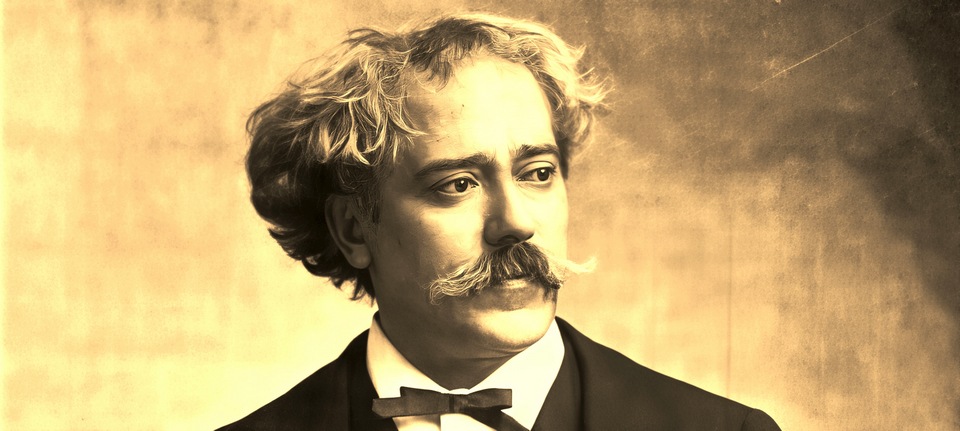
The concert ended with Zigeunerweisen (“Gypsy Airs”) written in 1878 by the gloriously-named Pablo Martín Melitón de Sarasate y Navascués, more conveniently known as Pablo de Sarasate. He was a Spanish virtuoso violinist and composer who visited Budapest on a concert tour in 1877. There he would have heard local gypsy bands playing the popular songs that inspired this work.
The name “gypsy airs” is a bit misleading because one of the tunes is from Franz Liszt’s Hungarian Rhapsody No. 13 and another one is a song by Elémer Szentirmay (whose real name was János Németh) a Hungarian composer of popular music. At the beginning of the score, Sarasate writes “It is impossible to indicate the exact interpretation of this piece,” indicating his awareness that musical notation has its limits.
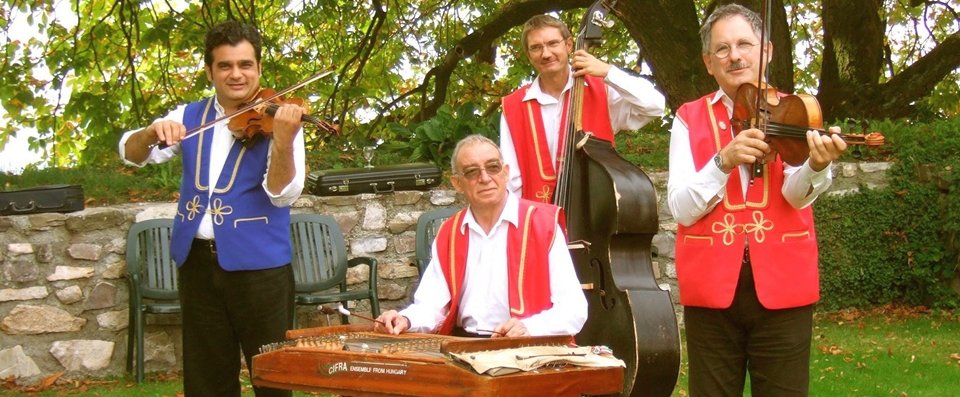
After a brief fortissimo introduction on the piano, the violin takes the lead. Chasa captured the haunting obsessive quality of the music, with its gipsy-like tormented soulfulness. The music has an improvisational quality but it’s peppered with challenging tasks for the violinist, especially some tricky bowing techniques which Chasa handled to perfection. Chasa’s playing of this challenging music was exemplary and really caught the essence of the music. It reminded me of Budapest where in the restaurants, strolling gipsy violinists entertain the customers with lugubrious folk melodies, oozing with schmaltz and dark melancholy.
The third section uses the well-known song that Sarasate borrowed (or stole, if you prefer) from Elémer Szentirmay. Anant played the theme with a marvelous sense of nostalgia and later Chasa played it with great warmth, expressive use of dynamics and perfect phrasing. The final section is energy-driven music full of technical fireworks in the violin part which include a tricky bowing technique known as spiccato, harmonics, alternative arco and pizzicato in quick succession, rapid chromatic passages and sudden contrasts of dynamics. There are touches of humour too, mixed with tricky violin harmonics and notoriously difficult left-handed pizzicato. Chasa played this virtuosic music brilliantly with confidence and charm supported by driving, rhythmic piano playing from Anant. With perfect ensemble playing, they brought the exciting movement – the concert and the season – to a brilliant close, with a grand musical flourish.