BANGKOK, Thailand – Thailand’s stock market has continued to attract strong foreign investment in 2026 despite growing tensions in the Middle East, with investors viewing the country as one of the safer destinations for capital in Asia.
Since the start of the year, the SET Index has climbed by around 217 points, or roughly 17 percent, reaching a peak of 1,510 points in mid-April before facing profit-taking pressure.
Trading activity also accelerated sharply during the first quarter. Average daily turnover rose from 46 billion baht in January to 73 billion baht in February and 75 billion baht in March, lifting the first-quarter average to around 65 billion baht per day. Activity has slowed slightly in April, with daily turnover easing to around 42-45 billion baht.
Analysts say the main force behind the rally has been foreign investors, whose shareholding in Thai equities has risen to around 37 percent from 30 percent last year. March recorded the strongest foreign net buying in four years, with investors focusing heavily on large-cap stocks in the energy, banking and technology sectors.
Energy giant PTTEP has become the biggest beneficiary of foreign inflows, supported by soaring global oil prices and fears of supply disruption linked to the conflict involving the United States, Israel and Iran. Foreign investors accumulated around 12.45 billion baht worth of PTTEP shares between February and mid-April.
Major bank BBL followed with net foreign buying of around 5.12 billion baht, reflecting confidence in the bank’s strong financial position and ability to weather market volatility during a period of elevated interest rates.
Meanwhile, technology stock DELTA regained attention after renewed speculation over a recovery in global tech demand. Foreign investors accumulated nearly 3.89 billion baht worth of DELTA shares in early April.
Telecom operator ADVANC also emerged as a popular defensive play thanks to its stable cash flow and reliable dividend payments. Investors used the stock as a safe place to park money during periods of heightened geopolitical uncertainty.
On the other hand, retailer CPALL faced net foreign selling of more than 2.3 billion baht as concerns grew over rising operating costs and weaker consumer spending caused by higher inflation and energy prices.
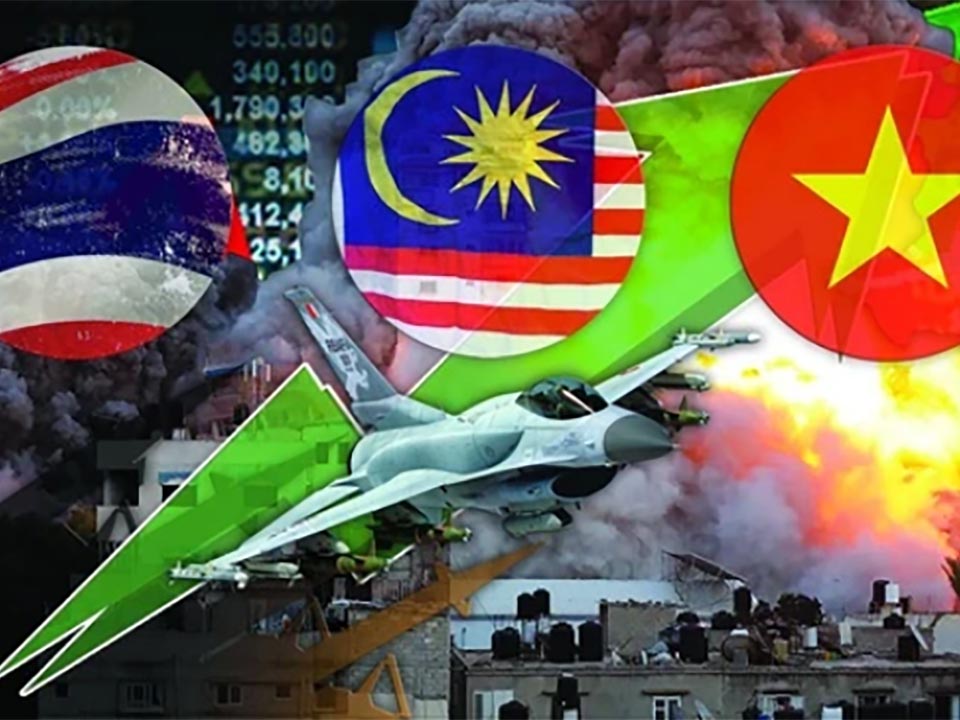
Across ASEAN, markets in Malaysia and Vietnam have also attracted strong foreign inflows, helping fuel a broader regional rally as investors seek relatively safe emerging markets with attractive valuations, strong dividend yields and lower direct exposure to Middle East geopolitical tensions.
Analysts believe upcoming first-quarter earnings results from banks and energy companies could determine whether the SET Index can return to test the key 1,500-point level again.
However, risks remain. A prolonged conflict between the United States and Iran, particularly if it leads to a closure of the Strait of Hormuz for several months, could send oil prices sharply higher, hurt global growth and drag the Thai market lower.
Even so, market observers say foreign investors have not abandoned Thailand. Instead, they are rotating money between sectors, shifting from defensive names like ADVANC into war-linked beneficiaries such as PTTEP and major banks like BBL.