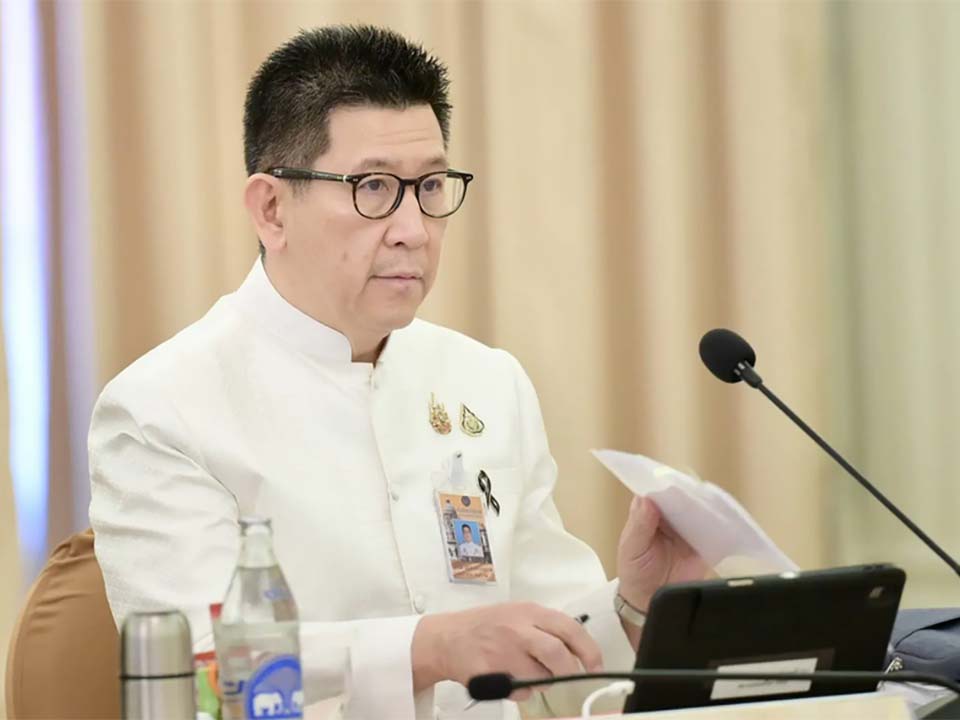
BANGKOK, Thailand – Deputy Prime Minister and Minister of Finance Ekniti Nitithanprapas announced that the Cabinet has approved a comprehensive package of measures to assist citizens, businesses, and key economic sectors impacted by the ongoing Middle East conflict. The measures are intended to ease immediate financial pressures and address broader risks such as slower growth and rising inflation.
The relief package provides both short-term assistance and long-term adaptation. For vulnerable groups, welfare card benefits will increase from 300 to 400 baht per month for 13.22 million recipients, from April 13 to May 12, 2026, to help offset rising living costs.
Low-interest loan programs will be introduced to support the public’s transition to clean energy. The Government Savings Bank will offer a 5-billion-baht soft loan program for energy adaptation, including solar panel installation and the purchase of electric vehicles, with loans of up to 2 million baht per borrower over five years. The Government Housing Bank will provide special mortgage schemes for energy-efficient housing and solar roof installation.
The Bank for Agriculture and Agricultural Cooperatives will launch a 30-billion-baht loan program to reduce production costs in the agricultural sector. Farmers will receive low-interest loans, with the government subsidizing half the interest rate, and technical support such as soil and fertilizer optimization to improve productivity and income stability.
Procurement rules for businesses, especially government contractors, will be relaxed to address disruptions from global energy price volatility. Measures include contract flexibility, temporary work suspension, and adjustments to construction cost calculations to reflect changing fuel prices. Budget disbursement will be accelerated to maintain liquidity.
Small and medium-sized enterprises will have access to a 100-billion-baht soft loan program to support business transformation, including digitalization and green initiatives. Additional financing will be available through SME development banks and export credit agencies, offering low-interest loans and insurance to help manage rising logistics costs and market uncertainties.
The Cabinet approved a 2.06-billion-baht fuel subsidy for the transport sector over 42 days, from April 20 to May 31, 2026, covering trucks, public transport, taxis, and interprovincial buses. Additional support will be provided to Transport Co., Ltd. to help reduce travel costs during the Songkran holiday.
The government will also implement cost-saving measures in the public sector, including reduced overseas travel, increased domestic activities, and expanded work-from-home arrangements to lower energy consumption.
The Deputy Prime Minister emphasized that the government, through the Ministry of Finance and relevant agencies, is committed to implementing these measures to urgently mitigate impacts on small-scale farmers, the public, and businesses, enabling them to resume normal economic activities and daily life as quickly as possible. These efforts aim to reduce economic risks by building a business ecosystem that supports enterprise growth and lays the foundation for a sustainable and inclusive recovery across all sectors. (NNT)