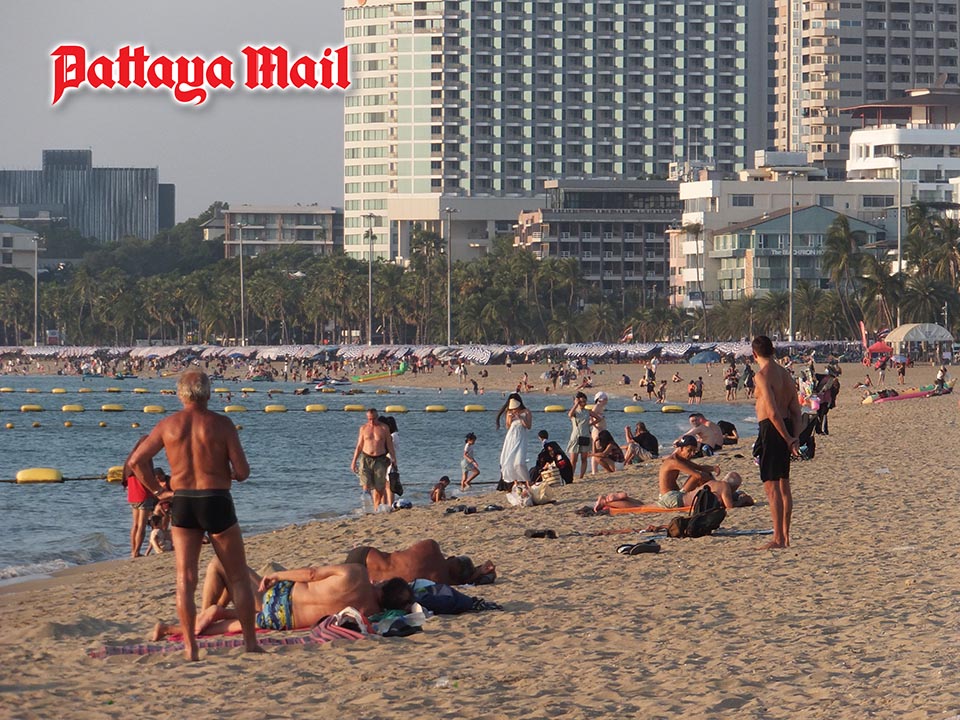
PATTAYA, Thailand – As Songkran approaches its peak, Pattaya is once again buzzing — crowded streets, full hotels, and the familiar energy that defines Thailand’s biggest holiday. But beneath the surface, a different conversation is taking shape, especially among long-term visitors watching what comes next.
Online forums are filling with concern and speculation. Some say the city is “busy everywhere” right now — a reassuring sign after years of disruption. But others are already looking beyond the festival, warning of a sharp drop once the crowds leave. The phrase “off a cliff after Songkran” comes up more than once, reflecting a lingering fear shaped by recent years of volatility.

It’s not just about seasonal patterns. What’s different this time is the sense that multiple pressures are converging at once.
Currency strength is one of them. A strong baht continues to chip away at affordability, particularly for long-stay visitors who budget in foreign currencies. Add to that rising rents, higher everyday costs, and transport prices likely to increase after temporary fuel measures end, and the equation starts to shift.
Visa policies are another flashpoint. Rumors and frustrations around entry rules, length of stay, and enforcement create uncertainty — and uncertainty is rarely good for a destination that relies heavily on repeat, long-term visitors. Some commenters even float drastic or sarcastic “solutions,” highlighting the level of frustration rather than offering realistic fixes.
There’s also a deeper tension running through the conversation: the question of value. When people talk about “greed,” they’re not always referring to one specific group. For some, it’s landlords pushing rents higher. For others, it’s businesses raising prices faster than service improves. And for a few, it’s a broader feeling that Pattaya risks taking its customer base for granted.
At the same time, not everyone shares the pessimism. Some voices are calling for diversification — fewer dependencies on one type of visitor, more balanced tourism that includes families, regional travelers, and higher-spending segments. It’s a familiar argument, but one that feels more urgent as global travel patterns shift.
What makes Pattaya different is its resilience. The city has reinvented itself before, and many long-term residents point out that outside the nightlife zones, life continues in a relatively stable and predictable way. Markets open, gyms fill up, routines carry on. The chaos is real — but so is the normality.
Still, the memory of the pandemic lingers. Empty streets during COVID are not easily forgotten, and for some, the fear isn’t just about a slow season — it’s about how quickly things can change when external factors align.
As one perspective puts it: the issue isn’t whether Pattaya is busy today — it’s whether it can stay sustainable tomorrow.
Songkran will once again prove the city’s drawing power. What happens after will test its balance.