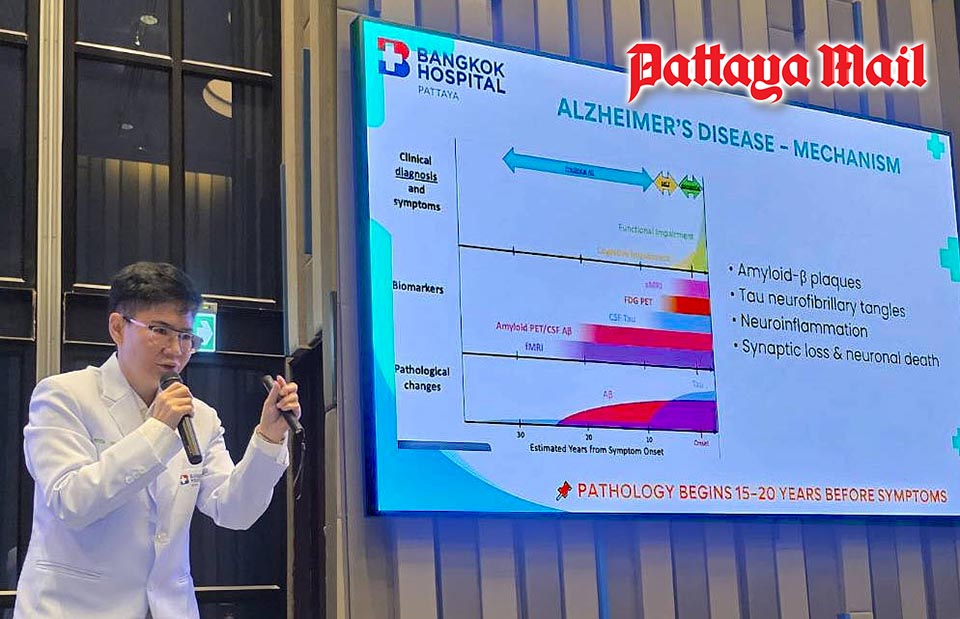
PATTAYA, Thailand – In a wide-ranging talk on Wednesday, March 11, to the Pattaya City Expats Club (PCEC) by Dr Kriththa Puengcharoen, MD, about memory concerns in later life. Dr Kriththa provided guidance on how to distinguish between dementia and “brain fog” and treatments available. She is a Neurologist from the Brain Center of Bangkok Hospital Pattaya.
Dr Kriththa noted that one should not assume that every lapse signal Alzheimer’s disease while also emphasizing that early assessment matters when symptoms begin to affect day-to-day function. The presentation walked attendees through a “spectrum” of memory problems, from attention lapses and anxiety-related forgetfulness to brain fog, mild cognitive impairment (MCI) and dementia, highlighting which causes may be reversible and which typically require longer-term monitoring and support.

She opened with quick, interactive “screening-style” tasks to perform remembering three words for later recall and generating as many words as possible that begin with a chosen letter within a minute. Dr Kriththa used these demonstrations to explain a key point: many people who feel “forgetful” are struggling at the earlier stages of memory formation, where distraction, stress or poor sleep prevents information from being encoded in the first place.
Dr Kriththa described memory complaints as falling along a continuum. At one end are attention deficits, when information never “gets in” because focus is divided. Next is anxiety-related cognitive dysfunction, where stress hormones and sleep disruption interfere with the brain’s ability to store new memories. Brain fog can feel more changeable with good days and bad days and may be linked to medication effects, metabolic problems, inflammation, dehydration, sleep disorders, or post-viral states. Farther along the spectrum is MCI, where early brain changes can begin but daily function may remain largely intact; some cases stay stable or improve if contributors are addressed, while others progress. Dementia, by contrast, involves progressive decline accompanied by functional impairment.

A central theme of the talk was that many cognitive symptoms can improve when underlying drivers are identified and treated. Dr Kriththa pointed to polypharmacy and certain commonly used drugs such as some antihistamines, sleeping pills and pain medications as potential culprits for reduced attention and brain fog. She also highlighted depression and chronic pain as factors that can drain attention and impair sleep. Another frequently overlooked cause is sleep apnea, which can reduce oxygen delivery to the brain at night and is linked to increased future risk of both stroke and cognitive decline.
Other contributors discussed included thyroid abnormalities, vitamin B12 deficiency, dehydration, and chronic inflammation (with dental and tooth problems offered as an example. Dr Kriththa’s overarching message was that persistent symptoms deserve a structured medical evaluation rather than guesswork, especially when multiple small factors may add up to noticeable impairment.
Vascular health as brain health. When discussing dementia risk, Dr Kriththa repeatedly returned to modifiable, largely vascular and lifestyle-related factors. She emphasized hypertension as a leading stroke risk factor and underscored the role of diabetes, high cholesterol, atrial fibrillation, and smoking in long-term brain outcomes. The practical takeaway was prevention: manage cardiovascular risks, stay physically active, maintain hearing and vision, reduce excessive alcohol intake, and prioritize sleep, along with steps to support overall quality of life.
Among the prevention strategies highlighted were about 150 minutes of exercise per week, a Mediterranean-style diet, ongoing cognitive and social engagement, and 7–8 hours of sleep nightly, alongside stress reduction and routine management of blood pressure and metabolic health. Dr Kriththa also stressed the value of early diagnosis, noting that identifying reversible contributors or catching early-stage decline can lead to better outcomes and more options for patients and families.

The presentation concluded with a brief “brain gym” segment led by an occupational therapist from BHP, featuring hand and finger coordination drills designed to challenge concentration and coordination. Attendees were encouraged to practice the simple movements at home to keep the brain “active,” alongside the broader lifestyle measures she emphasized throughout the presentation.
In a subsequent post presentation interview, Dr Kriththa explains that problems like frequent word-finding difficulty, hearing loss, or sudden neurological changes (vision/speech issues, weakness, numbness) should be taken seriously as urgent symptoms that require immediate hospital evaluation. She emphasized prevention through strong lifestyle habits: consistent, restorative sleep, regular physical activity, and maintaining healthy circulation. Overall, her message is to seek medical advice when symptoms fall outside normal daily lapses, because early assessment and treatment can help slow progression and support better outcomes.
After the presentation, MC Ren Lexander brought everyone up to date on upcoming Club events. This was followed by the Open Forum where questions are asked and comments made about Expat living in Thailand. To learn more about the PCEC, visit their website at https:/pcec.club. To view the video of Dr Kriththa’s presentation, visit the PCEC’s YouTube Channel at https://www.youtube.com/watch?v=hkBuYuCwp-Y&t=15s. For the interview, visit https://www.youtube.com/watch?v=KVMan-gXD08.