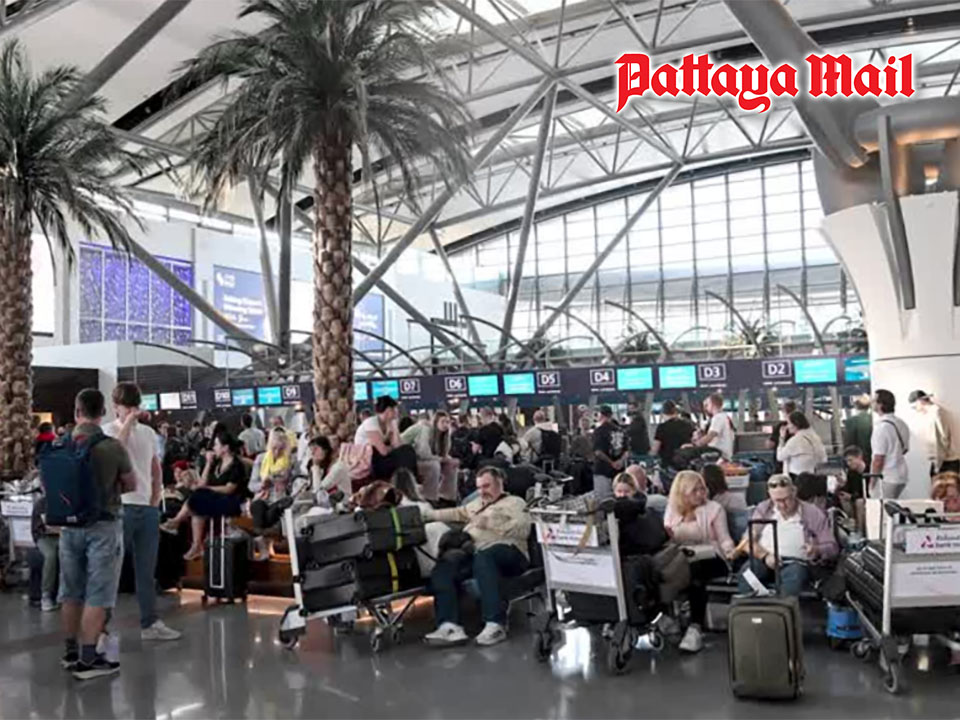
PATTAYA, Thailand – Airlines based in the United Arab Emirates have begun gradually restoring key international routes, even as the ongoing conflict in the Middle East continues to disrupt global air travel and leave thousands of passengers stranded.
Major carriers Emirates and Etihad Airways resumed limited flight operations on Friday from their hubs in Dubai and Abu Dhabi. However, airline officials warned that services remain reduced and subject to sudden changes as missile threats and regional airspace closures continue to create uncertainty across the aviation sector.
Large parts of Middle Eastern airspace remain restricted following the outbreak of hostilities involving the United States, Israel, and Iran. The situation has forced many countries to organize charter flights and reserve limited seats on commercial aircraft in order to evacuate tens of thousands of citizens from affected areas.
Philippe Tabarot, France’s transport minister, said a charter flight operated by Air France that was tasked with evacuating French nationals from the UAE was forced to turn back on Thursday after missile launches were reported in the region. The incident highlighted the volatility of the situation and the challenges facing evacuation operations.
Meanwhile, the first evacuation flight carrying British nationals departed from Oman and landed at London Stansted Airport in the London early Friday morning after experiencing delays during passenger boarding.
Etihad Airways said it plans to operate a reduced schedule until March 19, serving approximately 70 destinations including London, Paris, Frankfurt, New Delhi, New York City, Toronto and Tel Aviv.
At the same time, Emirates announced it would temporarily reduce its network to 82 destinations, including Sydney, Singapore and London. The airline said it will only accept transit passengers in Dubai if confirmed connecting flights are available.
According to flight tracking platform Flightradar24, air traffic at Dubai International Airport nearly doubled compared with Wednesday levels, although it still represents only about 25 percent of normal operations.
The disruption has been particularly severe on routes linking Europe with the Asia-Pacific region. Airlines such as Emirates, Qatar Airways and Etihad Airways normally carry about one-third of passengers traveling between Europe and Asia, and more than half of those flying between Europe and Australia or New Zealand.
Operations remain especially constrained as the main hub of Qatar Airways in Doha remains closed. Only limited relief flights are currently operating through Oman and Saudi Arabia.
Data from aviation analytics firm Cirium shows that since the conflict began on February 28, more than 25,000 flights to and from the Middle East have been canceled out of approximately 44,000 scheduled services.
Rising fuel costs are also worsening the crisis. Jet fuel prices in Singapore reached a record high of about 225 US dollars per barrel earlier this week before easing to around 195 dollars on Thursday. The price remains nearly double the level seen the previous week.
According to analysis by Fitch Ratings, airlines are facing a double financial impact from both lost revenue due to flight disruptions and sharply higher fuel expenses. While many carriers in Europe, the Middle East, and Africa have hedged between 50 and 80 percent of their fuel needs for the next three months, the prolonged instability continues to pose a serious challenge for the global aviation industry. (TNA)