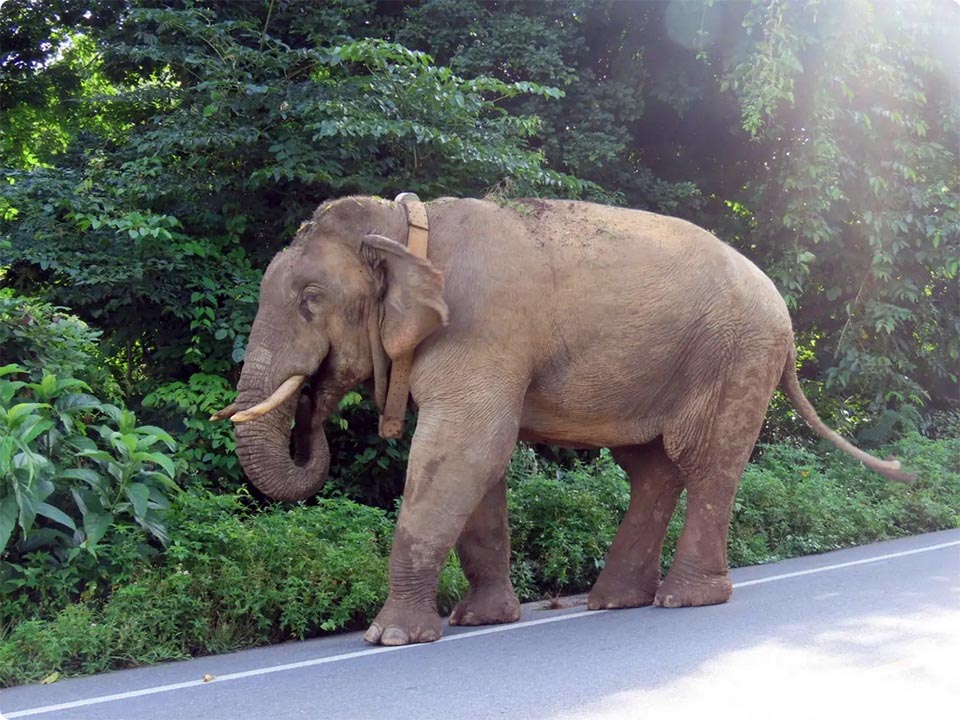
BANGKOK, Thailand – The Department of National Parks, Wildlife and Plant Conservation has directed officials to accelerate the removal of GPS tracking collars from wild elephants once monitoring objectives have been completed. The order from the department’s director-general states that elephants should return to living naturally as soon as sufficient data have been collected, in accordance with animal welfare standards.
GPS collar use began in 2019, when six elephants were fitted with devices to study movement routes and feeding behavior; all of those collars have since been removed. Since 2020, 37 additional elephants have been collared to help manage human–elephant conflict and prevent animals from entering nearby communities. Of those, 33 collars have been removed, two elephants are still wearing collars, and two more are in the process of removal. In 2024, a Mahidol University research team fitted five elephants with collars; one has been removed, and four remain under study pending removal after the research concludes.
The collars transmit satellite data every hour, providing information on heart rate, environmental temperature, terrain use, movement direction and speed, and estimated food intake. Wildlife officers use the real-time data to track herd movements and intervene before elephants reach agricultural or residential areas, reducing risks to lives and property.
Officials said collaring in certain eastern forest zones remains a temporary measure while longer-term solutions are developed. Data from the tracking program will support forest management planning, including improving food and water resources within protected areas to encourage elephants to remain in natural habitats.
The department said elephant welfare remains a priority alongside public safety. GPS collars are considered a short-term management tool and will be removed promptly once their purpose has been fulfilled, ensuring elephants are not burdened with tracking equipment longer than necessary. (NNT)