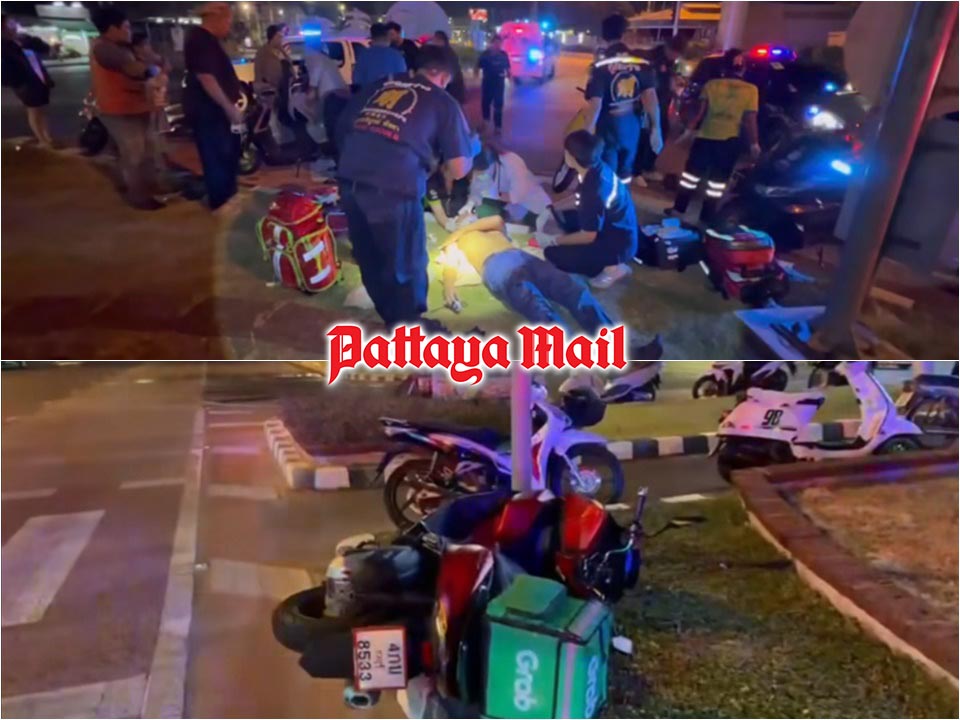
PATTAYA, Thailand – A motorcycle collision at the Central Pattaya intersection this week has once again highlighted a long-standing and dangerous problem on the city’s roads: routine disregard for red traffic lights.
According to initial reports, a local rider ran a red light and collided with another motorcycle legally crossing the intersection. Several people were injured and taken to hospital. As is often the case, speculation quickly followed online — about who was at fault, whether alcohol was involved, and why traffic laws seem optional to some road users.
The comments that followed were brutal, sarcastic, and revealing.
“But I honked — why didn’t the others stop?”
“Go faster. Ignore lights and signs. Safety third.”
“Karma on wheels.”
Behind the dark humor lies a serious reality: running red lights in Pattaya is not an exception — it is normalized behavior.
Red-light running endangers far more than the rider who takes the risk. Intersections are shared spaces used daily by tourists on rented motorbikes, pedestrians crossing unfamiliar roads, baht buses stopping unpredictably, and drivers who assume — reasonably — that a green light means it is safe to proceed.
For visitors, the danger is compounded. Many tourists follow the rules precisely because they do not understand local traffic habits. When a rider blasts through a red light at full speed, it is often the law-abiding road user who pays the price.
Public frustration also reflects a deeper issue: weak enforcement.
Residents openly question how many red-light violations have actually resulted in tickets over the past decade. Whether exaggerated or not, the perception remains that running red lights carries little consequence — until someone is injured or killed.
Without consistent enforcement, traffic lights become suggestions rather than rules.
Some commenters framed the crash in terms of fate, luck, or religious protection — even joking that an amulet might protect against bullets but not traffic laws. While flippant, such remarks point to a broader mindset where accidents are attributed to destiny rather than preventable behavior.
But traffic collisions are not acts of fate. They are choices.
As Pattaya continues to market itself as a world-class tourist destination, road safety remains one of its most visible contradictions. Running red lights is dangerous, illegal, and entirely preventable — yet it persists daily, in full view of cameras, police booths, and crowded intersections.
Until enforcement becomes consistent and consequences real, the question won’t be why accidents keep happening — but who will be next.