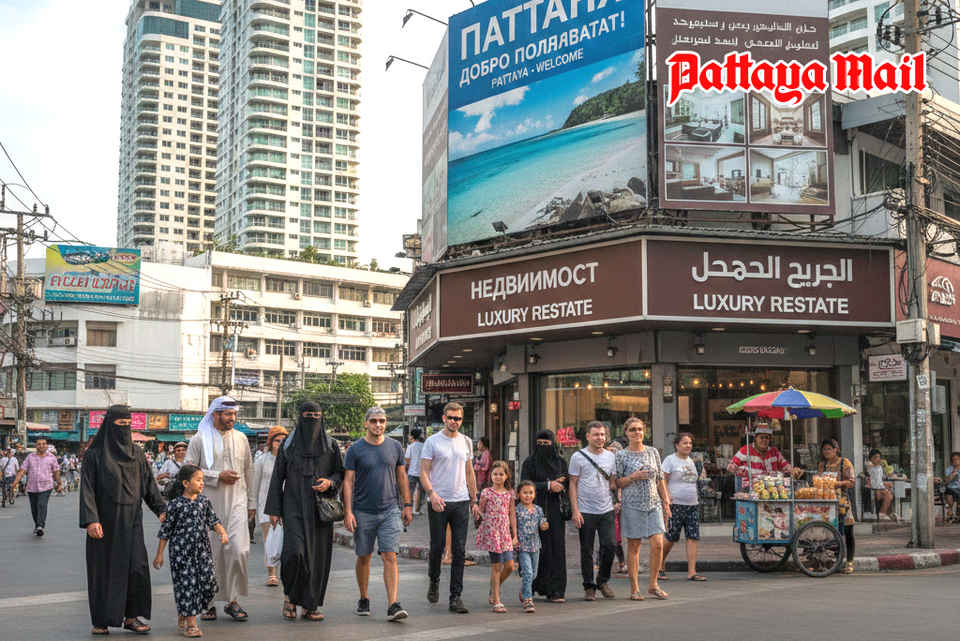
PATTAYA. Thailand – Thailand has always been good at attracting people. For decades, visitors have come for the obvious reasons: climate, affordability, food, and a lifestyle that feels lighter than the one they left behind. What is different now is not the attraction itself, but who is staying and for how long. In 2025, Thailand recorded just over 30 million foreign arrivals, generating an estimated 1.4 trillion baht in tourism revenue. These figures are often quoted, usually to demonstrate recovery or growth. They matter but they do not tell the whole story. A quieter change is taking place beneath the headline numbers.
From visitors to residents
Cities such as Pattaya illustrate this shift clearly. Beyond the hotels and short stay tourists, Pattaya now supports a sizeable population of long term foreign residents, retirees, property owners, small business operators, and families who have chosen not merely to visit Thailand, but to live here. Estimates place the long term foreign population in Pattaya at between 40,000 and 70,000 people. These are not seasonal visitors. They rent or own homes, use local hospitals, shop locally, and remain in the city year after year. Their economic footprint is steady rather than spectacular, but it is substantial.
Who is coming has changed
For many years, Thailand’s foreign facing mindset revolved around three languages, Thai, English, and Chinese. This reflected reality at the time. Today, that reality is more complex. Russian nationals now rank consistently among Thailand’s top source markets, and in Pattaya they form one of the largest long term resident communities. Russian language signs are no longer aimed only at tourists; they exist because daily life requires them.
At the same time, visitors from the Middle East particularly the Gulf states and Dubai have become more visible. While their numbers are modest compared to mass tourism markets, their spending is not. Estimates suggest 150,000–200,000 visitors from the UAE each year, with per trip spending well above the global average. They stay longer, travel as families, and spend heavily on healthcare, property, and services. These are not passing trends.
Language as infrastructure
Language is often treated as a “soft” issue something desirable but not essential. In practice, it functions more like infrastructure. When communication works, business flows easily. When it does not, intermediaries appear, costs rise, and trust erodes. In Pattaya, many businesses now rely on foreign staff or informal translators to serve Russian or Arabic speaking clients. This works, but it is not a sign of strength. It is a sign of adaptation happening without planning. The point is not that every Thai must speak Russian or Arabic. It is that the economic relevance of these languages now exists, whether acknowledged or not.
A country people choose
Thailand remains, by any measure, one of Southeast Asia’s most desirable countries. People choose it not only for holidays, but for years of their lives. That choice brings opportunity, but also responsibility. Being welcoming is not enough. Preparedness matters. Quiet adjustments matter. Language, in this context, is not about identity or culture wars. It is about practicality. The countries that thrive are rarely the loudest. They are the ones that notice change early and respond without drama. Thailand has always been attractive. The question now is whether it is willing to adjust, calmly and deliberately, to the world it is attracting.