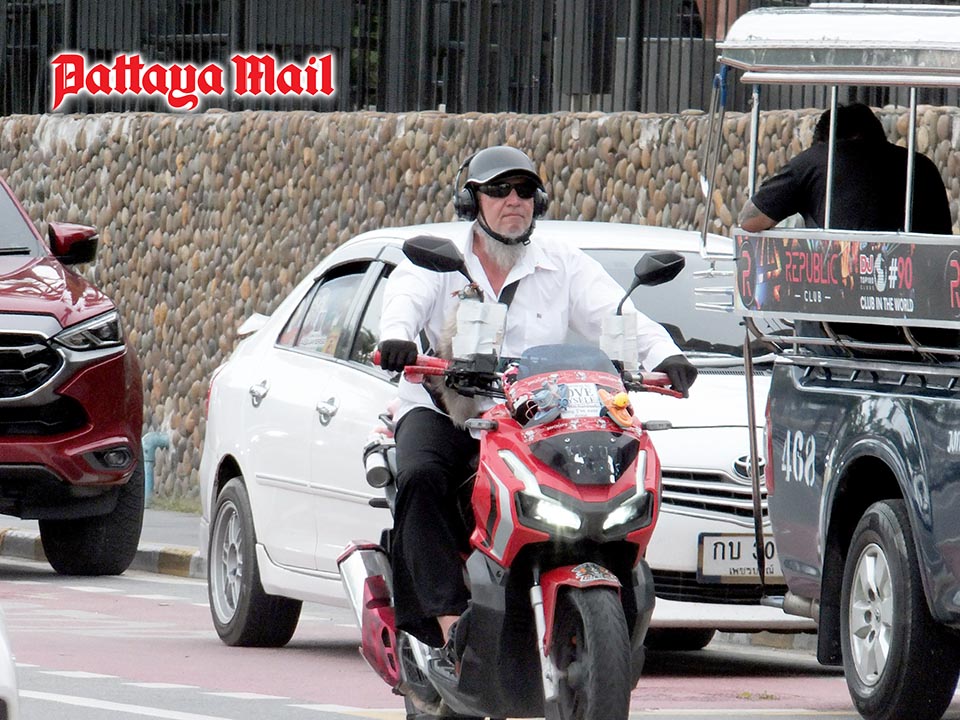
PATTAYA, Thailand – For years, Pattaya’s streets have been dominated by motorbikes—cheap to buy, easy to park, and fast in traffic. But among foreign residents and long-term visitors, a growing chorus is questioning whether riding a small motorbike in Pattaya still makes sense at all.
Their argument is blunt: Pattaya’s roads are no place for fragile vehicles.
Expats who have spent years driving in the city say the real danger isn’t just potholes or congestion, but unpredictable behavior and uneven enforcement. Red lights ignored, one-way streets treated as suggestions, motorbikes riding on footpaths, and vehicles cutting across lanes without warning are daily realities. In that environment, riding a 110–125cc scooter offers almost no protection when something goes wrong.
Many foreigners point out that traffic rules apply inconsistently. Enforcement often focuses on paperwork or helmet checks, while more dangerous behavior—wrong-way riding, aggressive weaving, blocking intersections—goes largely unpunished. When accidents happen, it’s almost always the motorbike rider who pays the highest price.
That’s why some expats now openly advise newcomers: if you can afford it, buy a small car instead.
Compared with a motorbike, even a modest second-hand car offers basic safety advantages—seatbelts, airbags, a solid frame, and protection from weather. Add air-conditioning, music, and the ability to sit calmly in traffic, and the daily stress level drops significantly. As one long-term resident puts it, “You arrive annoyed, not injured.”
Cost is no longer the barrier it once was. Used compact cars are widely available, and entry-level electric vehicles can now be found around the 500,000-baht range. For expats staying months or years, many argue that the upfront cost is a small price to pay compared with hospital bills—or worse.
Critics of this view say cars worsen congestion, and they’re not wrong. Pattaya’s road network is already struggling with volume. But expats counter that this is a policy problem, not an individual survival decision. Until enforcement improves and road discipline changes, they say riders—especially foreigners unfamiliar with local driving culture—are taking disproportionate risks on small bikes.
There’s also a cultural reality at play. Motorbikes may be normal for locals who grew up navigating chaotic traffic from a young age, but for many foreigners, especially older residents, reaction times and risk tolerance are different. What feels “normal” to one group can be life-threatening to another.
In the end, the debate reflects a deeper issue: Pattaya’s roads are adapting neither to the volume of traffic nor to the mix of drivers using them. Until that changes, many expats believe the safest move isn’t learning to ride better—but choosing not to ride at all.