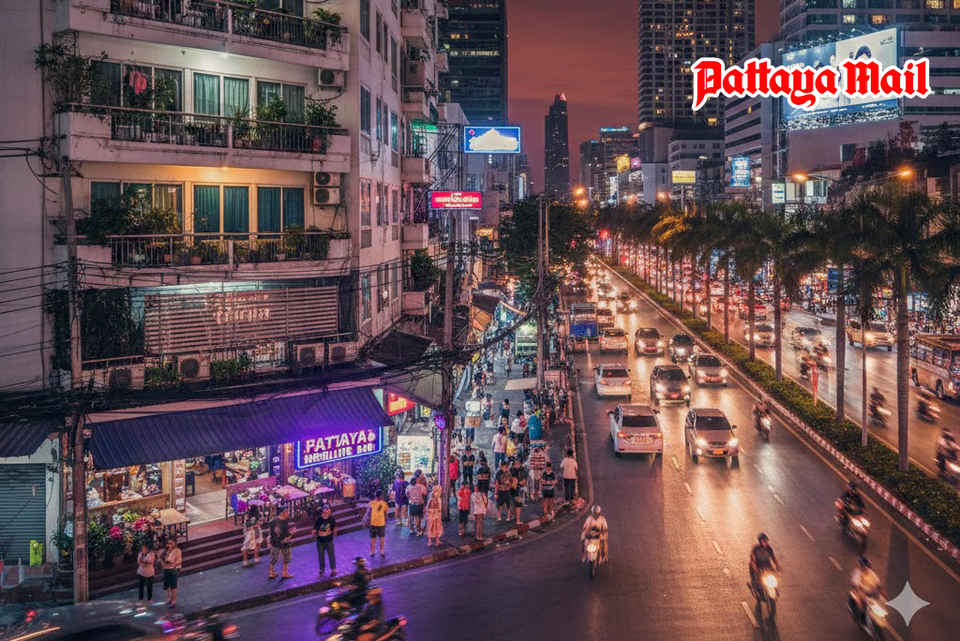
Noise, safety, and the quiet cost Pattaya is beginning to notice
PATTAYA, Thailand — Pattaya has never claimed to be a quiet city. Built on movement, it thrives on visitors who arrive, stay briefly, and move on. Long-term residents accept nightlife, traffic, and seasonal noise as part of that reality. What many did not anticipate is that some of the most persistent disturbances would emerge not from main roads or entertainment zones, but from within residential neighborhoods.
In recent years, houses in areas once defined by long-term living have increasingly shifted to short, rotating stays. Groups arrive for a few nights, often to celebrate rather than rest, then leave. Another group follows. Familiar neighbors are replaced by constant turnover.
The first impact is audible.
Late-night music, shouting, and large gatherings have become recurring complaints on streets never designed for such activity. These are rarely isolated incidents. They happen repeatedly, often after midnight, and typically involve people with no ties to the surrounding community. For families, older residents, and those with regular working hours, disrupted sleep becomes routine.
Noise, however, is only the most visible symptom.
More concerning is the erosion of predictability and safety. When occupants change every few days, neighbors no longer know who lives next door, how many people are inside, or what is taking place. Access keys and codes circulate. Family homes are used to host large groups.

In several Pattaya neighborhoods, police responses now extend beyond noise complaints to public disturbances, suspected drug-related activity, and gatherings that clearly exceed normal residential use. In some cases, repeated complaints have led to inspections and arrests.
These situations place added strain on police, private security, and juristic offices—systems designed for residential communities, not hotel-style turnover embedded in neighborhood streets. Property owners often cite economics. Short stays generate higher returns, an argument that is commercially understandable.
From a community perspective, the impact is cumulative.
As more houses shift away from long-term occupancy, neighborhood stability weakens. Long-term residents relocate. Families hesitate to settle. Streets remain occupied but lose their sense of familiarity and trust. Over time, areas gain reputations not from a single serious incident, but from repeated smaller ones involving different people each time. Such reputations, once established, are difficult to reverse.
Pattaya will always depend on visitors. That is not in question. But it also depends on residents who stay—who raise families, operate businesses, and care for their streets long after visitors have gone. When residential areas begin functioning as unmanaged accommodation zones, the balance shifts too far. The issue is no longer theoretical. Repeated complaints, police involvement, and growing unease among residents point to a practical problem requiring clearer boundaries and firmer management.
And Pattaya, of all places, has always understood the difference.
 Victor Wong (Peerasan Wongsri)
Victor Law Pattaya/Finance & Tax Expert
Email: <[email protected]> Tel. 062-8795414