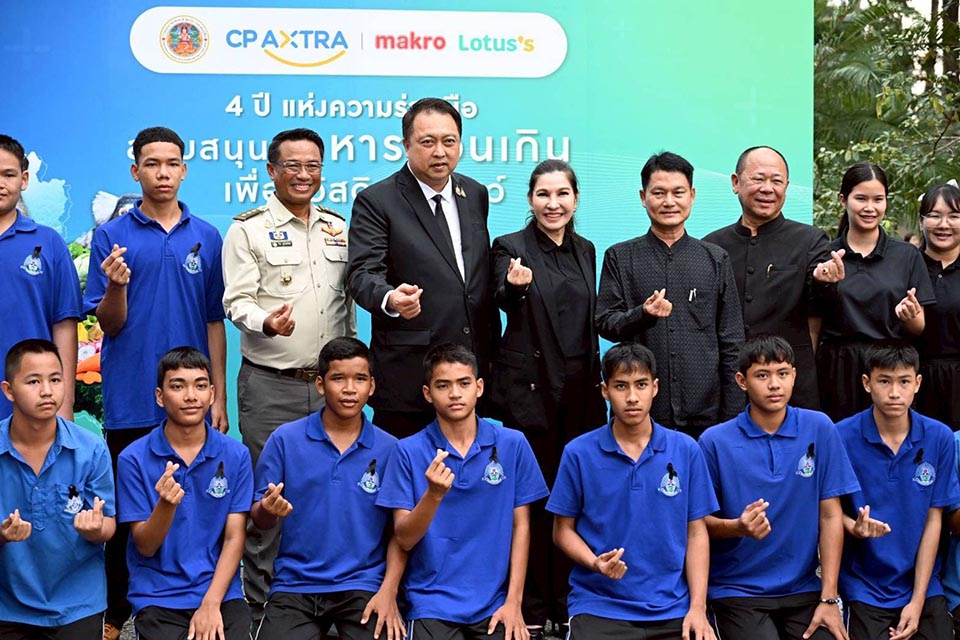
BANGKOK, Thailand – Deputy Prime Minister and Minister of Natural Resources and Environment Suchart Chomklin presided over the signing of a renewed Memorandum of Understanding (MoU) on Food for Wildlife Cooperation between the Department of National Parks, Wildlife and Plant Conservation (DNP) and CP Axtra Public Company Limited. The agreement, signed on November 12 at the Bang Phra Waterfowl Breeding Station in Chonburi province, expands a nationwide program that redirects surplus food from retail stores to wildlife breeding and rescue centers under the DNP’s supervision.
The MoU was signed by DNP Deputy Director-General Veera Kunchairuk and CP Axtra Chief Sustainability and Corporate Communications Officer Siriporn Dechsingha, with Seub Nakhasathien Foundation Chairman Panudet Kerdmali serving as witness. Senior ministry officials and representatives from both the public and private sectors also joined the ceremony.
Launched during the COVID-19 pandemic, the Food for Wildlife program began when CP Axtra started donating unsold but safe-to-eat food to support DNP wildlife centers after government budgets were redirected to pandemic relief. The first MoU in 2022 established a model for distributing surplus food to improve animal welfare, while a second agreement in 2024 expanded the effort to include Lotus’s retail stores. To date, 16 wildlife facilities have received more than 2,300 tons of surplus food, with over 1,500 tons repurposed as animal feed.
The latest MoU updates the term “food waste” to “food surplus,” highlighting the continued usability and value of excess food. The initiative aligns with Thailand’s national strategy to cut food waste by 50 percent by 2030, in accordance with the UN Sustainable Development Goals, and supports the government’s circular economy agenda by turning waste into resources that benefit wildlife and the environment. (NNT)