Chatting with some friends the other night, the subject of wine temperatures came up again. Someone quoted that tired old cliché that “you should drink red wine at room temperature”. I resisted the temptation to make an issue of it, but a moment’s thought reveals that the statement is nonsense. For a start, it implies that all red wine should be served at the same temperature, which is not true. Anyway, the “room temperature rule” was invented in Europe decades ago, when room temperatures were significantly lower.
Those helpful people at the Wine & Spirit Education Trust have suggested that “room temperature” should be regarded as being between 15-18°C (59-64°F), which I suppose is about right for an average day in a temperate climate. But I am typing this in sunny Thailand. The room temperature – with all the windows open – is currently 36°C (97°F) which is clearly far too hot for wine. It’s too hot for the dogs too, who are sprawled around the floor in listless heaps. Only a lunatic would want to drink wine at that temperature.
Many wine books suggests that red wines should be served slightly cool. But one is compelled to ask, “cool compared to what temperature?” The Cambridge English Dictionary gives one definition of “cool” as being “slightly cold in a pleasant way”. That definition admits a degree of subjectivity, because a room that feels pleasantly cool to one person would feel shiveringly chilly to someone who has just emerged from a hot shower. We are treading a shaky path here of course. Individuals perceive ambient temperatures differently, and in the case of the scented freshly-showered person, not because of where they are, but where they’ve been.
I suppose you could reasonably ask, “Why bother with wine temperature?” Just pour it and swig it, as no doubt many people do. But if you want the wine to taste its best, especially if it’s a high quality one, temperature is important. As writer Maureen Messmer says, “Wine is more than just a beverage; it’s a symphony of flavors, aromas and textures, all of which can be dramatically altered by temperature. The journey from vineyard to glass is a meticulous process, and serving wine at the right temperature ensures that each component shines.”

Experts agree that every wine has an optimum serving temperature. Even the cheapest plonk tastes better if you get the temperature right. If you serve red wines at too low a temperature, the taste feels tight and closed; the aromas remain hidden and the tannins are emphasized, making the wine taste raw and unpleasant. When red wines are too warm, they taste flabby and flat and lose their refreshing qualities and firmness. And not only wine, of course. Warm beer or warm lemonade are about as welcoming as a poke with a pointed stick.
A recent study at a Canadian university has revealed that the taste of food can change depending on the ambient temperature (i.e. the temperature of the surrounding air). Every chef knows this, but I suppose it’s reassuring to get a professorial confirmation. In this climate, we tend to keep bread and cheese in the fridge but if you eat them at that temperature, they taste hard and unyielding. Cheese is especially sensitive and benefits enormously if you allow it to warm up before use. Many cheeses have complex aromas and flavours which are lost when they are cold. The fats become solidified making the cheese difficult to slice and chew. Too warm, and cheese loses its texture and becomes overly soft and greasy. Chocolate has a critical temperature too, because when too cold, it’s tough and brittle with little taste, and too warm – well, you know what happens.
The other day, I read an article about wine serving temperatures in a well-known British newspaper. “I have never used a wine thermometer in my life,” the writer airily remarked, a comment which didn’t instill in me much confidence. I am not sure that I believe her anyway. Surely, she must have checked the temperature of some wine just out of casual curiosity. The article, like most wine books contained a chart showing recommended wine serving temperatures. The recommendations are all pretty much the same whichever source you use.
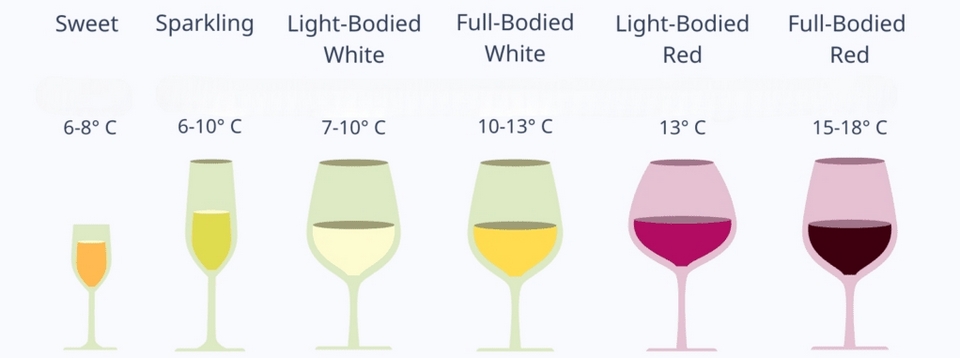
The important thing is that these serving temperatures apply to regions with a temperate climate, not to South East Asia. If your tropical home provides a permanent air-conditioned environment at a constant temperature of about 18-20°C, or you are drinking your wine in an air-conditioned restaurant, you can safely go with these recommended temperatures. But if the temperature in your house is much the same as outdoors, you’ll need to tweak the recommended temperatures, otherwise red wines will taste positively chilly. Oh, and if you feel more at home using the Fahrenheit scale, you can convert from Celsius easily. Just multiply by 1.8 and add 32. Being fairly useless at mental arithmetic, I find it easier to multiply the Celsius value by 2, subtract 10% from the total, then add 32. It’s not very scientific but it’s near enough.
Chicago-based wine writer Cedar Stoltenow explains how living in a tropical climate poses some particular problems to wine consumers. “The high temperature and humidity levels in tropical countries are not conducive to bringing out the best in your favourite wines. When the temperature is high, red wines can feel overwhelmingly heavy, while whites and rosés seem bland and boring. Full-bodied reds aren’t at their best in hot weather and those with a high alcohol content can dehydrate you faster, which will make the wine seem even heavier than it already is.”

White wines seem to be less fussy than reds because they’re traditionally served cold. Domestic fridges operate between 1-4°C. This is a bit too cold for drinking, so a white wine should be taken out of the fridge shortly before it’s needed. Chardonnay, Sauvignon Blanc and Riesling invariably express their characters best at about 10-12°C. Even so, you’d probably be amazed at how quickly a glass of wine warms up. The other day I conducted my Wine Temperature Experiment, much to the merriment of the dogs. The evening temperature in the house was a pleasant 29°C. Being half Scottish, I am reluctant to waste money, so as usual, the windows were all open and the air conditioners switched off. I took a bottle of Chilean Chardonnay out of the fridge and it was exactly 3°C. Some of the wine was poured into a decanter and the bottle and a sample poured into a wine glass. During this process, which took less than a couple of minutes, the wine’s temperature shot up to 10°C, which as luck would have it, is just about right for Chilean Chardonnay.
But then, the surprise. During the following five minutes when the glass was left unattended, the temperature increased to an amazing 15°C. At this temperature, the wine was too warm and predictably, tasted dull and flabby. It was heating up at one degree Celsius every minute. At a typical social occasion, the wine might be too warm even before you get to taste it, let alone finish the glass, especially if people insist of doing the local chok dee routine before every swig. You can try the experiment for yourself, if you have the time and the inclination. All you need is a fridge, some wine, a wine glass, a watch and a thermometer. If you can borrow a white laboratory coat, it will look more impressive. But try not to drink too much of the wine.
With a bit of practice, you could probably judge the temperature just by sticking your finger into the glass. At an up-market restaurant, that wouldn’t be much appreciated, especially if the glass belonged to someone else. In the days of long ago, when I was a spotty teenager, I was passionately interested in photography and learned all about film and print processing. At the time, the standard working temperature for all photo chemicals was 20°C (68°F). During our cold winters, liquids at 20°C felt slightly warm to the touch. The photo chemicals were warmed up by dangling an electric immersion heater into the liquid. If I mislaid my thermometer in the sombre gloom of the darkroom, I could judge the temperature of the liquid quite well just by sticking my finger into it. But it’s not a practice I would recommend, especially for those who habitually nibble their fingernails.
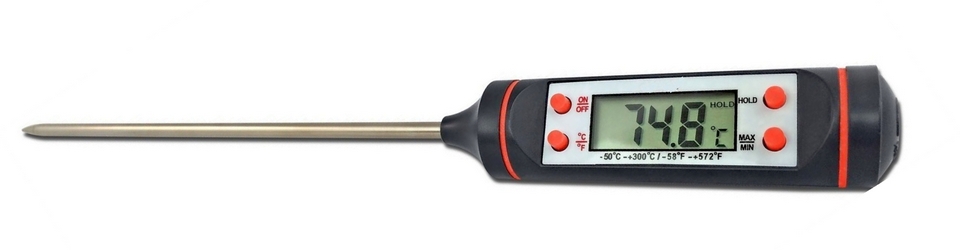
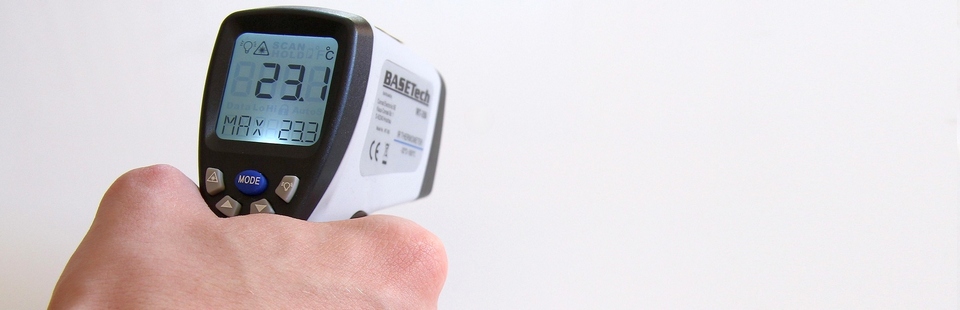
Rather than finger-dunking, it’s worth buying a thermometer. They are quite cheap, so there’s really no excuse. An ordinary food thermometer will do the trick, and you can get one for well under Bt 200. Just dip it in the wine and take the reading. Infra-red thermometers are more convenient because they are instantaneous. Bear in mind that infra-red thermometers measure surface temperatures and they can’t read through glass. This means that when you point an IR thermometer at a bottle, you’ll get the temperature of the bottle surface, rather than the liquid inside it. However, if they’ve been in contact for some time, the temperatures should be about the same.
To summarize then, I’d suggest that red wines are the trickiest in tropical conditions, especially when consumed outdoors. This is because you need to find a balance between the low “recommended” serving temperature and the comparatively high ambient temperature. I tend to avoid full-bodied reds outdoors because they warm up too rapidly and therefore taste heavy and flabby. It’s best to play safe with medium or lighter reds. The other evening for example, I opened a bottle of medium-bodied Chianti to drink outside, where the ambient temperature had dropped to a pleasant 28°C. As expected, at the recommended temperature of about 15°C the wine tasted awful: hard and unyielding with sharp tannins and little else. By the time it had warmed up to 23-24°C, it had become a different wine and the true Chianti character shone through with the characteristic aromas and flavours. This would be far too high a serving temperature in Tuscany, but seemed ideal for a comparatively warm evening in tropical Thailand.
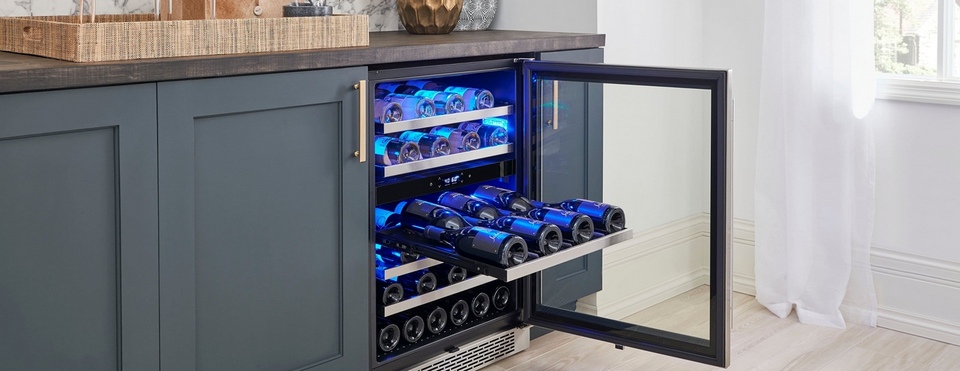
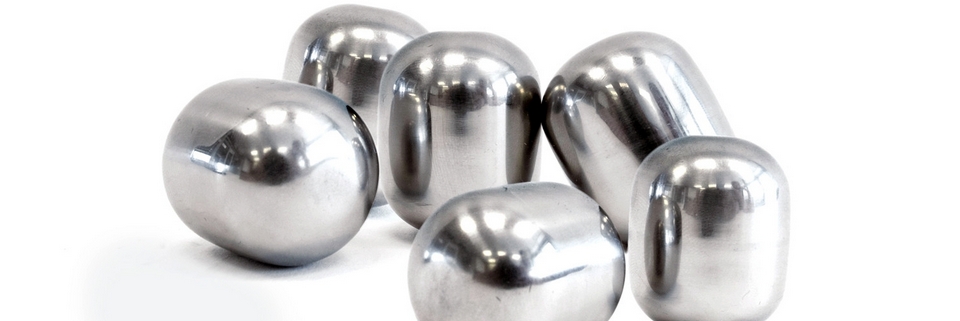
White wines are much easier to please. Just keep the bottle in the fridge until the last moment, then stick the opened bottle into an ice bucket. I know some people like to lob a few ice cubes into their wine, and even though it’s a common practice in wine-producing countries, it dilutes the flavour. In any case, never add ice to top-class fine wines. An excellent alternative is to use “fake ice” in the form of stainless-steel ice cubes or “wine pearls”. You store them in the freezer and just plop them into the wine glasses as needed. Alternatively, you could serve white wine in cold glasses. But beware of cooling the glasses in the freezer as one of my friends used to do, otherwise your guests might drop them in shock.