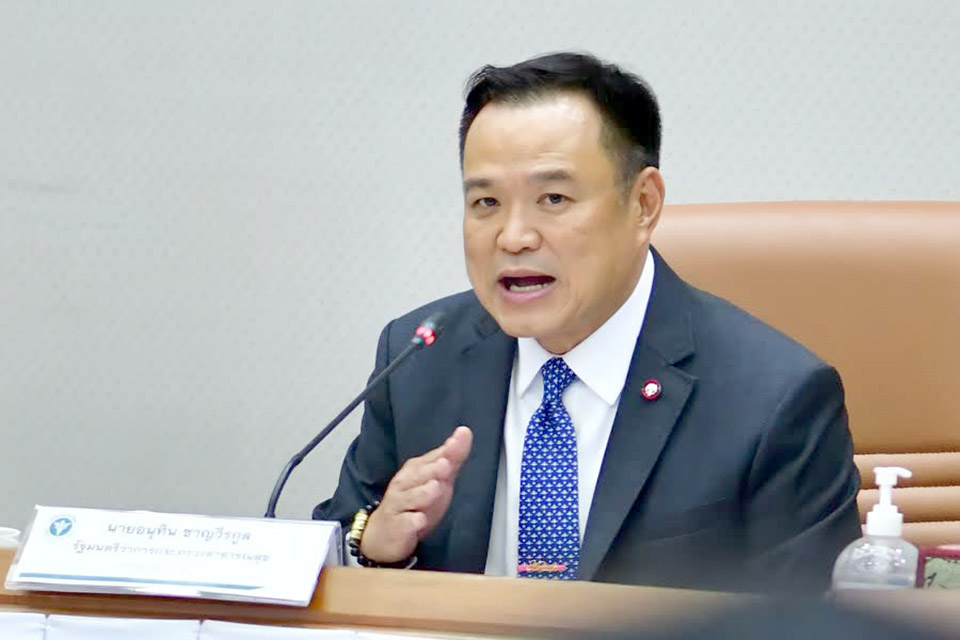
New prime minister Anutin Charnvirakul has chosen to retain the separate role of interior minister, which he held in the now defunct Pheu Thai administration from 1 September 2023 to 19 June 2025. Whilst the motivation to maintain both portfolios is doubtless to keep control of local administrative units in the runup to a likely general election in 2026, Mr Anutin is keenly interested in the visa world.
Under Anutin’s stewardship, Thailand in July 2024 permitted tourists from 93 countries to have two months’ visa-free entry, with a further 30 days extension at local immigration. Whilst there has been some concern that this liberal policy has resulted in the entry of illegal workers, especially Chinese, it is unlikely there will be a major revision as Thailand struggles to keep the momentum in increasing tourist arrivals. The TDAC or digital arrival card, compulsory for all foreign entrants, potentially allows for a closer inspection of non-Thai nationals.
July 2024 also saw the introduction of the Destination Thailand Visa. Critics, such as Thai national and American attorney Benjamin Hart, have stressed that this visa was the brainchild of the Ministry of Foreign Affairs and likely did not have the support of either the interior ministry or the immigration police. “DTV,” said Mr Hart in a feisty video, “is in need of revision or even cancellation as its purposes are ill-defined and open to abuse”. Many observers believe changes are inevitable sooner or later.
Two years ago, Mr Anutin endorsed the idea of a new, overarching Department of Immigration which would swallow the responsibilities and overlap of other ministries. Currently, the Ministry of Foreign Affairs is responsible for visa policy in Thai embassies and consulates, but the Interior Ministry (through the immigration bureau) is in charge of foreigners once they arrive here at an airport or border post. Moreover, extensions are exclusively in the domain of the immigration police.
Another example of departmental overlap is in the issuing of work permits. These are traditionally the purview of the Ministry of Labour, but there are separate regulations for Board of Investment prompted companies with relaxed capital and employee requirements. BOI also registers applications for the 10-years Long Term Residence visa and the Smart visa which is now focused exclusively on startup entrepreneurs. Not to mention the Tourist Authority of Thailand which manages the Elite (now Privilege) visa. It’s a confusing picture to say the least.
The premier has also expressed support for the streamlining of immigration policing in matters such as national security, residency permits, citizenship and civil registration. Artificial intelligence is also being developed to analyze data, offer language translation, create chatbots and catch criminals through linking photographs of persons to a central data base of criminals. This is the age of the surveillance camera.
In the past few years, immigration bureaucracy has become more digitalized with online facilities for specified functions. Under Anutin’s stewardship, these developments will likely continue apace. There is even a government working party looking at the implications for an end to the issuing of traditional passports and their replacement by a digital system that uses biometric data like facial recognition and fingerprints for border control. The good news in such a transformed world is that foreigners won’t have to worry about filling in manually so many forms before and after they set foot in the kingdom. Immigration reform in September 2025 is still in its infancy.