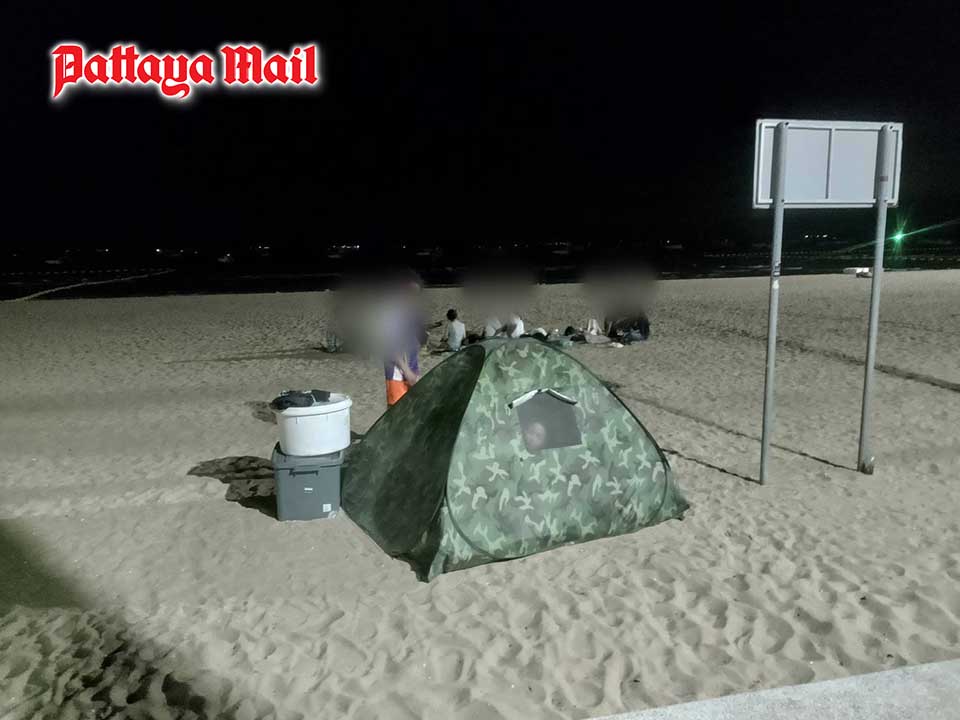
PATTAYA, Thailand – Pattaya city officials recently intervened to check tourists setting up tents along the beach without permission. Authorities asked visitors to pack up their equipment to maintain public safety, order, and accessibility, emphasizing the shared nature of public spaces.
The move has sparked lively discussion among residents and tourists alike, highlighting the tension between recreational freedom and public regulation. Some locals voiced frustration over strict enforcement. “Tourists can’t do anything; they issue rules for everything. Even parking a motorcycle at Jomtien Beach can get you reprimanded,” remarked one resident, pointing to the city’s complex regulations and inconsistent enforcement.
Others proposed solutions that balance tourism and safety. Several suggested creating designated camping zones where visitors could legally set up tents, pay a small fee, and adhere to hygiene rules. One comment recommended a nightly fee of 500–1,000 baht per person, with fines for leaving trash behind, noting such measures could generate revenue for beach maintenance and local staff.
Safety concerns also resonated among the public. “It’s dangerous out there,” said one visitor, reflecting the risk of camping directly on the sand without facilities like toilets. Some pointed out incidents of inappropriate behavior, such as public indecency among certain groups, stressing the need for monitoring by city officials.
Tourists themselves expressed confusion over the rules. “Can we not set up tents, or do we need to get permission somewhere?” asked one visitor, echoing a sentiment shared by others who felt the lack of clear signage made enforcement inconsistent. Suggestions included multilingual signs outlining regulations and permitted activities, catering to the diverse international crowd that frequents Pattaya beaches.
Meanwhile, some voices emphasized that controlled, responsible camping could enrich the tourism experience. “Public beaches should allow tents. It’s cost-effective and encourages longer stays,” noted one commentator. Others, however, stressed that without clear zones and rules, public safety and cleanliness would inevitably suffer.
City officials are now balancing the need for order with the desire to support tourism. Observers suggest that formalizing camping areas, instituting permit systems, and providing basic facilities could reduce conflicts, improve safety, and generate local revenue, while still maintaining the natural appeal of Pattaya’s beaches.
As the city navigates these competing priorities, the discussion highlights a broader challenge for Pattaya: managing public spaces in a way that supports both residents and the diverse spectrum of visitors who come to enjoy the coast.