
It seems amazing, but today’s Classical Connections article is celebrating its 400th birthday. Of course, I don’t mean that it has been running for 400 years, although sometimes it feels like that. The column made its first appearance in the Pattaya Mail of 11th July 2014. But there will be no celebrations, thank you very much. I have never enjoyed birthdays, especially my own. When I reached my eighth year, my parents decided that a birthday party was necessary and organised a modest event at our house, to which all the children in my class at school were invited. I think I put on a brave show, but I hated every moment of the wretched thing and I’ve never had a birthday party since.
A few months later, I was invited to a birthday party of a school friend. I told my mother that I didn’t want to go, but was firmly informed that I had no option. My mother took me to the house personally, presumably to make sure that I showed up. The place was packed with noisy children none of whom I knew, for the birthday boy was a year older than me. As soon as my mother had left, I crawled under the dining room table and refused to come out. At one point, the children all sang the inevitable and tiresome song Happy Birthday to You and I seem to vaguely recall joining in from beneath the table.
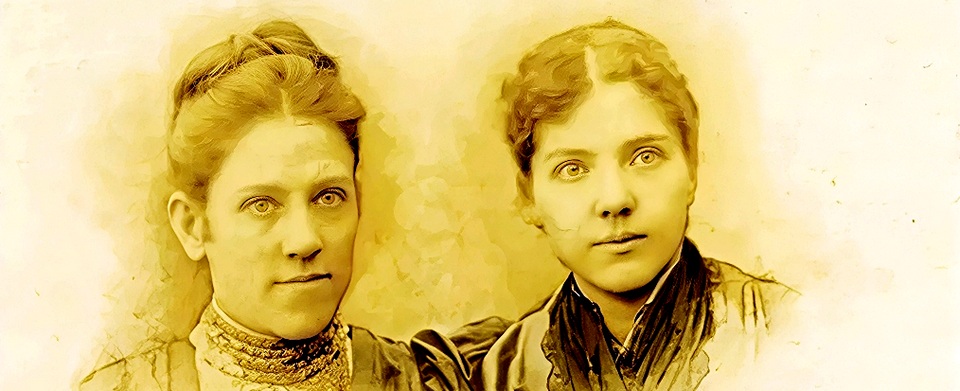
According to Guiness World Records, this song is the most recognized in the English language. The second-most-recognized, in case you were wondering is, somewhat surprisingly, For He’s a Jolly Good Fellow which dates back to the early 18th century. Happy Birthday to You was intended for kindergarten children and composed in the 1890s by two American sisters, Patty and Mildred Hill. Patty was the head of a kindergarten in Louisville, Kentucky and her sister Mildred was a pianist. It first appeared, though with different words, in their songbook Song Stories for the Kindergarten published in 1893 by the Clayton F. Summy Company of Chicago. In 1912, the same melody appeared in print with the now-familiar birthday words but it’s uncertain who wrote them. Whoever it was, it couldn’t have taken them very long.
For years, most people assumed that Happy Birthday had no copyright and used it freely. But in 1988, the massive publishing conglomerate Warner/Chappell Music bought the Clayton F. Summy Company for $25 million. It was then claimed that Warner/Chappell owned the copyright of Happy Birthday and that unauthorized commercial performances of the song were illegal unless royalties were paid. As a result, Warner/Chappell began hauling in around $2 million a year licensing the song for commercial use. A nice little earner, as they say. But it was not to last, for in September 2015 a US District Judge ruled that Warner/Chappell didn’t own the copyright and that royalty claims were invalid. Warner/Chappell agreed (presumably with some dismay) to pay out $14 million to settle the lawsuit. The outcome of all that fuss was that Happy Birthday to You is now in the public domain and can be used freely by anyone, commercially or otherwise.
For much of human history, the concept of ordinary people celebrating birthdays was unknown. The earliest recorded birthday celebrations date to Ancient Egypt, around 3,000 B.C. but they were primarily for pharaohs, who were considered to have god-like status. In Ancient Greece, birthdays were also celebrated for gods with rituals that included offerings and cakes adorned with candles. By the time of the Roman Empire, birthday celebrations for lesser mortals became common but were usually limited to men (not women) who were deemed important members of society. For ancient Romans, the concept of a birth-date, let alone its celebration, was not widely recognized.
The more recent concept of family birthdays didn’t emerge until the 18th century in Germany with the Kinderfeste which – as the name implies – was for children. It wasn’t until the 19th century, especially in America, that the celebration of children’s birthdays became popular. Imbued with the spirit of consumerism, families began to invest more in their children’s upbringing, leading to the tradition of birthday parties. As far as I am concerned, birthday celebrations should be just for children – if indeed they want them. Many people simply grow out of this ritual annual celebration. Some don’t of course. I know quite a few older adults, who engage in this spectacle of self-congratulation every year. Adult birthday celebrations are often narcissistic, ego-stroking rituals which desperately demand attention for simply existing.
Many composers wrote music specifically for birthdays, usually as gifts to patrons. Throughout musical history and especially in the years of the baroque and classical periods, composers often had to rely on wealthy benefactors to keep food on the table. Some of these works have become well-known, such as Handel’s Ode for the Birthday of Queen Anne and Bach’s Cantata No. 42 for the 24th birthday of one of his patrons, Prince Leopold. In more recent times, the British composer Michael Tippett wrote a Suite for the Birthday of Prince Charles.
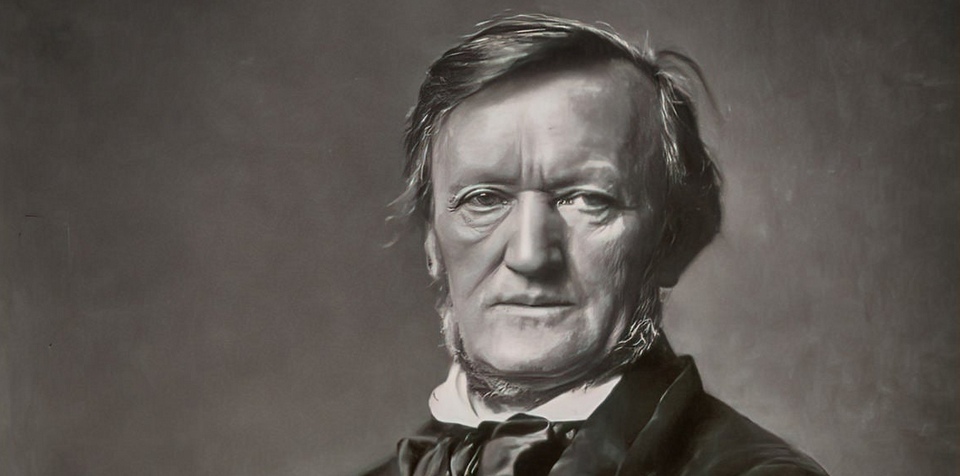
I first heard the name Siegfried Idyll as a young teenager. At the time and not knowing any German, I heard it as The Zeeg Free Diddle, which sounds a lot more fun than the real thing. Wagner was another composer who relied heavily on patronage, especially from Ludwig II, King of Bavaria whose extravagant spending earned him the dubious title of “Mad King Ludwig”. It was he who commissioned the construction of lavish buildings such as the spooky-looking Neuschwanstein Castle and the majestic Linderhof Palace.
Siegfried Idyll dates from 1869, shortly after the birth of Wagner’s son Siegfried, known in the family by his nickname “Fidi”. The boy had been named after the hero of the opera on which Wagner was working at the time. The opera Siegfried runs for over five hours and it’s the third of the four epic music dramas that make up Wagner’s monumental opera cycle The Ring of the Nibelung. The Siegfried Idyll was intended as a surprise birthday present for his second wife Cosima. On the day of her 33rd birthday she woke up to hear the opening bars of the music performed by a small group of musicians on the staircase of their sumptuous villa near Lake Luzern in Switzerland.
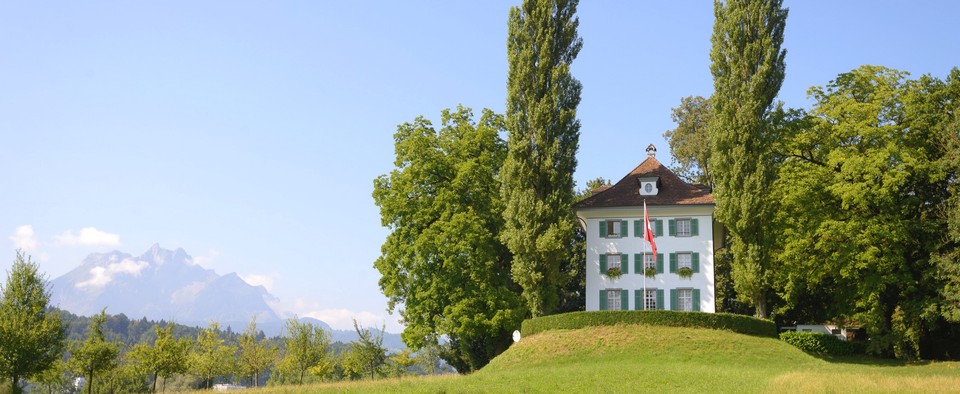
Perhaps as a joke, the famous conductor Hans Richter had learned to play the trumpet specially for the occasion. He had to practice in secret and to avoid being heard at the Wagner house, regularly sailed out to the middle of the Lake Luzern to practice. However, the trumpet part is only thirteen bars long and easy to play, apart from a tricky flourish at the end. Being intended for private performance, the work was scored for a modest ensemble of just thirteen players. Ten years after its composition, and to raise some much-needed cash, Wagner sold the score to his publisher. To make it more marketable, he expanded the chamber orchestration to that of a standard orchestra. This is the version we usually hear today.
It’s a lovely, lyrical work and for the first couple of minutes the music uses the strings only, before the woodwind and horns come in echoing the melody. The music grows in intensity, wallowing in the rich sumptuous harmonies and dramatic modulations for which Wagner is known. The oboe introduces a deceptively simple melody, based on an old German lullaby and which forms a quiet and thoughtful middle section. This reflective music might remind you of the English composer Frederick Delius, who borrowed many harmonic ideas from Wagner. The main theme keeps recurring as the music changes colour and mood with sudden moments of emotion, sweeping musical gestures and rich melodic lines. It ends in the quiet timeless world where it began, with the cellos quietly echoing the main theme for the last time.
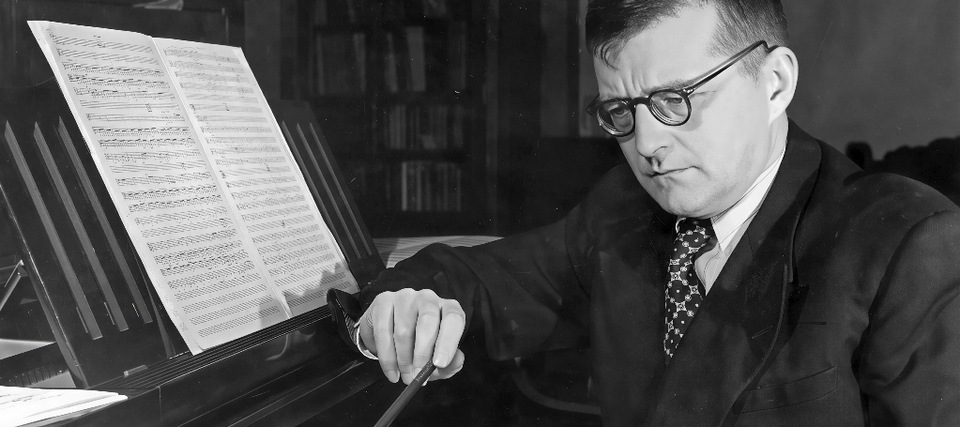
Maxim Shostakovich, the composer’s son turned nineteen on 10 May 1957 and this jolly work was his father’s birthday gift. It was premiered at Maxim’s graduation concert at the Moscow Conservatory. In stark contrast to other works Shostakovich was writing at the time, this concerto is light-hearted; full of humour and buffoonery. It opens with a cheeky, spiky melody on the solo bassoon after which the piano enters with a simple, catchy tune played in octaves. The piano part doesn’t stay simple for song and breaks into a sparking fanfare-like melody which leads into a burlesque-like circus march. There is drama too, especially when the piano hammers out the theme in double octaves to a mischievous jarring accompaniment from the orchestra. In this breathless first movement the furious pace never lets up, not even in the solo cadenza towards the end of the movement.
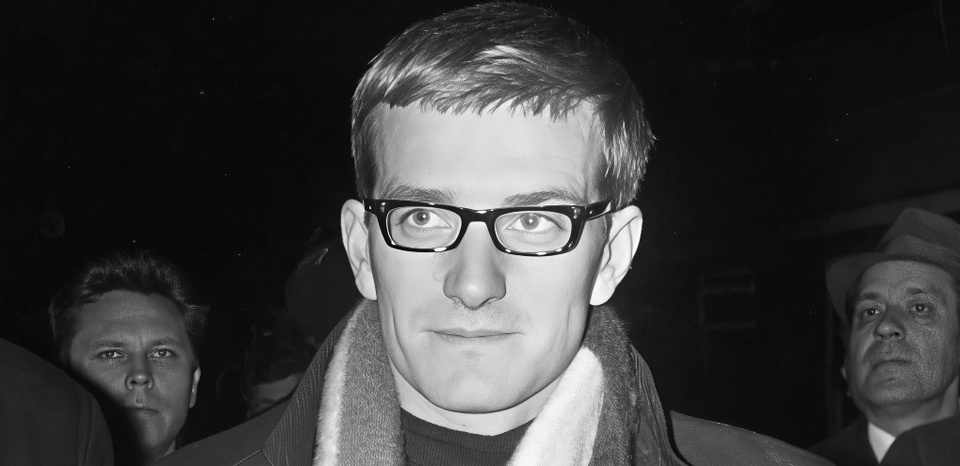
The lovely slow movement is in complete contrast. Over sustained strings, the piano weaves a wistful and meandering melody with echoes of Rachmaninov. It leads without a break into the sparkling finale, the highlight of which is the jubilant melody in 7/8 time first played by the woodwind and horns then taken up by the piano. The finale is as frenetic as the first movement but it’s not quite as difficult as it sounds, for the work was intended to be accessible to student pianists. There are many clever allusions to piano exercises and piano studies, which would be familiar to generations of piano students and include typical scale passages that modulate quickly from one key to another. Perhaps the last movement is a bit repetitive and I get the feeling that the concerto was composed quite rapidly. Nonetheless, it’s an amusing and entertaining work and an excellent place to start if the music of Shostakovich is new to you.