Longstay foreigners are attempting to read the financial runes once again. The current government plans to roll out a negative income tax system by 2027. Every Thai citizen, rich or poor, will need to submit an annual tax form. Those earning below a certain threshold, not yet announced, will receive subsidy money from the government. Anyone not submitting a tax return will be refused financial assistance.
Those earning more than the to-be-announced threshold together with 600,000 businesses will be subject to normal, graduated Thai taxation. The main argument in favour of negative income tax is that tax rebates will help boost the income of those individuals not yet at a minimally-acceptable level. The move will be much fairer and make redundant the current system of handing out state welfare according to generalized categories such as “senior citizens” or “farmers” or “covid sufferers”.
In theory, the saga should not concern the expat community. Typically, the foreign group is not eligible for government handouts or subsidies. But the problem is how to define a Thai citizen. Does it include Thai foreign residents who live here for more than 180 days in a year? The matter has not specifically been addressed by government spokespersons, but many expats are painfully aware of the recent hullabaloo (not yet resolved) about personal taxation on overseas income transmitted to Thailand. In that minefield, Thai citizens did include foreign Thai residents.
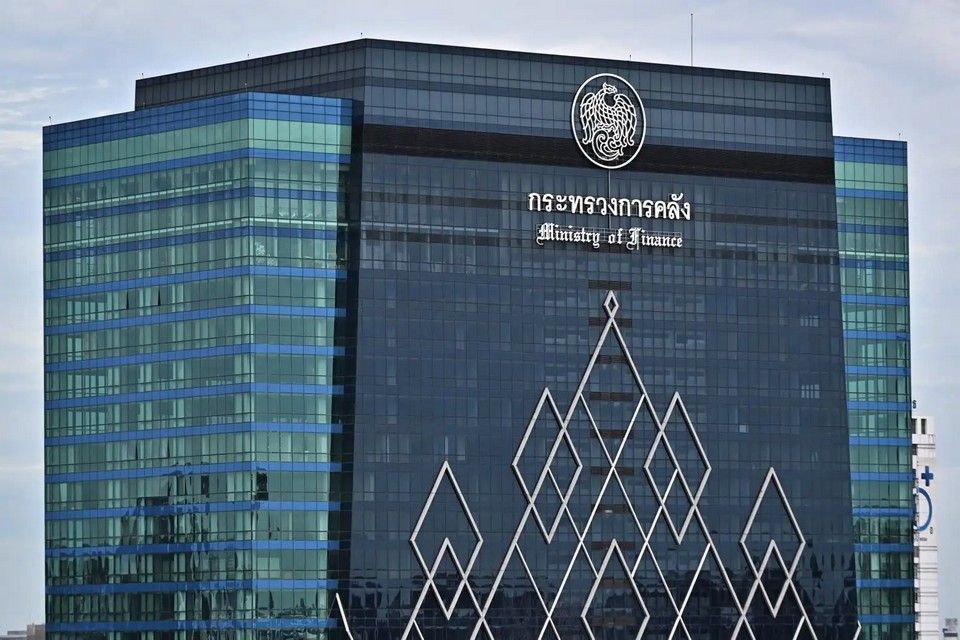
The Ministry of Finance has also caused consternation by announcing that it is developing a huge, hi-tech data lake or warehouse about Thai citizens to be used in targeted fiscal and welfare benefits in the future. The data base, according to the ministry, will ensure accurate and efficient welfare provision. There will also be liaison with the Ministry of Public Health to accommodate individual inpatient and outpatient treatment records on the new data base.
Vorapak Tanyawong, advisor to the finance minister, said negative income tax was a good way to assist low-income individuals but needed a very strong support system. He pointed out that no country in the world had yet adopted negative income tax in full although there had been initial testing in the US and Canada. A country such as Thailand, whose traditional data infrastructure is weak, needs to be careful about abrupt changes.
The advisor added that validating the income of grassroots workers can be difficult. Many Thais work in the informal or even black economy and there is often no audit trail to prove where their income originated. Self-declared information opens the distinct possibility of individuals minimizing their income to obtain government rebates. Moreover, at least 75 percent of Thais have never filled in a tax form. Not yet anyway. He suggested that regional pilots should be completed before national implementation. The 2027 inauguration date needed to be pushed forward several years.
Negative income tax has been discussed in Thailand for a decade or more. General Prayut Chan-o-cha, in his post coup 2014 administration, included the subject in a government proposal which was never acted upon. Thaksin Shinawatra supported the introduction of negative income tax in his first speech after his pardon in 2024. But expats are obviously primarily interested in their own welfare. Will my visa be affected? How will tax changes affect me financially? If I’m taxed like a Thai aren’t I entitled some of the rights enjoyed by Thais? How will these changes, if implemented, compare with practice in alternative destinations such Vietnam or Cambodia?