Cambodia, as the much weaker military combatant in recent violence, is turning to asymmetric or unconventional opportunities in the border conflicts. Whilst Cambodia has used effectively Chinese-made artillery, she has no military airforce and a much smaller army. The Thai military operates more or less independently of the civilian authorities and has a budget more than three times larger than her much smaller neighbor.
The ratification in Malaysia of the ceasefire is certainly a necessary first step, surprisingly big in scope according to Thammasat University professor Thanapat Chatinakrob. It freezes troop movements, forbids attacks on civilians or infrastructure and agrees various humanitarian moves. But these are just promises to behave, whilst the crucial omissions have been deferred to an indefinite future hosted by the General Border Commission.
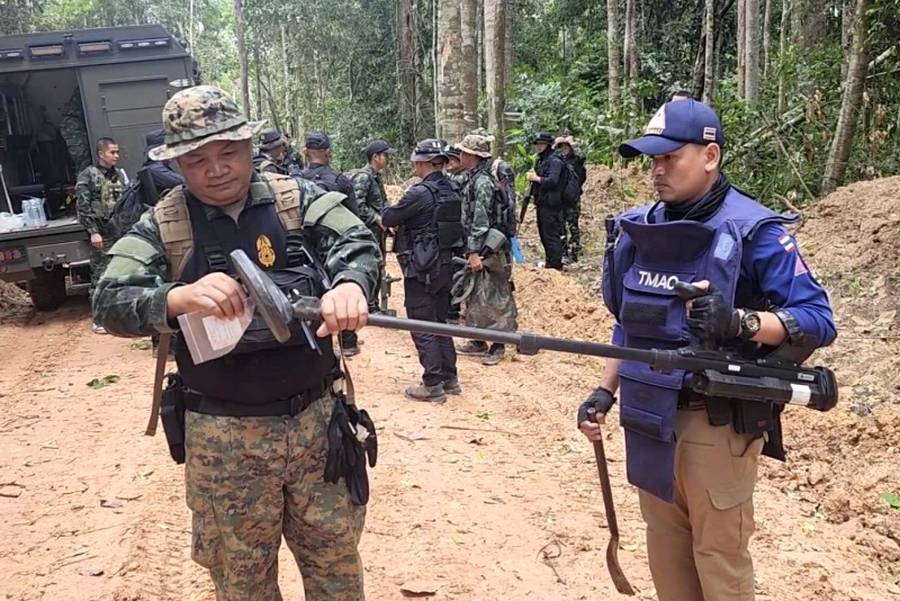
Cambodia has refused to commit to the removal of landmines, or to an end to online scams, or even to comprehensive fake news cancellation. In turn, Thailand has refused to commit to not using aerial forces or removing barbed wire from certain border positions. Cambodia continues to dig trenches to reinforce bases and to reposition heavy artillery. Thai second army region two commander Boonsin Padklang has stated that human eyes, not just technology, will be needed to observe what Cambodia may be secretly planning.
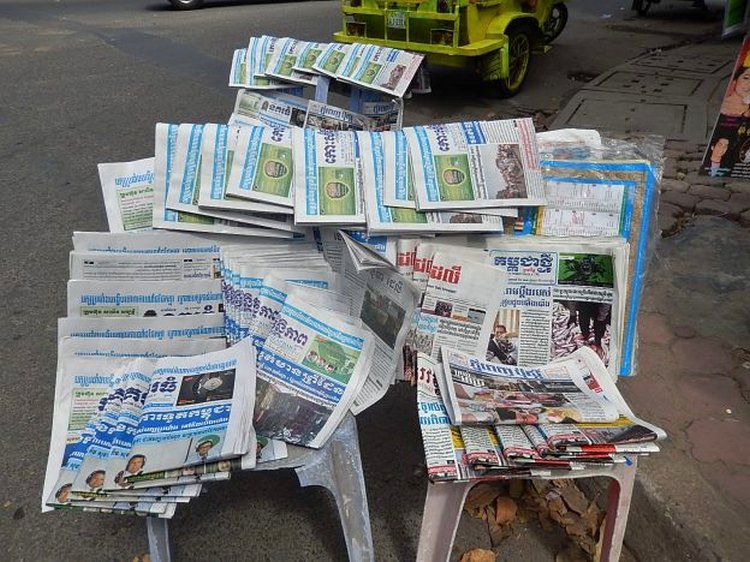
Asymmetric warfare stops short of publicly firing weapons, but is designed to gain an advantage or influence international opinion. For instance, Cambodian agents have proved adept in confusing fake news about Thai atrocities such as the spraying of poison gas on civilian populations or evil bombing runs against women and children. Thai authorities have now belatedly appointed a fake news czar to combat the ongoing fraud.
Other asymmetric strategies still in use by Cambodia include claims that Thailand refuses to withdraw from “Cambodian temples” or that Thai drones are hovering over Cambodian schools and hospitals. Even the negative body language of generals at ceasefire meetings have been used to show that they don’t agree with compromises. Phnom Penh may also be tempting Bangkok into pre-emptive military action by anonymously provoking border incidents.
The core issues in the overall dispute are still unaddressed. The opening and closing of border checkpoints was not mentioned at all in the ceasefire agreement, nor the Cambodian referral of the dispute to the International Court of Justice which is, in any case, a waste of time as many countries apart from Thailand – US and China for example – refuse accept any rulings they don’t like.
ASEAN chair Anwar Ibrahim said that satellite monitoring is in place to keep watch on battlegrounds which are being remotely tracked by Malaysia’s defence attache and Asean counterparts. But even that is not entirely possible at present. Thai telecom providers AIS and Thaicom are improving communication networks in critical border areas. Enhanced 4G and 5G networks are surely essential as many contested areas have poor or non-existent internet access for satellite systems. But they are not yet in place and require huge budgets, potentially running into billions of baht.
A total resolution of the conflict calls for currently-unthinkable concessions. Thailand would need to accept international arbitration and cede Preah Vihear temple and surrounding areas, whilst Cambodia would have to give up other unmarked areas by legitimizing Thai detailed maps rather than her own versions. The best hope is that a combination of Asean neutrality and pressure from both the US and China will prevent a major outbreak of violence. As Saifuddin Nasution, Malaysian home affairs minister put it, “freezing the dispute” is the only realistic way out.