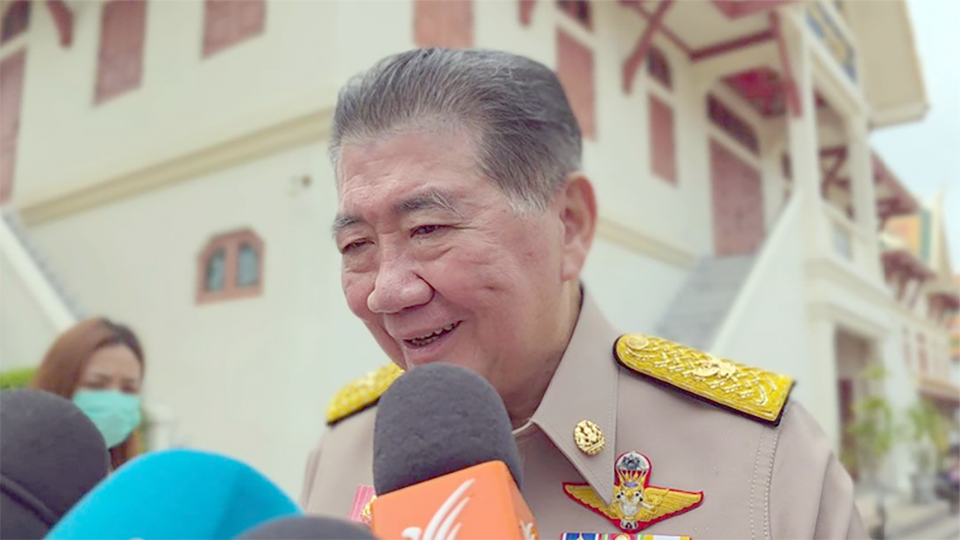
BANGKOK, Thailand – Deputy Prime Minister and Minister of Interior Phumtham Wechayachai, currently serving as Acting Prime Minister, reaffirmed the government’s hardline stance against narcotics during the latest episode of the “Empowering Thais” program this morning (July 20). The Deputy Premier outlined a wide-reaching crackdown on drug networks and corrupt officials, while reiterating that addiction would be addressed as a public health issue. The nationwide campaign, known as “Seal Stop Safe,” is now entering its third phase, with intensified operations across 14 provinces and 51 districts.
According to Phumtham, the operation combines strict law enforcement with long-term social and economic development. Security agencies are coordinating with the Ministry of Interior, the Office of the Narcotics Control Board (ONCB), and the Royal Thai Police. Surveillance and interdiction are being strengthened through the use of drones, CCTV systems, and enhanced border patrols, with military, police, and civil authorities working jointly. Budget allocations have been directed toward upgrading equipment and boosting readiness at the local level.
Phumtham warned that state officials found aiding drug traffickers or neglecting enforcement duties would face immediate removal. His comments followed a series of inspections and field visits that uncovered ongoing issues, including bribery and inaction. He stressed the importance of accountability and announced that inspections would now be carried out without prior notice to ensure greater transparency.
Public participation is playing a vital role through networks such as “Sapparot Eyes” (pineapple eyes), which gather local intelligence to support enforcement. The government is also coordinating with INTERPOL to expand international cooperation. Meanwhile, individuals struggling with addiction will be treated as patients and offered rehabilitation services, with the goal of reintegrating them into their communities.
The campaign also seeks to stabilize communities by engaging local leadership and families. Village heads are being tasked with conducting area-wide assessments, identifying vulnerabilities, and reporting progress. Phumtham noted that lasting results would require cooperation across all sectors of society, with each household playing a role in prevention, support, and recovery. (NNT)