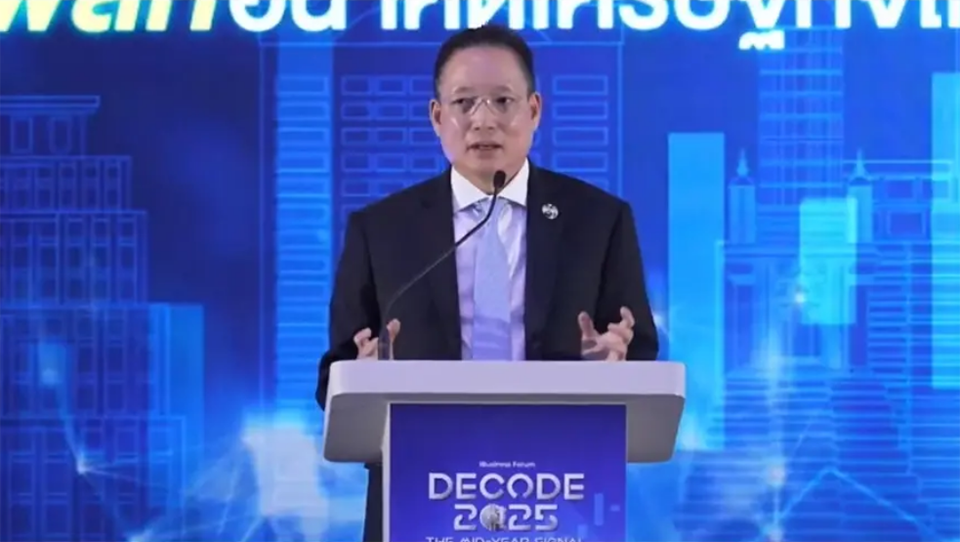
BANGKOK, Thailand – Thailand must urgently reform its economic structure to survive what Krungthai Bank CEO and Thai Bankers’ Association chairman Payong Srivanich calls the “disruption of the century.” Speaking in response to the U.S.’s planned 36% tariff — dubbed the “Trump tax” — Payong warned of mounting uncertainty and ripple effects across the Thai economy.
“We’re out of lucky breaks,” he said, calling for a three-pronged strategy: shock the system into action, stabilize those still viable, and reform with precision — not broad strokes. SMEs, he noted, need immediate jolts of support, while sectors suddenly hit by foreign policy shifts need targeted assistance.
Thailand has long struggled with economic traps, sluggish growth, and slow post-COVID recovery. Now facing new pressure from global tariffs, Payong said each crisis bleeds public resources — and unless those are used wisely, they’re simply lost.
Commercial banks, along with the Bank of Thailand, have rolled out the “You Fight, We Help” program in two phases, which aims to help debtors regain their financial footing. Payong urged eligible borrowers to engage fully with the scheme to reduce and eventually clear their debts.
He also raised the issue of public debt, noting that while the current public debt ratio stands at 65% of GDP — just below the 70% ceiling — raising that limit may be necessary. However, he stressed that any additional debt must be invested strategically.
In Payong’s view, the crisis offers a chance to rebuild trust and momentum in the Thai economy — but only with clear-headed policy. He emphasized the need to strengthen skills development, integrate education with employability, and improve quality of life for Thai workers.
He also called for investment policies that protect domestic businesses, promote fair competition, and encourage the use of local resources and labor. Greater public-private collaboration, he said, is essential — especially in building innovation and tech ecosystems. (TNA)