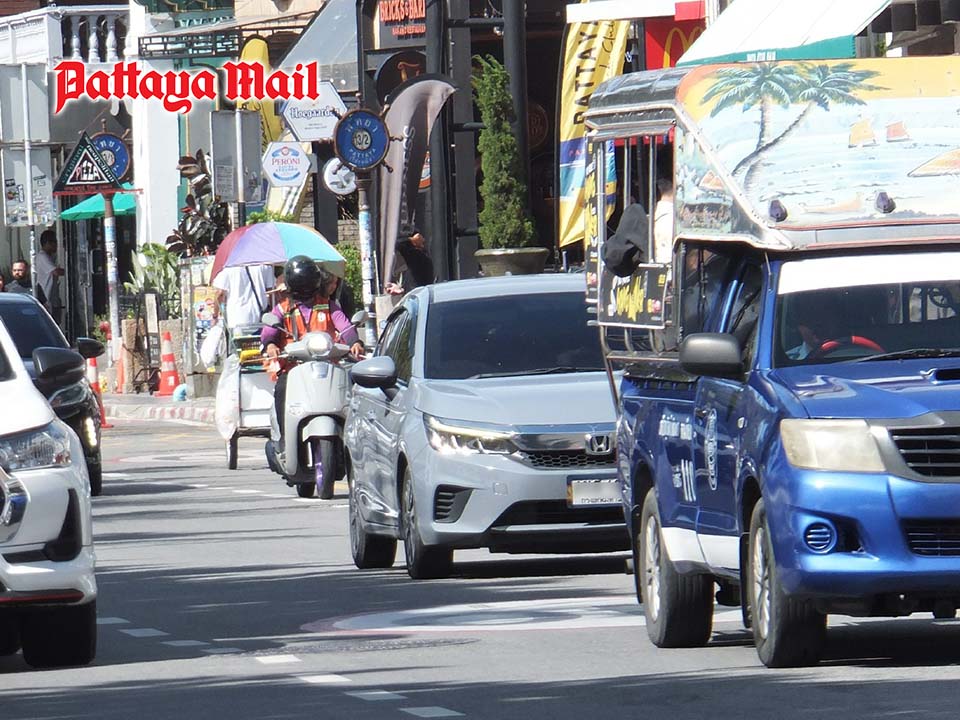
PATTAYA, Thailand – For just 10 or 20 baht, you can hop on a baht bus and cruise down Pattaya Beach Road or Second Road — if you know where you’re going, and how not to get overcharged.
Despite occasional reports of dual pricing and inflated fares, many foreign tourists and residents say the city’s songthaew system remains one of the best-value transport options in town — as long as expectations are in check.
“There’s no direct route from Jomtien to Central Pattaya, so usually you change at South Pattaya near Second Road and pay another 10 baht,” one visitor explained. “If the driver goes direct, then 20 baht makes sense — and my Thai friend had to pay the same, so I can’t complain.”
In fact, for many riders, the dual-pricing debate feels overblown. “This is actually one thing I’d be happy to accept,” said one expat. “Ten baht for locals, twenty for foreigners — fair enough. Ten baht for everyone is probably too cheap these days anyway.”
Yet not all experiences are as smooth. Tourists who ask the driver how much the ride costs often find themselves quoted wildly inflated fares — 100 baht or more for routes that cost everyone else 10 or 20 baht. “They target people who look confused or new,” said one longtime visitor. “It’s a rookie tax.”
During holidays like Songkran or New Year, prices can surge even further. “They’ve asked 300 baht for a five-minute ride,” one tourist shared. “And if you try to gather others to ride together, they get mad.”
Other complaints include surprise “unauthorized” detours that lead to passengers being kicked off early, or drivers refusing change if you only have a 20-baht note. Still, many shrug it off. “Man, that’s not dual pricing — that’s just being a chump. We’re talking about 30 vs. 60 cents,” one American tourist laughed. “Where I’m from, nobody gives you a ride for that.”
While the fares remain low, the convenience factor isn’t always there. “Baht buses are only good if you’re traveling in a straight line,” one user noted. “Down Beach Road, sure. But try going inland or between neighborhoods, and you’re out of luck.”
That has some calling for more planned routes and better signage. “Before, there were official rate tables in every bus. Not anymore,” said one regular rider. “A proper map or even a baht pass for long-term residents would help.”
The lack of diversified routes also adds to congestion, as baht buses endlessly circle the same narrow paths, often empty or nearly so. Some locals suggest the city should reduce their numbers or restructure the system to serve a wider area more efficiently.
With ride-hailing apps like Bolt offering 20-30 baht fares for point-to-point trips, many are opting for the extra convenience — especially during rain or when heading away from tourist zones. “Bolt is cheaper, easier, and more transparent,” one user said. “Baht bus is only cheaper if you’re doing short trips down the main drag.”
For all the gripes, plenty still find value in the iconic blue trucks. “I always give 20 baht for me and my little honey. That’s fair,” said one older visitor. “And in my country, you can’t get this price for sure.”
As one local put it bluntly: “If you’re that upset about 20 baht, maybe it’s time to walk.”
Many visitors and even long-term residents are increasingly skipping the hassle of hopping on and off multiple baht buses by opting for motorcycle taxis instead. While undeniably more expensive — especially for solo rides across town — motorbike taxis offer a level of convenience that baht buses simply can’t match. They go door to door, bypass traffic, and eliminate the guesswork of route changes or unexpected drop-offs. For those unfamiliar with Pattaya’s winding streets or who value speed over savings, the extra baht often feels like money well spent.
Still, with growing tourist expectations and declining tolerance for vague pricing, many agree it’s time for Pattaya to modernize its beloved — and beleaguered — public transport system.