BANGKOK, Thailand – The Bangkok Metropolitan Administration (BMA) is partnering with 30 government agencies to roll out 11 key policies aimed at combating PM2.5 air pollution. A major initiative includes expanding the Low Emission Zone (LEZ), which currently restricts non-Green List trucks from entering central areas, to cover all 50 districts citywide.
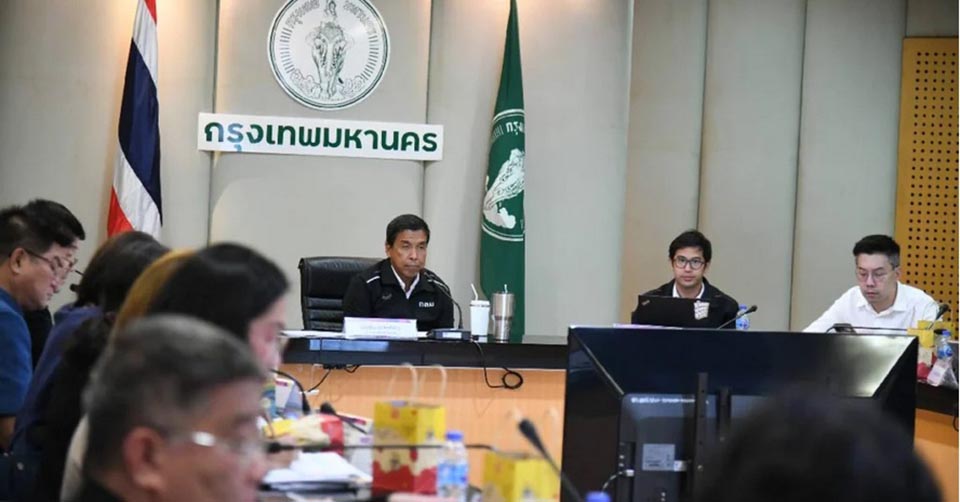
Bangkok Governor Chadchart Sittipunt chaired the first 2025 meeting of the PM2.5 Prevention and Mitigation Committee, emphasizing that air pollution must be tackled continuously, not just during smog season. He highlighted the city’s historic implementation of the LEZ policy, and underlined the importance of accurate pollution monitoring across Bangkok’s 50 districts using 70 air quality sensors.
Data from the BMA’s Environment Department shows PM2.5 levels typically spike from November to late March each year due to colder weather and biomass burning. In response, BMA has banned non-Green List trucks of six wheels or more (excluding EVs, NGVs, and Euro 5–6 vehicles) from entering the Ratchadaphisek ring road zone during smog crises. From October 29, 2024, to March 31, 2025, over 57,900 trucks have registered on the Green List.
The LEZ policy aims not to penalize polluting vehicles, but to incentivize proper maintenance like oil and filter changes to meet environmental standards. Additional measures include a vehicle retrofit campaign (over 291,000 filters changed), dust-free classroom upgrades (744 of 1,966 rooms completed), and work-from-home promotions (104,402 registered participants so far).
Governor Chadchart concluded that PM2.5 is ultimately an economic issue. For example, farmers resort to burning rice stubble due to lower costs. Without economic incentives or market support for cleaner alternatives, long-term change is difficult. “If we don’t address the economics—by providing tools or supporting markets for non-burned crops—then we cannot solve this issue sustainably,” he stated. (TNA)