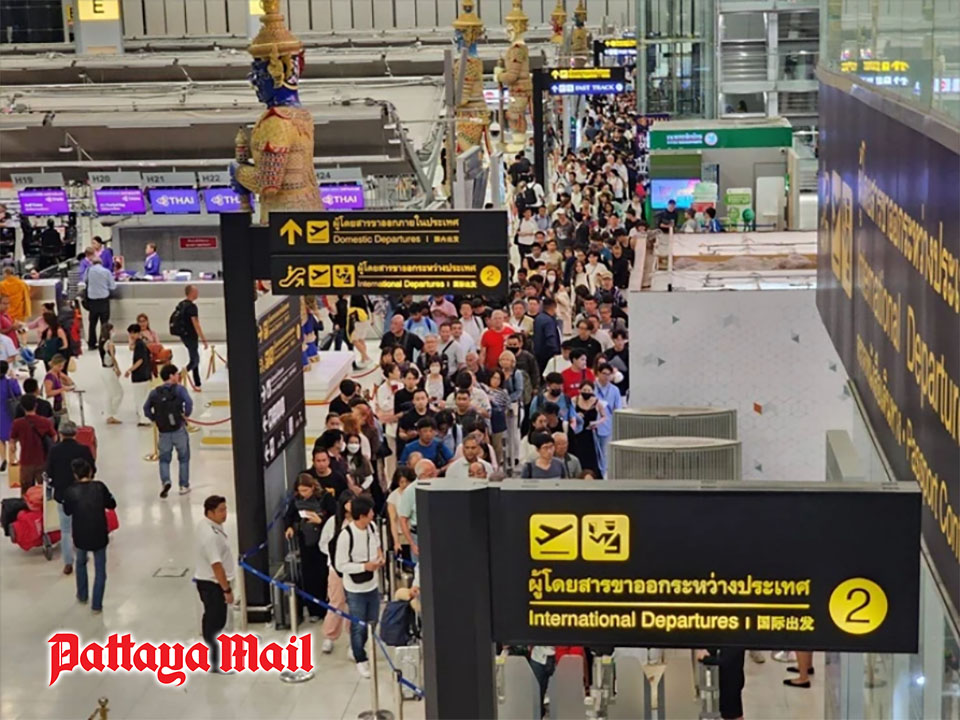
PATTAYA, Thailand – After years of turbulence in the global travel industry, Thailand’s tourism sector has shown remarkable signs of recovery. The Airports of Thailand Public Company Limited (AOT) recently reported a strong financial performance for the first half of fiscal year 2025 (October 2024 – March 2025), recording total revenues of 36.2 billion baht, a 5.98% increase from the previous year. Net profit stood at 10.4 billion baht, indicating steady progress in the right direction.
With over 68 million passengers passing through AOT’s six main airports—Suvarnabhumi, Don Mueang, Chiang Mai, Chiang Rai, Phuket, and Hat Yai—during the same six-month period, Thailand has shown it can once again be a regional aviation hub. International flights surged to 237,511, while domestic flights hit 176,866, both showing double-digit growth year-on-year.
But with such numbers on paper, is Thailand truly ready to celebrate its tourism success just yet?
Mixed Signals Amid Positive Growth
While the half-year numbers look promising, a closer look at Q2 of FY2025 reveals some nuances. AOT’s Q2 net profit declined by 12.24%, primarily due to a drop in non-aeronautical revenues such as commercial leasing and retail, which fell by over 1.3 billion baht. This decline serves as a reminder that tourism recovery is not just about flight traffic—it’s also about spending power, passenger behavior, and sustained infrastructure support.
AOT executives remain optimistic. Ms. Paweena Jariyathitiphong, Acting President and Executive Vice President for Engineering and Construction, emphasized the company’s ongoing infrastructure development to support long-term growth. Projects such as the expansion of Suvarnabhumi Airport to accommodate 15 million more passengers by 2030, and the Don Mueang upgrade to handle 50 million passengers by 2033, are expected to be game-changers.
What More Needs to Be Done?
If Thailand wants to not just celebrate short-term gains but sustain its position as a top-tier travel destination, it must continue executing a comprehensive, future-proof tourism strategy. Here are key areas that still need attention:
- Diversifying Revenue Streams
The dip in non-aeronautical income highlights a vulnerability. AOT is addressing this through its AOT Property Showcase initiative and Public-Private Partnership (PPP) projects, aimed at commercial development around airports. However, these must deliver not just real estate profits, but value-added services that enhance traveler experiences.
- Smart Airport Innovations
Thailand’s move toward becoming a “Smart Airport – Smart Immigration” country is commendable. With systems like automated check-ins, biometric boarding, and the Thailand Digital Arrival Card (TDAC) now replacing the outdated TM.6 paper forms, the country is improving efficiency. These technologies must be consistently maintained and upgraded to avoid tech bottlenecks as traffic rises.
- Regional Connectivity and Accessibility
AOT’s Marketing Fund and Incentive Scheme to support airlines and boost inter-regional connectivity are critical. Ensuring that smaller airports and secondary destinations receive adequate support will help disperse tourism beyond overcrowded hubs.
- Sustainability and Cultural Sensitivity
As mass tourism returns, Thailand must invest in sustainable tourism models to preserve its natural and cultural heritage. Tourist hotspots like Phuket and Chiang Mai are already feeling the strain of over-tourism. Environmental management, local community engagement, and inclusive tourism must remain top priorities.
- Crisis Preparedness and Flexibility
Thailand’s ability to adapt quickly to global disruptions—be it a new pandemic, geopolitical shifts, or natural disasters—will be key. Building agility into its aviation and tourism ecosystem will help weather any future storms.
Final Thought: Celebrate with Caution, Build with Purpose
Yes, the numbers are worth acknowledging. The jump in passenger traffic, the improved half-year revenues, and the rollout of smart systems all signal recovery. But true celebration must wait until Thailand achieves a balanced, inclusive, and resilient tourism ecosystem.
Thailand may be on the runway for long-term success, but to truly take off, it must complete the full pre-flight checklist.