BANGKOK, Thailand – Deputy Prime Minister and Digital Economy and Society Minister Prasert Chandraruangthong visited four northeastern provinces on May 17 to assess flood and drought risks as Thailand moves into the 2025 rainy season. His visit to Khon Kaen, Kalasin, Maha Sarakham, and Roi Et highlighted the dual threat of flooding in low-lying areas and potential drought later in the year. During the trip, Prasert stressed the need for early warnings and rapid response to protect communities and limit disruption to agriculture and local livelihoods.
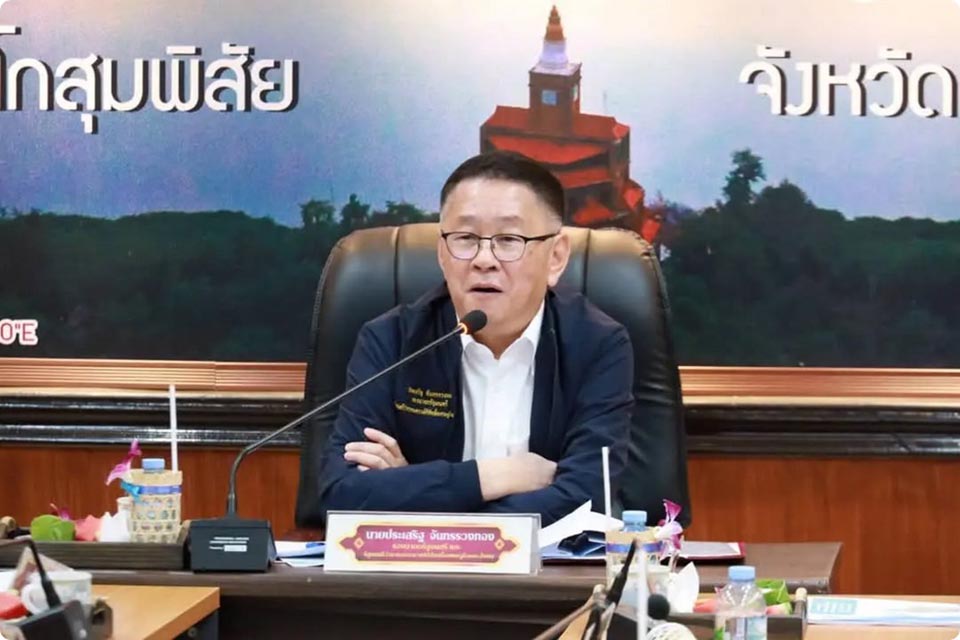
In Maha Sarakham, the Deputy Premier chaired a meeting with provincial officials to review water management and progress on the D5 Huai Nam Khem Floodgate project. The province relies on 17 medium-sized reservoirs, currently holding less than 30 percent of their total capacity. Damage to the D5 embankment during past floods has left farmland exposed to overflow from the Chi River. A proposed 70 million baht pumping station is expected to help manage both flood and drought risks, benefiting 30,000 rai of agricultural land and nearby communities.
Prasert instructed the Office of the National Water Resources and the Royal Irrigation Department to work with local authorities to manage water reserves efficiently. He also ordered urgent repairs to village water systems, groundwater wells, and flood barriers, and called for budget proposals to fund these improvements. Public campaigns to raise awareness about water conservation and disaster preparedness are also being planned.
In Khon Kaen, Prasert addressed community issues, including the management of Village and SML Funds, urging local authorities to ensure active public participation in decision-making. He also raised concerns about nearly 19,000 children who had left the education system in the province, with over 12 percent still unaccounted for. Officials have been tasked with quickly locating and helping these children return to school.
The visit also included discussions on boosting local economies through cultural industries such as silk production. Officials proposed promoting silk fashion as part of Thailand’s Soft Power strategy to create new income opportunities for rural communities. The government pledged ongoing support to address both immediate challenges and long-term development across the region. (NNT)