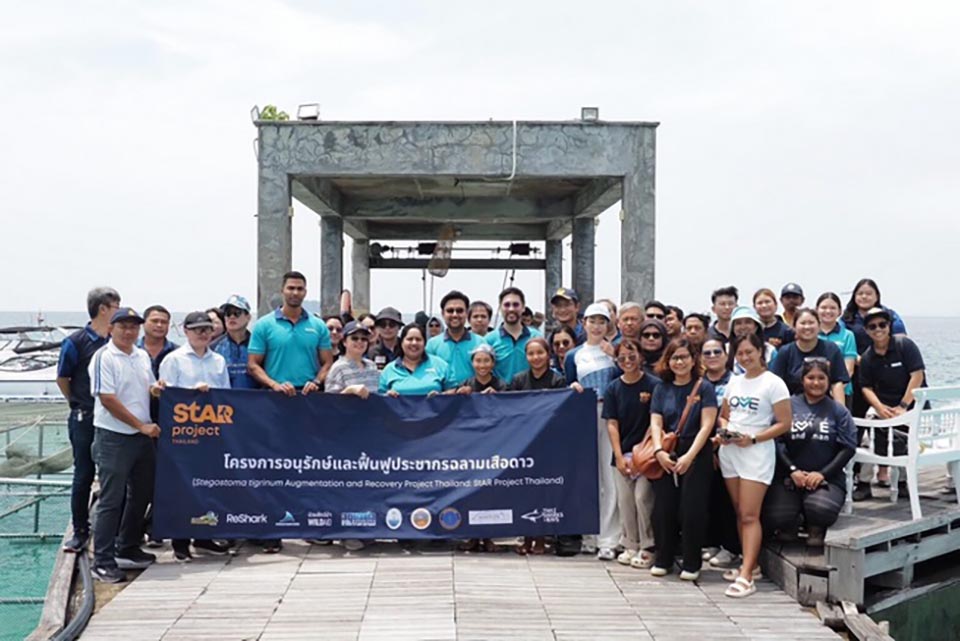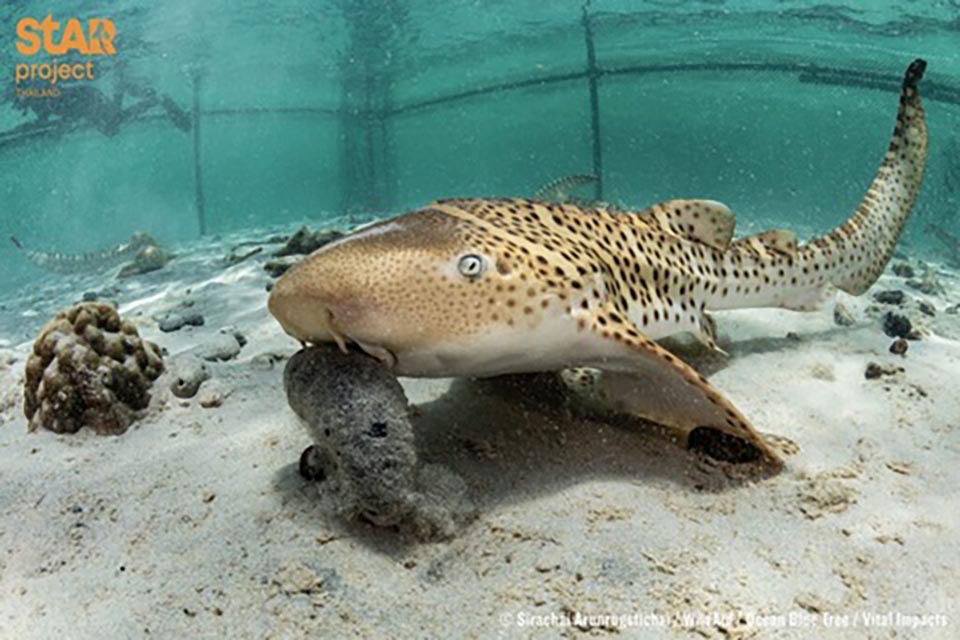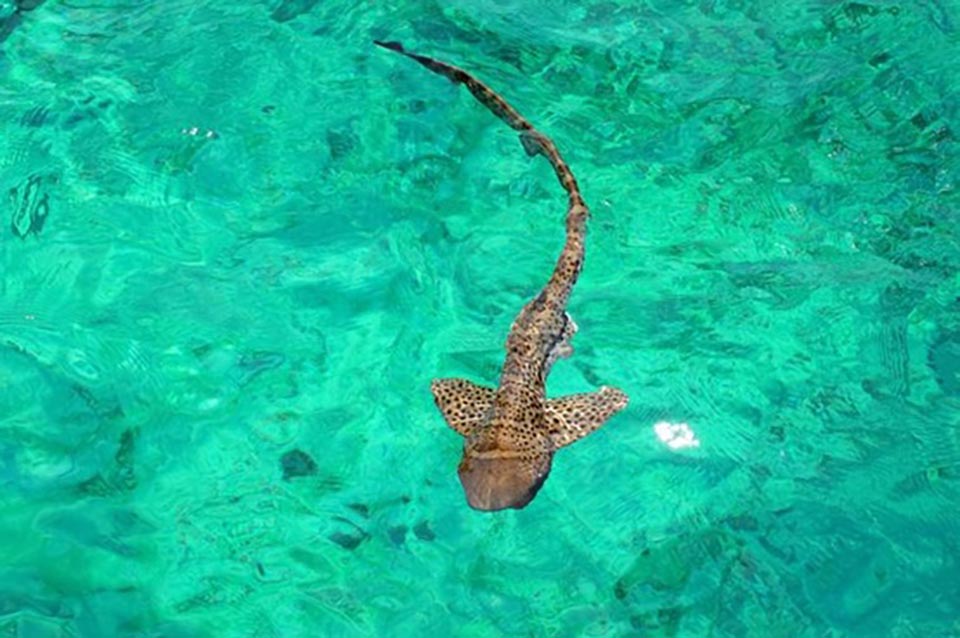
PHUKET, Thailand – Thailand’s Department of Marine and Coastal Resources (DMCR) has officially launched the “StAR Thailand” project (Stegostoma tigrinum Augmentation and Recovery), aimed at conserving and restoring the endangered leopard shark population. The initiative involves both domestic and international partners and recently transferred nine captive-bred juvenile leopard sharks from Phuket Aquarium to a sea pen off Maiton Island, where they will acclimatize before being released back into the wild.
Dr. Pinsak Suraswadi, Director-General of the DMCR, explained that the project is collaboration among several organizations, including the DMCR, Department of National Parks, Phuket Aquarium, the Department of Fisheries, Maiton Island Resort, WildAid, and Ocean Blue Tree. It is supported by ReShark, a global network focused on restoring endangered sharks and rays. The first project site was launched in Indonesia in 2022, with Thailand now becoming the second country to join the initiative.
The nine leopard sharks involved in the project were bred by marine biology experts at the Phuket Marine Biological Center. After their transfer, the young sharks are kept in a specially constructed sea pen near Maiton Island to adapt to natural conditions. Before release, tracking devices will be attached to monitor survival rates and inform long-term conservation strategies.
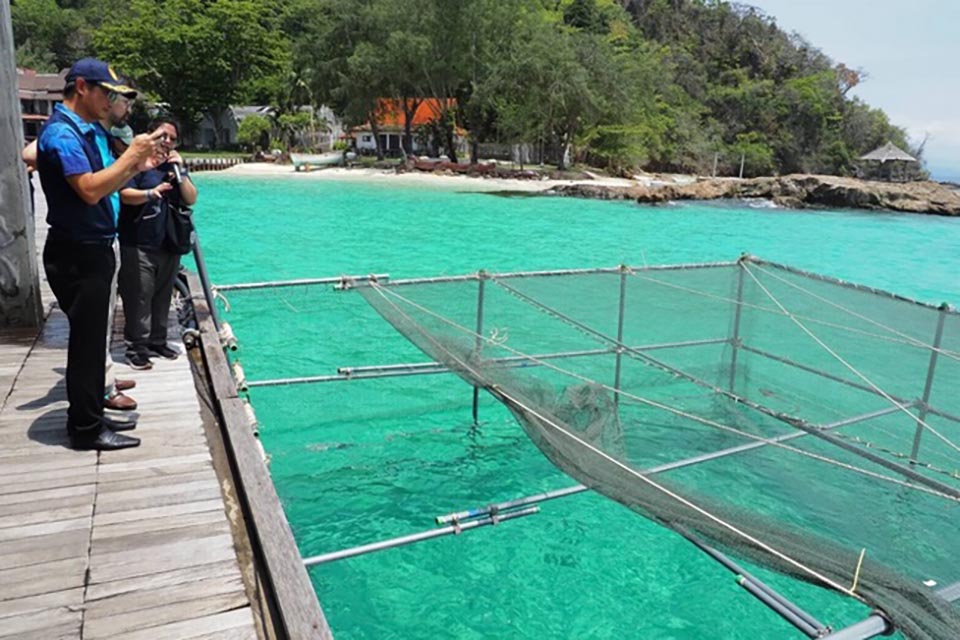
Dr. Pinsak emphasized the crucial role leopard sharks play in maintaining coral reef ecosystems. These gentle, slow-growing animals with low reproductive rates are a favorite among divers but face steep population declines. The restoration effort requires time and cross-sector collaboration. He noted the department’s pride in supporting this initiative, especially in establishing the sea pen as a key transitional habitat.
Methavee Chuengcharoendee, Thailand Program Manager at WildAid, highlighted the challenges of restoring shark and ray populations, particularly due to their slow life cycles and population fragility. She called the rewilding approach—breeding and releasing into natural habitats—a new hope for recovery, while urging urgent action to reduce threats like overfishing and habitat destruction.
The StAR Thailand project builds on the success of “Spot the Leopard Shark – Thailand,” a citizen science initiative encouraging divers to submit photos of leopard shark sightings to help collect data on behavior and habitat. The project is currently assessing population trends and extinction risks to guide future conservation actions, including release numbers and suitable nursery areas in the wild. (TNA)