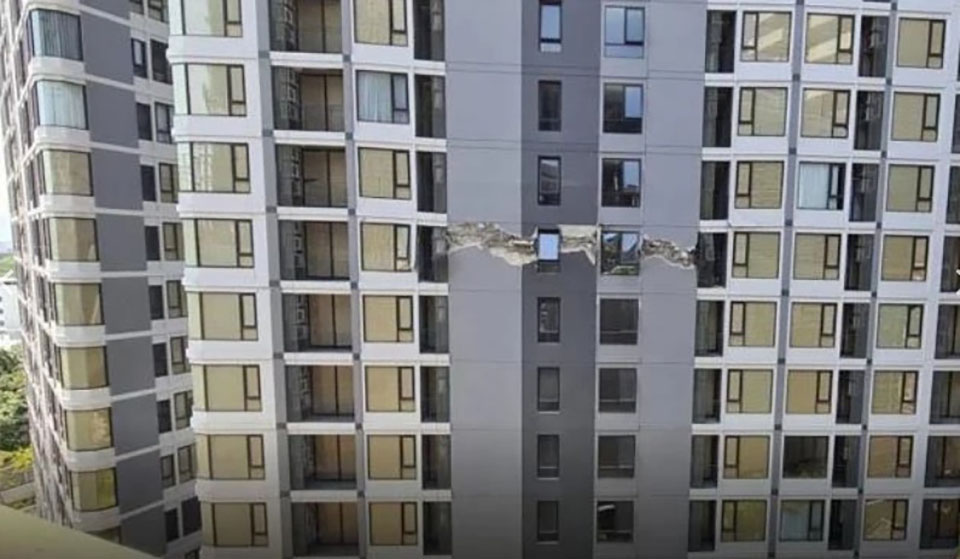
BANGKOK, Thailand – The powerful earthquake that struck Myanmar and sent tremors through Thailand has sparked widespread concern across the Thai economy, particularly in the real estate and insurance sectors. Although there was no catastrophic destruction in Thailand, the psychological impact on consumers and investors—especially in the condominium market—has been profound.
High-rise condominiums, office towers, and large-scale mixed-use developments in Bangkok and other urban centers have seen an immediate slowdown in buyer activity. Many potential homeowners and investors are postponing purchases and ownership transfers due to lingering fears about structural safety, despite most buildings withstanding the tremors without visible damage.
Sunthorn Sathaporn, President of the Housing Business Association, revealed that developers are already seeing a significant drop in interest in vertical housing. “We expect a slowdown in the condominium market for at least the next two months, especially in April and May 2025,” he said. While some anticipated a shift in demand toward low-rise housing, Sunthorn emphasized that the overall impact may be limited. “This was not a complete failure of our structural systems,” he said, referencing the partial collapse of the new State Audit Office building as an isolated case.
Nevertheless, the psychological blow has been enough to dent industry confidence. Original forecasts for 5% growth in Thailand’s real estate market in 2025 have now been revised down to just 3%. Projects in progress may face additional scrutiny, cost increases, and delays due to new structural inspections, design revisions, and heightened insurance requirements.
Analysts warn that developers will need to rework cost structures to factor in additional construction standards, such as earthquake-resistant foundations, materials, and engineering assessments. Insurance premiums are expected to rise significantly, which could erode developer margins and put pressure on stock valuations and shareholder dividends. Developers listed on the Stock Exchange of Thailand are likely to revise their 2025 earnings projections.
This crisis also raises serious policy questions. Urban planning and building codes in Thailand—especially in quake-prone regions—may be due for an overhaul. Experts are calling on the government to mandate stricter construction standards, periodic safety inspections, and better land zoning for vertical development projects.
Meanwhile, Thailand’s insurance industry is bracing for one of its biggest payouts in years. The Thai General Insurance Association estimates that total claims from the earthquake’s effects could exceed 100 billion baht. A high-profile case involves the State Audit Office building in Nonthaburi, which partially collapsed during the quake. The project had Contractor All Risk (CAR) insurance coverage of 2.136 billion baht, underwritten by four major insurers: Dhipaya Insurance (40%), Bangkok Insurance (25%), Indara Insurance (25%), and Viriyah Insurance (10%). Additional policies cover property damage and third-party liability, which could push final claims even higher.
Despite these massive figures, the Office of Insurance Commission (OIC) has reassured the public that the industry remains financially stable. Most insurers have robust reinsurance coverage with international firms. Dhipaya, for instance, had 95% of its liability reinsured overseas. Moreover, the capital adequacy ratio of the non-life insurance industry is around 300%—well above the legal requirement of 100%—ensuring companies can withstand major claim events without collapsing.
The situation is drawing comparisons to the 2011 floods, which transformed attitudes toward flood insurance and prompted regulatory reforms. A similar shift may now occur with earthquake insurance, which has historically seen low uptake. Many Thai property owners had considered it an unnecessary add-on—until now. Analysts predict that demand for fire insurance policies that include natural disaster riders, as well as dedicated earthquake coverage, will surge in the coming months.
In the end, the Myanmar quake may mark a turning point for how Thailand builds, insures, and protects its urban landscape. The road ahead demands a cultural and structural shift—from reactive rebuilding to proactive resilience planning.