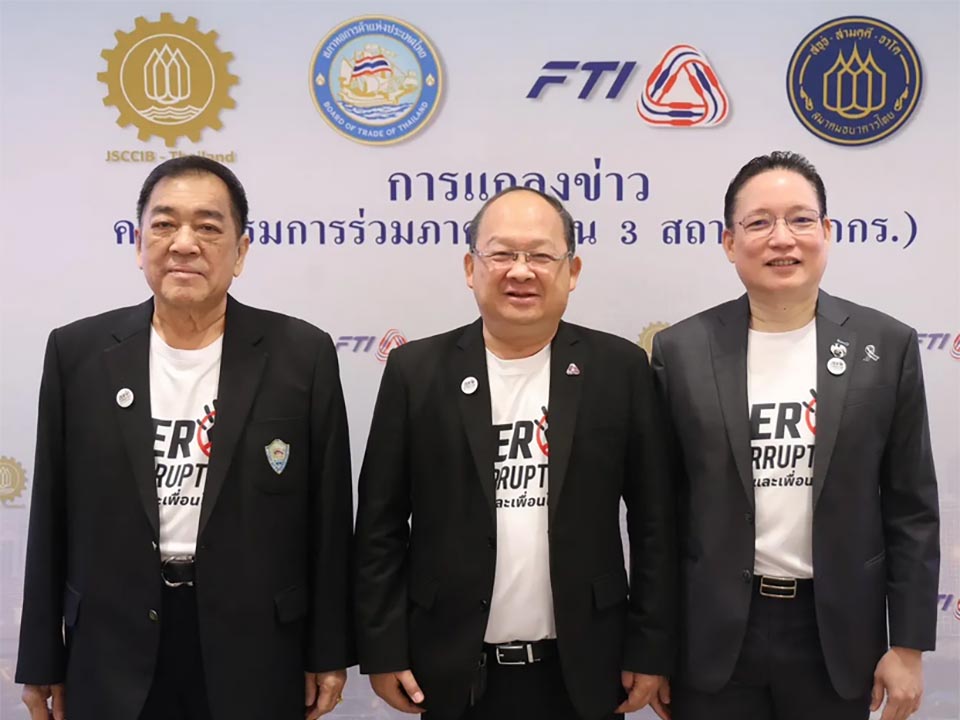
BANGKOK, Thailand – The Joint Standing Committee on Commerce, Industry and Banking (JSCCIB) urged voters to support quality elections by selecting parties committed to anti-corruption policies, which help reduce hidden costs and strengthen national competitiveness.
JSCCIB, which includes the Thai Chamber of Commerce, the Federation of Thai Industries, and the Thai Bankers’ Association, reported progress on the Zero Corruption initiative through its own efforts and the “Mai Thon” (No Tolerance) network. The committee thanked political parties for integrating anti-corruption principles into their campaigns, debates, and public communications, reflecting increased public awareness.
JSCCIB emphasized that corruption imposes high hidden costs and weakens business competitiveness. Surveys show that 97 percent of businesses and 72 percent of the public consider corruption a serious issue, with many noting a gap between campaign promises and actual implementation. The committee reaffirmed its commitment to advancing Zero Corruption beyond the election period.
The private sector has maintained public engagement through forums, campaigns, surveys, and multi-channel communications to increase awareness and participation. JSCCIB plans to integrate a zero-tolerance approach to corruption into policies and practices across sectors, and to collaborate on related issues such as scam networks and electoral malpractice.
JSCCIB announced that a post-election briefing will present findings on bribery in business licensing, encouraging the new government to prioritize anti-corruption and take sustained, concrete action.
The Zero Corruption network now includes 26 public and private organizations, working with partners such as the Anti-Corruption Organization of Thailand, the Collective Action Coalition Against Corruption, and the Thailand Institute of Justice, as well as support from enforcement agencies and business associations nationwide. (NNT)