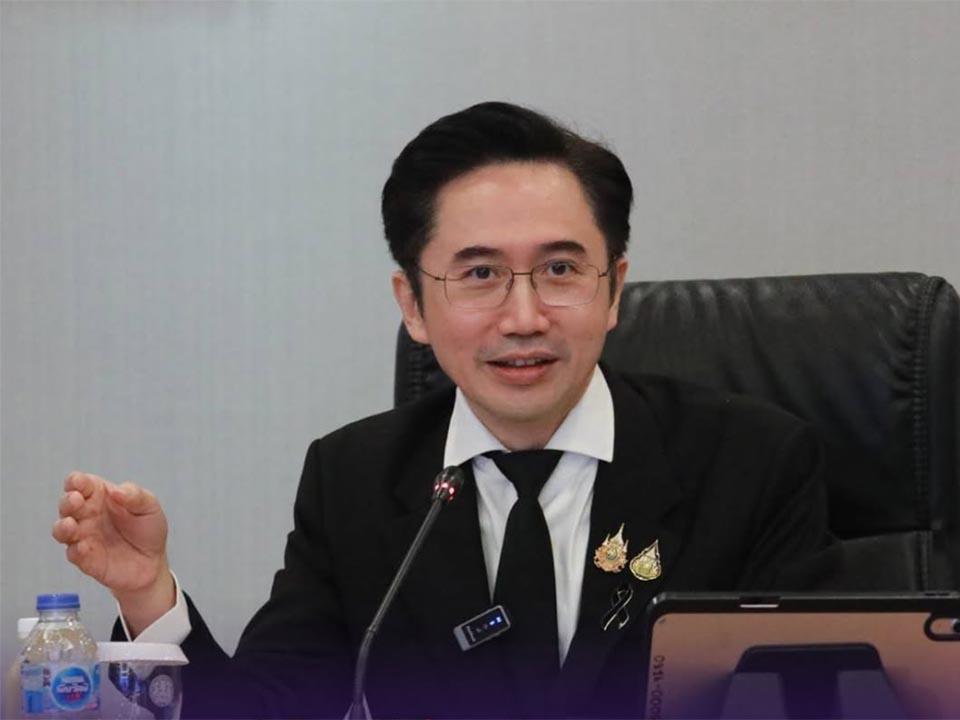
BANGKOK, Thailand – Deputy Prime Minister and Minister of Higher Education, Science, Research and Innovation Yodchanan Wongsawat chaired the second 2026 meeting of the National Qualifications Framework Committee at Government House. The meeting was attended by Education Minister Prasert Jantararuangtong, Office of the Education Council Secretary-General Phichet Phophakdee, and other committee members.
The Deputy Prime Minister emphasized the need for a more seamless system that connects education, work, and skills development to address inequality, technological change, labor shortages, and Thailand’s ageing society.
The meeting approved establishing two subcommittees, including one focused on advancing and integrating the National Credit Bank. It also endorsed draft guidelines to align foreign-language competency levels with the National Qualifications Framework for use by educational institutions, training providers, and workplaces.
The committee also reviewed progress on the NQS Dashboard and the integration of the National Credit Bank platform, both of which are expected to be completed by October.
The Deputy Prime Minister highlighted Thailand’s Future Skills App as a pilot platform for accumulating and certifying skills acquired both within and outside formal education. He stated that the future learning ecosystem should connect basic education, vocational education, universities, professional qualification bodies, private companies, and industrial workplaces under a “Beyond School, Beyond University” approach.
The committee also stressed the importance of aligning future skills development more closely with the needs of Thai industry, in cooperation with the private sector, the Federation of Thai Industries, international partners such as Japan, and the Ministry of Labor. (NNT)